Bogota covers a lot of ground - both literally and figuratively. Colombia’s capital stretches across the Sabana de Bogota at 2,640 metres, and packs in one of South America’s best museum clusters, a colonial historic centre, a thriving street art scene, and a Sunday morning tradition that closes 120 kilometres of roads to cars and fills them with cyclists. Here is where to spend your time.
Museo del Oro (Gold Museum)
The Gold Museum on Carrera 6 holds more than 55,000 pre-Columbian pieces - the world’s largest collection of its kind. The permanent collection takes roughly two hours at a comfortable pace and covers goldworking traditions from cultures across Colombia including the Muisca, Calima, Quimbaya, and Tairona.
The Sala de la Ofrenda at the top of the museum is the centrepiece: a circular room where a replica of a Muisca raft surrounded by gold figurines depicts the El Dorado ceremony. It is one of the most affecting museum moments in the country.
Entry costs approximately COP 5,000 for foreign adults as of 2026 (free on Sundays). Open Tuesday to Saturday 9am to 6pm, Sunday 10am to 4pm. Closed Mondays. Located one block from Plaza de Bolivar in La Candelaria. The museum fills up on free Sundays - arrive before 11am to avoid the longest queues.
Cerro Monserrate
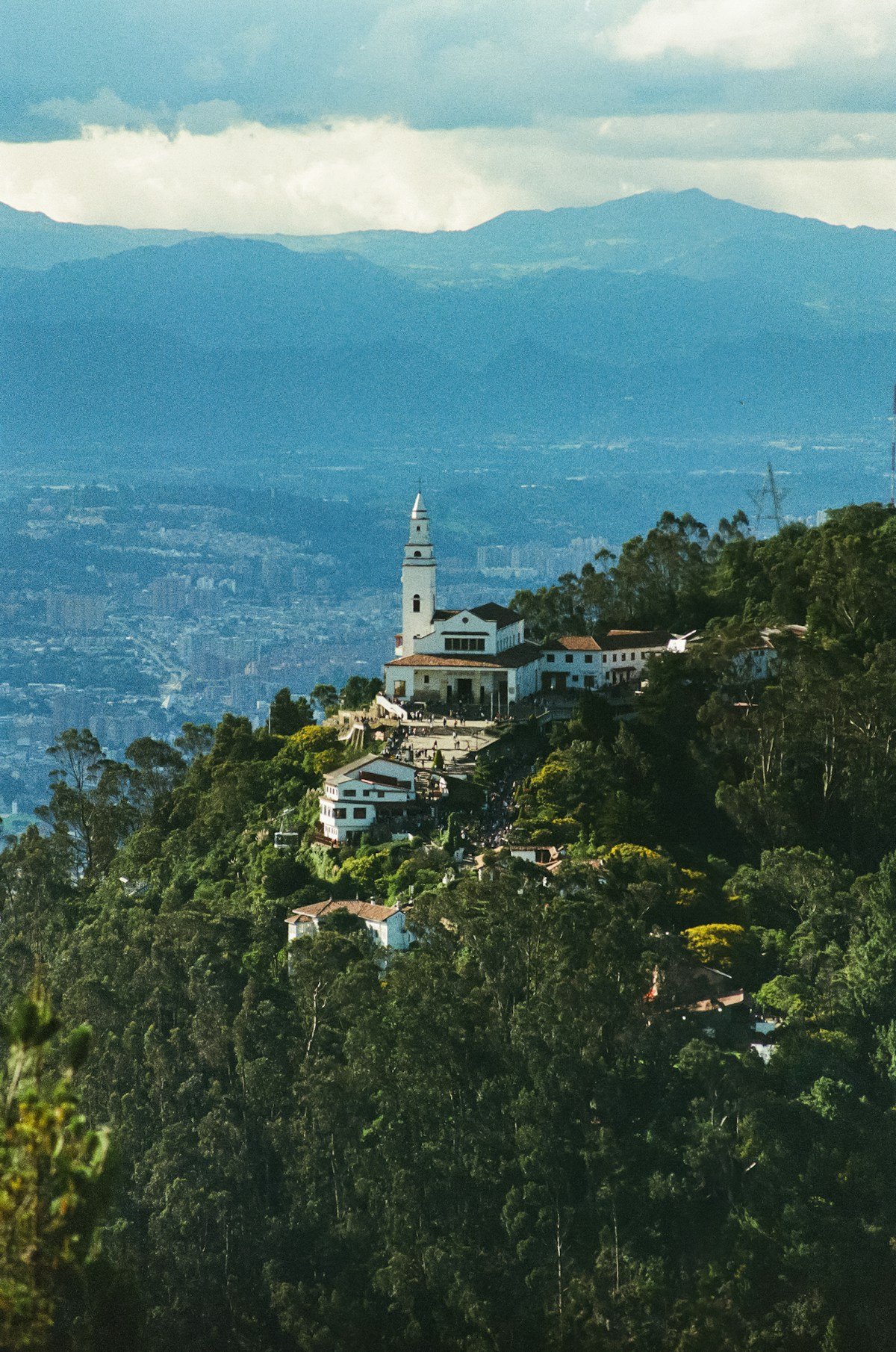
The peak rising directly east of the city centre is the most visible landmark in Bogota. At 3,152 metres, Monserrate stands 500 metres above the city and offers the best panoramic view available without flying.
The easiest way up is by cable car or funicular, both of which run from the base station on Carrera 2 near Calle 18. Cable car tickets cost approximately COP 27,000 return (adult) as of 2026. The funicular runs on a separate track and costs the same. Both operate from 7am daily, and the trip takes around 10 minutes. The last descent is at 11:45pm, later on weekends.
Alternatively, the stone footpath can be walked. It takes 45 minutes to an hour at altitude and is a steep climb. The path is open from 5am on weekdays and Sundays specifically for morning walkers. Do not hike it after dark.
At the summit: the 17th-century white church, a small craft market, two restaurants (Restaurante Casa Santa Clara for a proper meal, Restaurante El Rancho for quick snacks), and the view over a city of 8 million people. Morning visits have the clearest air - cloud tends to build in the afternoon.
La Candelaria and the Botero Museum
La Candelaria is the colonial historic centre where Bogota was founded in 1538. Plaza de Bolivar anchors the neighbourhood and is flanked by the Cathedral Primada (open daily, free entry), the Capitolio Nacional, and the Palacio Lievano (city hall).
The Museo Botero on Calle 11 near Carrera 4 houses 123 works donated by Fernando Botero to the Colombian nation in 2000. The collection includes paintings and sculptures by Botero himself alongside works by Picasso, Monet, Renoir, Dalí, and Chagall. Entry is free. Open Wednesday to Monday 9am to 7pm, closed Tuesdays. Allow an hour.
Outside the museum on Avenida Jiménez, the bronze Botero sculptures extend into the street. The plaza immediately in front is a good spot for street food - look for the buñuelo and empanada vendors.
Walking La Candelaria suits the morning. Take Calle 10 eastward from Plaza de Bolivar toward Carrera 1 for the best concentration of street murals, bookshops, and small galleries. Take a taxi or ride-hailing app back to your hotel in the evening - the neighbourhood requires more caution after dark.
Search hotels in Bogota on Booking.com
Usaquen and the Sunday Flea Market
Usaquen is a former municipality absorbed into Bogota’s northeast that retains the character of a colonial village - cobbled central plaza, whitewashed walls, and streets narrow enough to make you forget you are in a city of 8 million. It is 30 to 40 minutes by taxi from La Candelaria.
Every Sunday from around 9am to 5pm, the Mercado de Usaquen spreads across the blocks around the central plaza and the surrounding streets. Vendors sell antiques, handmade jewellery, leather goods, vintage clothing, artisan food products, and street food. It is one of the more pleasant markets in Colombia - no aggressive selling, good quality, and the surrounding restaurant terraces are ideal for lunch after a browse.
Ciclovía
Every Sunday and public holiday between 7am and 2pm, Bogota closes more than 120 kilometres of its main roads to vehicles and opens them to cyclists, runners, skaters, and walkers. The Ciclovía has run since 1974 and is one of the most distinctive things about the city.
Bike hire is available at multiple points along the route for approximately COP 10,000 to 15,000 per hour. The main corridor runs along Carrera 7 from La Candelaria north through Chapinero to Calle 127 and the Parque El Country. Additional circuits cover the south and east of the city.
Combine Ciclovía Sunday with the Usaquen market for a full-day Bogota experience: rent a bike, ride north on Carrera 7, browse the market, eat lunch in Usaquen, and return before 2pm when the cars come back.
Jardín Botánico José Celestino Mutis
The Botanical Garden on Avenida 63 covers 19 hectares and organises Colombia’s diverse flora by altitude zone - páramo plants from the high Andes, cloud forest specimens, and lowland species all within walking distance of each other. The orchid collection is extensive and well-maintained.
Entry costs approximately COP 3,000 for adults as of 2026. Open Tuesday to Sunday 8am to 5pm. A 1.5 to 2 hour visit covers the main collections. The garden also has a small café near the main entrance.
Museo de Arte Moderno de Bogota (MAMBO)
The Museum of Modern Art on Calle 24 collects Colombian artists from the 20th century onward with rotating contemporary exhibitions drawn from Latin American and international collections. The permanent collection includes work by Alejandro Obregón, Omar Rayo, and Beatriz González - three of the most important figures in Colombian modern art.
Entry costs approximately COP 6,000 as of 2026 (free on Sundays). Open Tuesday to Saturday 10am to 6pm, Sunday 12pm to 5pm. Allow 1 to 2 hours.
Parque de la 93 and Zona Rosa
If La Candelaria represents colonial Bogota, Parque de la 93 and the surrounding Zona Rosa neighbourhood represent the modern city. The park itself is a small, well-kept green square, but the 12 blocks around it contain the highest concentration of quality restaurants, coffee shops, and bars in Bogota.
There is nothing historic here - this is Bogota as a contemporary Latin American city works. Good for an afternoon of café-hopping followed by dinner. Streets around Calle 82 and Carrera 13 in Chapinero Alto have a similar concentration at slightly lower prices.
Practical Notes
Getting around: TransMilenio bus rapid transit covers the main corridors for approximately COP 3,000 per ride. InDriver and Cabify are reliable app-based options for point-to-point trips, typically COP 8,000 to 20,000 within the tourist areas. Never hail a cab off the street.
Altitude: At 2,640 metres, Bogota causes mild altitude adjustment symptoms in most visitors on the first day. Drink extra water, eat lighter meals, and avoid heavy exercise in the first 24 hours.
Timing: Sunday is the best single day in Bogota - Ciclovía, Usaquen market, and free museum entry align. Build your itinerary around it if you have flexibility.
Safety: The main tourist areas - La Candelaria by day, Chapinero, Zona Rosa, Usaquen - are straightforward. Avoid displaying phones or jewellery on the street, and do not walk in La Candelaria after 8pm.
Book a Guided Tour
Verified GYG options for Bogota, with free cancellation, prices as of 2026:
| Tour | Duration | From Price | |
|---|---|---|---|
| Bogota: Complete Downtown Walking Tour | 2.5 hours | from $23 | Book |
| Bogota: Free Walking Tour — Arte, Historia y Café | 2.5 hours | tip-based | Book |
| Browse all Bogota tours | — | — | Browse |
Prices are per person. The tip-based free walk is a good introduction; the paid tour keeps groups smaller and covers more content. For guided options covering these highlights — Monserrate, the Gold Museum, the Botero Museum, and a Zipaquirá day trip — tours in Bogota lists vetted operators with English-language guides and free cancellation.