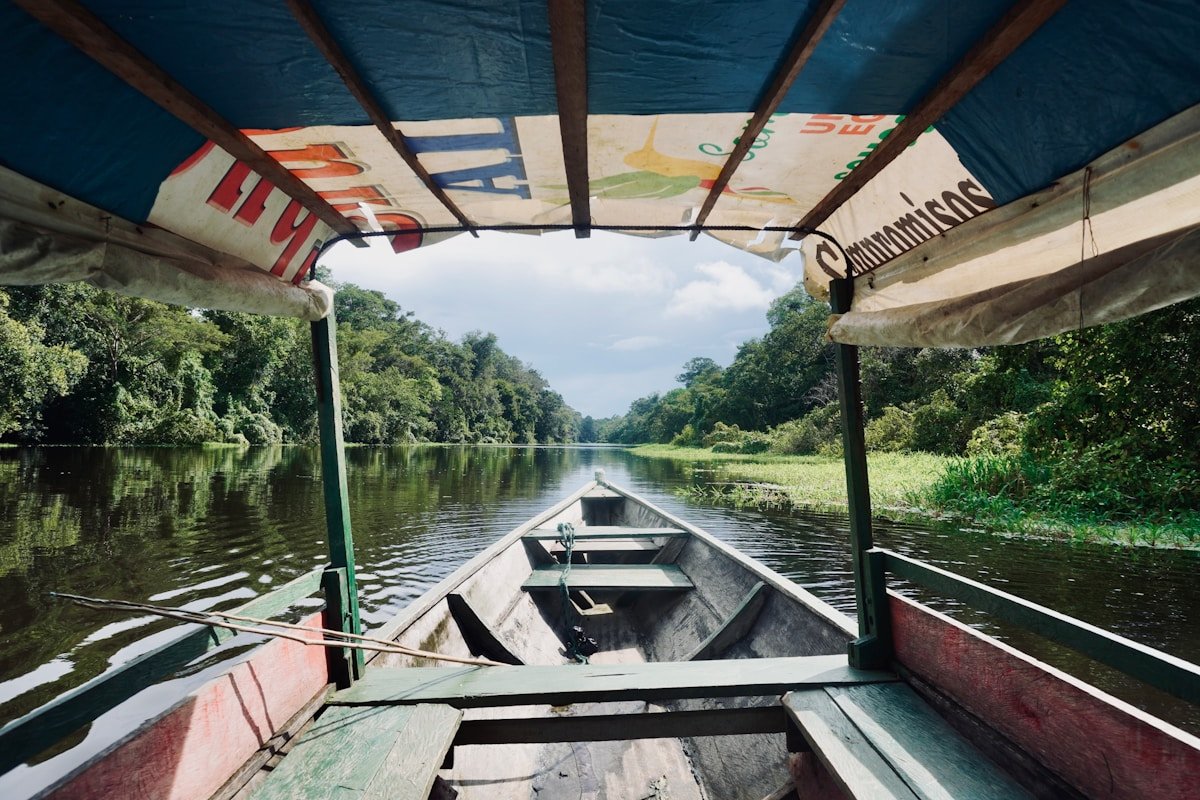
Leticia is unlike anywhere else in Colombia. The city sits at the southernmost tip of the country, surrounded on all sides by the Amazon rainforest, with no road connection to the rest of Colombia. Getting here means flying - there is simply no other practical option - and the isolation is part of the appeal. This is where Colombia meets Peru and Brazil, where the Amazon River defines daily life, and where wildlife watching, river trips, and visits to indigenous communities replace the city tourism found elsewhere.
Accommodation reflects the destination. There are no international chain hotels, no gleaming business lobbies, no rooftop pools overlooking a skyline. What Leticia offers instead is a spectrum from simple city-centre guesthouses to well-run jungle lodges built on riverbanks hours from any road. Understanding the distinction before you book will determine whether you have the trip you came for.
Getting to Leticia
Gustavo Artunduaga Paredes Airport (LET) sits within the city and receives direct flights from Bogota (approximately 2 hours, COP 250,000–600,000 return as of 2026 depending on how far in advance you book). Latam and Avianca both operate the route; Copa sometimes appears in aggregators but typically routes through Panama, which makes no sense for a domestic trip. Satena operates occasional flights from Bogota and Manizales.
Flights book out during Colombian school holidays and Semana Santa. Book at least three to four weeks in advance for peak periods. The airport has no taxi rank in the conventional sense - your accommodation can arrange a pick-up, or motorcycle taxis (mototaxis) are available just outside the terminal for approximately COP 5,000–8,000 to the centre.
Central Leticia: Budget and Mid-Range Hotels
The commercial centre is compact and walkable, with a main market, the port area where river boats and ferries depart, and a handful of restaurants that serve river fish. Staying central is the most practical option for anyone spending two or three nights before heading deeper into the jungle.
Budget - COP 60,000–120,000 per night
Hotel Anaconda is the most established budget property in central Leticia, a family-run guesthouse that has hosted travellers for decades. Rooms are simple but clean, with fans and private bathrooms. Double rooms run approximately COP 80,000–120,000 as of 2026. The owners speak basic English and can help arrange river tours, border crossings to Tabatinga (Brazil), and visits to Santa Rosa (Peru), all of which are easy half-day excursions from the port.
Nomada Hostel is a well-located hostel in the city with dormitory beds from approximately COP 50,000–70,000 and private rooms from COP 90,000–130,000. Hammocks, communal space, and a sociable atmosphere. Popular with budget travellers and researchers passing through Leticia before heading deeper into the Amazon.
Mid-range - COP 150,000–300,000 per night
Amazona Lodge is a comfortable mid-range property with air-conditioned rooms, a garden, and a terrace, approximately 5 miles from the airport. A restaurant on-site serves local Amazon fish dishes - try the arapaima or gamitana if available. Double rooms run approximately COP 180,000–280,000 per night as of 2026. A solid base for short stays before heading deeper into the jungle.
Hotel Waira Suites has newer rooms with stronger air conditioning and slightly higher service standards than other mid-range options. Rates run approximately COP 200,000–320,000 per night. The hotel can help book multi-day Amazon expeditions and has relationships with several reputable guide operations.
Riverfront and Jungle Lodges
For most visitors, the primary reason to come to Leticia is the rainforest and the river. The jungle lodges offer a fundamentally different experience: waking to bird calls before dawn, caiman spotting by torchlight, piranha fishing, and immersion in an ecosystem that functions on its own terms. These lodges range from basic to genuinely comfortable, and virtually all of them operate on all-inclusive packages that include meals, guided excursions, and transfers.
Heliconia Lodge is approximately 35 km upriver from Leticia (roughly 90 minutes by boat), built on the Yavarí River near the Peru border. The lodge accommodates sixteen guests in raised wooden cabins with mosquito nets, hammocks, and shared bathing facilities. An all-inclusive package for two nights typically runs COP 700,000–900,000 per person as of 2026, including airport pick-up, all meals, and three guided excursions per day. Night walks, canoe trips, and community visits are all included. Book directly or through the Leticia port tourism office.
Amazon Açaí Lodge sits closer to Leticia, making it accessible for shorter stays of two to three nights. The lodge has a garden, terrace, restaurant serving buffet and local options, and guided excursions into the rainforest. Packages typically start at approximately COP 600,000 per person for two nights including meals. Rooms have nets and fans but no air conditioning - at river level, the humidity and heat are pronounced.
Tanimboca Nature Reserve is a thirty-minute drive from the airport on land - one of the few jungle experiences accessible by road. This is less a lodge and more a multi-activity reserve, with tree canopy platforms, a zipline, and accommodation in the form of raised tree houses and platform tents. Rates start at approximately COP 400,000 per person per night all-inclusive. Good for visitors who want jungle immersion without a multi-day river journey.
What to Know Before Booking
Mosquitoes are significant. Leticia is in the Amazon lowlands at approximately 100 metres elevation. Malaria prophylaxis is recommended - consult a travel health clinic before departing. Most jungle lodges provide nets, but budget accommodation in the city may not. Bring your own if you are in any doubt.
The heat is genuine. Temperatures average 30–33°C year-round with high humidity. Budget hotel rooms with only fans can be uncomfortable. Air conditioning becomes meaningful here in a way it rarely does at higher-elevation Colombian cities. If heat affects your sleep, spend the extra money on a room with AC in the centre or prioritise lodges with river breezes.
Bring cash. ATMs in Leticia are limited to a small number in the city centre, and reliability is inconsistent. Jungle lodges are almost always cash-only. Withdraw sufficient pesos (and optionally Brazilian reais if you plan to cross to Tabatinga) at the airport in Bogota before flying.
Two destinations in one. Leticia and Tabatinga (Brazil) are effectively one continuous city despite being in different countries. Crossing is informal - you walk or take a mototaxi, show your passport, and you are in Brazil. Santa Rosa, Peru is a ten-minute boat crossing from the port. Many visitors use Leticia as a hub to tick three countries in one day, though the appeal is more logistical than experiential.
Rainy and dry seasons affect the river. The highest water level is typically April–June, when the river is highest and some areas accessible only by boat. The lower-water dry season (July–September) exposes river beaches and makes some wildlife more concentrated. Both seasons have merits; the mosquito population is higher during the rains.
Tours in Colombia includes Amazon experience packages from Leticia with lodge accommodation and guided excursions. Given the remote location and health considerations, travel insurance for Colombia that covers medical evacuation is strongly recommended before flying to Leticia.
More on Leticia: things to do in Leticia and Leticia travel guide.