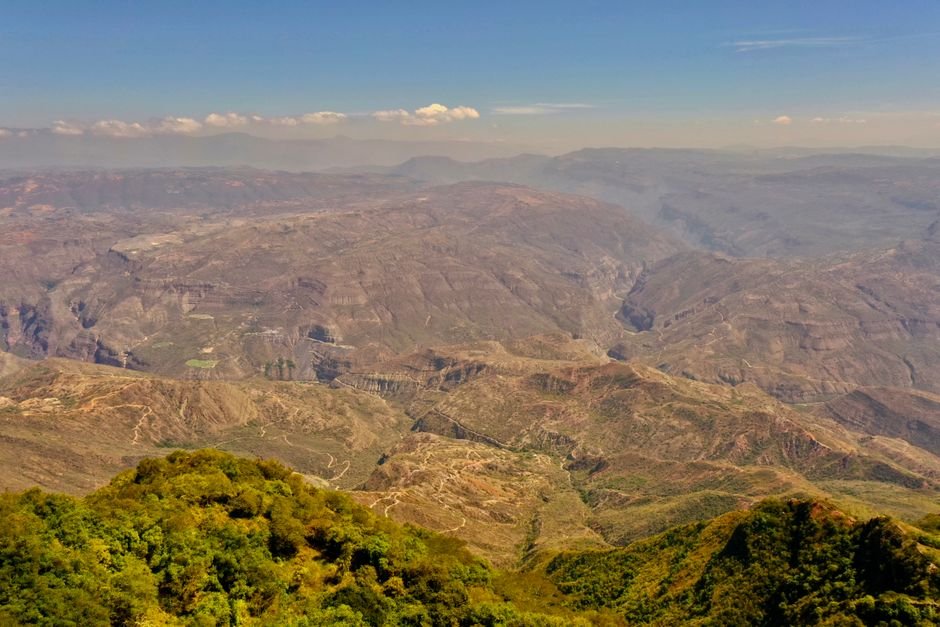
Bucaramanga sits at 959 metres above sea level on a mesa in the Cordillera Oriental, which explains both the comfortable climate (average 24°C year-round with evening breezes) and the dramatic terrain immediately surrounding it. The canyon country to the southwest and the mountains to the east make this a legitimate outdoor-activity hub - one that most international visitors skip entirely in favour of the more-marketed Colombian cities, which means it runs at a comfortable pace without the crowds.
Paragliding Over Chicamocha Canyon
The paragliding around Bucaramanga is genuinely world-class. The Mesa de Ruitoque and the ridges above the Chicamocha Canyon generate reliable thermal columns that have made this a competitive paragliding destination internationally - Colombia’s national team trains here.
For visitors, tandem flights are the most accessible option. Launch points sit at approximately 1,200 to 1,400 metres, and flights over the canyon walls run for 20 to 40 minutes depending on thermal conditions. The views down into the canyon are striking - the Chicamocha river cuts a gorge 1,500 metres deep in places, and the ochre canyon walls turn gold in afternoon light.
Cost: Approximately COP 100,000 to 160,000 (roughly USD 25–40) per tandem flight, including basic instruction. Longer extended flights cost more. Browse Bucaramanga paragliding and adventure tours on GetYourGuide for bookable packages with free cancellation.
Operators: Fly Colombia and Chicamocha Paragliding are established operators running from Mesa de Ruitoque, a 25-minute drive from central Bucaramanga. Book directly through the operators or at hotels in El Prado district.
Best time: December through February for most consistent thermals. Flights run most mornings year-round; strong afternoon winds can ground operations after 1pm.
Parque Nacional del Chicamocha (Panachi)
The national park on the canyon rim runs a 6.3km cable car across the full width of the Chicamocha Canyon - the crossing takes approximately 25 minutes one way and gives views that no road access replicates. The park also has a water park, a condor sanctuary, a replica of a traditional Guane village, and a monument to the Santandereanos killed in the War of a Thousand Days.
Entry costs approximately COP 44,000 for adults including the cable car as of 2026. Open Wednesday to Sunday 10am to 5pm (closes earlier on low-season weekdays). The park is 53km southwest of Bucaramanga - buses run from the terminal on Carrera 15 for approximately COP 12,000 each way and take 90 minutes.
The cable car itself is the main experience. The water park is oriented toward local family visits rather than foreign tourists. The condor sanctuary has a small population of Andean condors in rehabilitation - the morning feeding sessions allow closer views than most wild sightings.
Parque García Rovira (The Cathedral Square)
The Parque García Rovira in the historic centre is Bucaramanga’s oldest public space, anchored by the Catedral de San Laureano (begun 1748, reconstructed multiple times since). The park itself is modest in scale but the surrounding architecture - the Casa de la Cultura, the old city hall buildings - gives a sense of the colonial grid from which the city expanded.
The park is most lively on weekend mornings when food stalls set up and families use the space. The surrounding streets of the Centro Histórico are walkable during the day and give access to traditional shops, bakeries selling pan de bono and almojábanas, and the covered Mercado Comunal.
Note: The historic centre of Bucaramanga is smaller than Cartagena or Popayán. Allow two hours on foot to cover the main streets rather than a full day.
Parque Santander and the Modern Centre
Parque Santander in the commercial centre is the more active of the city’s main squares - surrounding cafes and ice cream shops make it a functional meeting point for locals. The Edificio Garces on the south side is worth noting as an example of mid-century Colombian modernist architecture.
From Parque Santander, the main shopping and pedestrian streets extend along Carrera 19 and Calle 35. The covered market at Galería Almacén has good fresh produce and prepared food stalls for a cheap lunch.
Floridablanca and Jardin Botanico Eloy Valenzuela
The botanical garden in the neighbouring municipality of Floridablanca (15 minutes south of Bucaramanga by bus) covers 29 hectares and is one of the better-maintained public gardens in Colombia outside Medellin. It focuses on native Andean cloud forest species, orchid collections, and medicinal plants. Entry costs approximately COP 3,000. Open Tuesday to Sunday 8am to 4pm.
The garden is worth combining with a walk around the historic centre of Floridablanca itself - the main plaza and the Iglesia de la Inmaculada Concepción are good examples of 18th-century provincial architecture rarely photographed by foreign visitors.
Mercado La Concordia
Bucaramanga’s main traditional market occupies several blocks in the older part of the city and is active every morning from around 5am to 2pm. The market is primarily functional (household produce, meat, grains) rather than tourist-focused, which makes it more interesting as a result. The prepared food section near the Calle 30 entrance has hot lunches - bandeja santandereana (rice, beans, pork, fried egg, chicharrón) for approximately COP 15,000 to 20,000.
Hormiga culona (large-bottomed ants) are sold here in small cellophane packets from March to May - toasted and salted, the taste is roughly similar to a flavourful popcorn. They are a regional product with a 2,000-year history in Santander cuisine going back to the Guane people.
Balcón de los Santanderes Viewpoint
The viewpoint at Mirador El Bochachico sits on the western edge of the mesa above the Chicamocha Canyon and gives the clearest unobstructed view of the canyon terrain without driving to the national park. It is free, accessible by car or taxi (approximately COP 20,000 from the centre), and most impressive in the late afternoon when the canyon walls are lit directly.
A second viewpoint, Mirador de Gualilo, is accessible along the same road and gives a different angle looking north toward Girón.
Girón Historic Town
The historic town of Girón, now technically a municipality within Greater Bucaramanga, sits 8km west of the city centre and has one of the best-preserved colonial centres in the Santander region. Whitewashed walls, red-tile roofs, the Iglesia San Juan Bautista (founded 1646), and a riverside setting on the Río de Oro make it a strong half-day trip.
Buses from Bucaramanga’s central terminal run frequently for approximately COP 3,000 and take 20 minutes. The town can be crowded on Sunday afternoons when it serves as a weekend escape for bumangueses. Wednesday and Thursday mornings give the quietest conditions.
Practical Notes
Climate: Bucaramanga’s 24°C average and low humidity make it one of Colombia’s most comfortable cities. Light rain is possible at any time; heavier rain falls in April to May and October to November.
Getting around: The Metrolínea BRT system connects the main districts efficiently for approximately COP 2,900 per trip. Taxis run on meters (base fare approximately COP 4,500 as of 2026). Rideshare apps (InDriver, Uber) operate and tend to cost slightly less than taxis for longer distances.
Base for adventure: San Gil for whitewater rafting and caving is 90 minutes south on frequent buses from the main terminal. Barichara - considered Colombia’s most beautiful colonial town - is a further 30 minutes from San Gil. Both are easily done as two-day extensions from Bucaramanga rather than requiring separate accommodation.