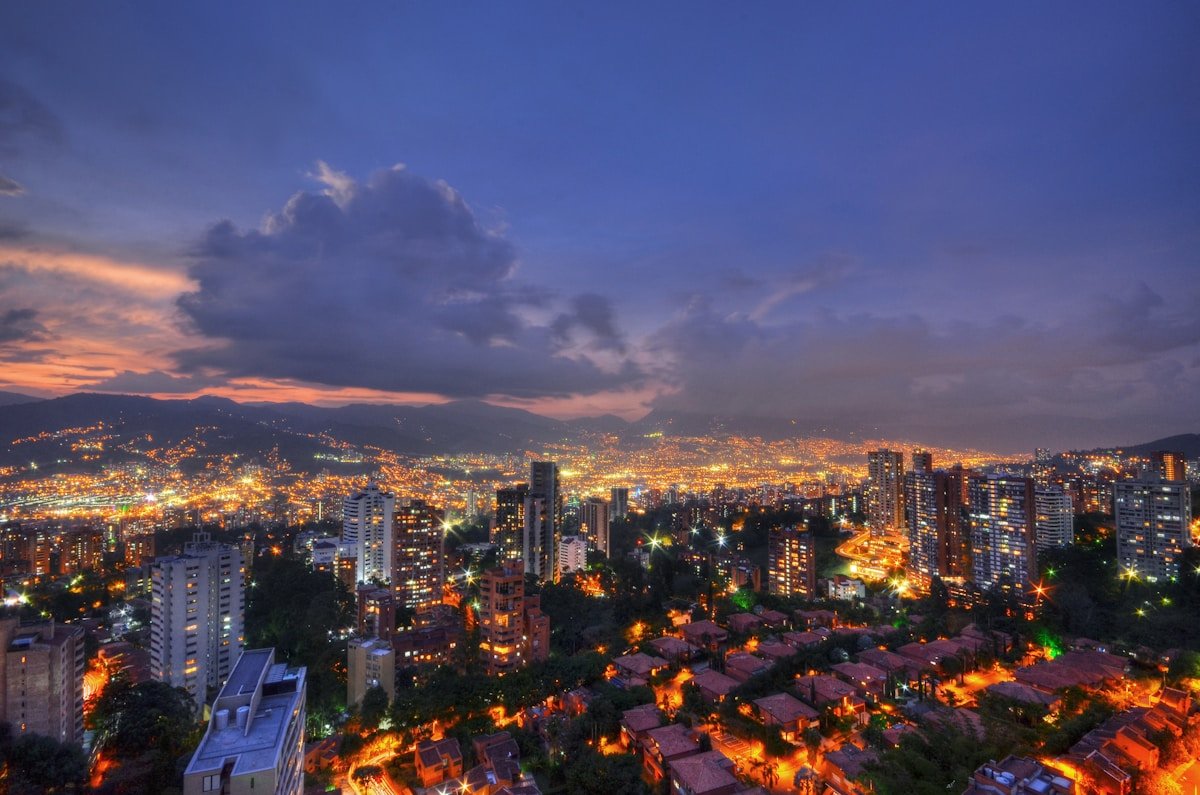
Medellin earned its reputation for urban transformation by doing things that seemed impossible - turning the most isolated and dangerous hillside comunas into connected, liveable neighbourhoods using cable cars and escalators, rebuilding public trust through design and investment rather than enforcement alone. That story is visible in the city’s fabric, and understanding it makes the place considerably more interesting than a standard city sightseeing list.
Commune 13 (San Javier)
Commune 13 is the most-visited neighbourhood in Medellin and rightly so - the transformation from one of the city’s most violent areas in the early 2000s to a thriving community with outdoor escalators, murals, music, and gastro-bars is extraordinary and the visual evidence is compelling.
The outdoor escalators (Escaleras Eléctricas de San Javier) were opened in 2011 and connect the hilltop communities to the valley metro system. At 384 metres long, they are the longest outdoor escalator system in the world and reduced a 35-minute uphill walk to a 6-minute ride. Riding them is free.
The murals along the escalator route cover the history of the neighbourhood and the broader story of conflict and transformation in Medellin. The best are along Callejón de los Sueños (Alley of Dreams) near the top of the escalators.
For context and proper explanation, take a guided tour. English-language tours run from Parque de los Pies Descalzos near the metro station for approximately COP 30,000 to 50,000 per person and last around 2.5 hours. Local community-based operators who grew up in the neighbourhood give the most substantive accounts. Tours typically include a stop at Meraki 13 Gastrobar on the upper terraces.
Getting there: Metro to San Javier station (Line B), then a short walk to the escalators. Total journey from El Poblado approximately 25 minutes.
Plaza Botero and Museo de Antioquia
Plaza Botero in the Centro district contains 23 bronze sculptures donated by Fernando Botero - the largest public collection of his work anywhere. The pieces occupy the open plaza in front of the Museo de Antioquia and are free to view at any time.
The Museo de Antioquia (Calle 52 with Carrera 52) holds the most important collection of Botero paintings and sculptures in Colombia: over 100 works donated by the artist alongside pre-Columbian pieces and colonial religious art. Entry costs approximately COP 20,000 for foreign adults as of 2026. Open Monday to Saturday 9am to 6pm, Sunday 10am to 5pm. Allow 1.5 to 2 hours.
The surrounding streets of El Centro are lively and worth exploring on foot during the day - the Palacio de la Cultura Rafael Uribe Uribe (free entry, worth seeing the interior) is two blocks away. The area is safe during business hours but less so at night.
Parque Arví and the Metrocable
The Metrocable system is both a practical transport solution and one of Medellin’s most remarkable experiences. Line K runs from the Acevedo metro station up to Santo Domingo station through the northeastern comunas - views from the cable car cabins give the best perspective on how the hillside communities are built and how the cable transformed access. The full cable ride takes approximately 15 minutes and costs the standard metro fare (COP 3,000 as of 2026 with an integrated ticket).
From Santo Domingo, a second cable line (Line L) continues uphill to Parque Arví, a 1,700-hectare nature reserve in the cloud forest above the city. The park has marked hiking trails, butterfly gardens, an artisan market on weekends, and considerably cooler temperatures than the valley floor. Entry to the cable car costs approximately COP 9,000 return from Santo Domingo (additional to the metro fare). Open Tuesday to Sunday.
Note: Line K passes through the comunas but the views from the cable car are safe at all times. Disembarking at intermediate stations on Line K is not recommended for solo visitors unfamiliar with the area.
El Poblado and Parque El Lleras
El Poblado is Medellin’s main tourist and expat neighbourhood - the hillside district of restaurants, bars, boutique hotels, and hostels that most travellers use as a base. Parque El Lleras is its central square, surrounded by restaurants and coffee shops that spill onto the pavement.
The neighbourhood itself is not a sightseeing destination but it works well as a base for everything else. The Avenida El Poblado corridor has good coffee shops for working mornings (Café Velvet and Cultor are two of the better options), and the Parque El Lleras area suits evening dining and drinks.
Parque Explora and the Planetarium
Parque Explora on Carrera 52 is a large interactive science museum aimed primarily at families but with enough genuinely interesting exhibits - including a river aquarium with Colombian freshwater species and a working TV studio you can walk through - to hold adult interest for a couple of hours.
The adjacent Planetario de Medellín runs shows on selected days. Combined entry to Parque Explora costs approximately COP 25,000 per adult as of 2026. Open Tuesday to Friday 8am to 6pm, Saturday to Sunday 10am to 7pm.
Jardín Botánico de Medellín
The Botanical Garden (Carrera 52 with Calle 73) covers 14 hectares in the heart of the city and is genuinely beautiful - particularly the Orquideorama, a canopy structure over the orchid collection that is a significant piece of contemporary architecture. Entry is free. Open Monday to Sunday 9am to 5pm. The garden gets busy on Sunday afternoons. Better on a weekday morning when the space is quieter.
Museo Casa de la Memoria
One of the most important museums in Medellin, the Casa de la Memoria (House of Memory) on Calle 51 documents the history of armed conflict in Colombia and the specific experience of Medellin from the 1980s through the early 2000s. The exhibits are thoughtful, the testimonies are powerful, and the building itself is well-designed. Entry is free. Open Tuesday to Friday 9am to 6pm, Saturday to Sunday 10am to 5pm.
This is not a comfortable museum but it is an essential one for understanding why the transformation of places like Commune 13 matters as much as it does.
La Alpujarra and the Civic Centre
The Civic Centre around the Parque de los Pies Descalzos (Barefoot Park) includes several architectural landmarks: the Palacio Municipal, the Torre Coltejer (the needle-shaped skyscraper that defines the Centro skyline), and the EEPPM headquarters building. The Barefoot Park itself is a deliberately low-tech open space with fountains, sand, and bamboo groves - the city government uses it for outdoor events. Free to enter.
Practical Notes
Metro: Medellin has the only metro system in Colombia, operational since 1995. A single fare costs approximately COP 3,000 and the system is clean, efficient, and safe. The integrated ticket covers metro, cable car lines, and some bus routes. A Cívica card (rechargeable, COP 5,500 to purchase) avoids queuing for individual tickets.
El Poblado vs. Centro: Most of the interesting sightseeing is in the Centro and northwestern districts (Commune 13, Parque Arví). El Poblado is convenient for sleeping and eating but is not where the city lives its daily life. Allocate at least a half-day for Centro.
Security: Medellin is safe in the main tourist and residential areas. Commune 13 is safe during daylight hours with or without a guide. Common sense applies: avoid displaying phones and jewellery, use the metro rather than taxis where possible, and don’t walk in unfamiliar Centro streets after dark.
Best day: Saturday - Parque Arví’s artisan market runs, the Botanical Garden is lively, and Commune 13 has the most street music and vendors.
Search hotels in Medellin on Booking.com
Book a Guided Tour
Verified GYG options for Medellin, with free cancellation, prices as of 2026:
| Tour | Duration | From Price | |
|---|---|---|---|
| Medellin: Comuna 13 Graffiti Tour, Cable Car & Street Food | 3 hours | from $39 | Book |
| From Medellin: Guatapé Day Trip with El Peñol Rock & Lunch | 9 hours | from $30 | Book |
| Browse all Medellin tours | - | - | Browse |
Prices are per person. The Guatapé day trip includes transport, guide, boat ride on the reservoir, and lunch - a full day with no logistics to arrange. For guided tours covering Commune 13, the cable car route, and Parque Arví, tours in Medellin lists community-based operators and English-language options for the main attractions.
More on Medellin: day trips from Medellin, where to stay in Medellin, Medellín Weather in March, Medellín Weather in February and Medellin travel guide.