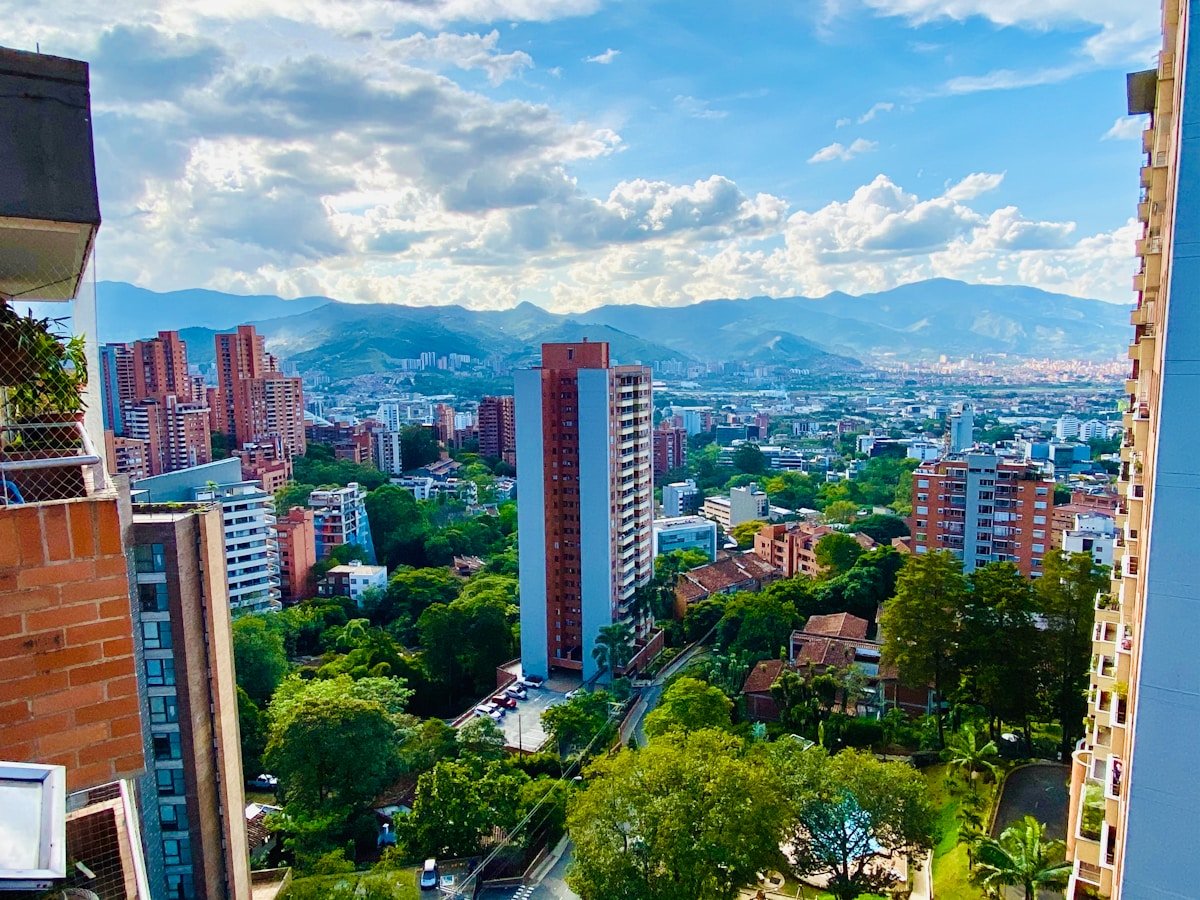
Colombia introduced a dedicated digital nomad visa category allowing remote workers to live legally in the country for up to 2 years. Before its introduction, nomads relied on the standard tourist entry (90 days, extendable to 180 days per calendar year). The visa opens a legal pathway for longer stays without the need to exit and re-enter.
This guide covers the current requirements, application process, income thresholds, costs, and how to decide whether the visa or tourist entry makes more sense for your situation.
Who Needs the Digital Nomad Visa
Tourist entry (no visa required for most nationalities): Citizens of most Western European, North American, and Australasian countries can enter Colombia as tourists without a prior visa. You receive a 90-day entry stamp on arrival at the port of entry. This can be extended once (to a maximum of 180 days in any 12-month calendar year) at a Migración Colombia office.
When the digital nomad visa makes sense:
- You plan to stay in Colombia for more than 180 days in a calendar year
- You want legal status as a remote worker rather than a tourist
- You need a formal Colombian visa for banking, property rental contracts, or other administrative purposes
- You intend to build a longer-term base in Colombia
Who the digital nomad visa does NOT suit:
- Travellers who visit Colombia for less than 90 days - tourist entry is simpler
- People earning income from within Colombia (different visa category required)
- Employees of Colombian companies (separate work permit required)
Current Visa Requirements (2026)
Requirements are set by Migración Colombia and can change. Verify current requirements directly with the Migración Colombia website or a Colombian consulate before applying, as thresholds may have updated since this guide was published.
Eligibility Criteria
-
Remote employment or freelance income from outside Colombia: You must demonstrate that your work is performed remotely for employers or clients based outside Colombia. Employees of Colombian companies or those with Colombian-source income do not qualify.
-
Minimum income threshold: As of 2026, applicants must demonstrate monthly income of approximately 3 times the Colombian minimum wage. This currently translates to roughly COP 4,200,000-5,000,000 per month (approximately USD 1,000-1,250 at current exchange rates). Income thresholds are periodically updated by Migración Colombia - verify the current figure when applying.
-
Valid passport: Minimum 6 months validity beyond the intended stay period.
-
Health insurance: Valid health insurance covering medical emergencies in Colombia for the duration of the stay.
-
Clean criminal record: Certificate of criminal record from your country of residence (apostilled), dated within 90 days of application.
Required Documents
- Complete Migración Colombia visa application form (submitted online)
- Valid passport (scanned copy of biographic page)
- Passport-sized photo (recent, meeting specification)
- Proof of income (see below)
- Employment contract or client contracts
- Criminal record certificate with apostille
- Health insurance policy covering Colombia
- Visa application fee payment confirmation
Proof of income - what is accepted:
- Last 3 months’ bank statements showing regular salary deposits
- Employment contract showing salary (for employees of foreign companies)
- Freelance contracts with clients outside Colombia
- Last 3 months of invoices for freelancers (showing billings)
- A letter from your employer on company letterhead confirming your remote employment status and salary
All documents not in Spanish require a certified Spanish translation.
Application Process
Step 1: Gather Documents
Collect all required documents. Note the 90-day validity requirement on the criminal record certificate - time this carefully if there is any processing delay.
Step 2: Get Documents Apostilled
Documents from your home country (criminal record certificate, birth certificate if required, employment letters) require an apostille stamp to be recognised in Colombia. In the US, apostilles are issued by state Secretary of State offices. In the UK, by the Foreign, Commonwealth & Development Office. Processing time varies by country: 3-10 business days typically.
Step 3: Certified Translation
Any document not in Spanish requires a certified Spanish translation by a professional translator. Budget approximately USD 30-80 per document depending on length.
Step 4: Submit Online Application
Visa applications are submitted through the Cancillería de Colombia online visa portal (not through Migración Colombia directly). Create an account, complete the application form, and upload all documents as PDFs. The system accepts files up to a specified size limit.
Pay the visa study fee: approximately USD 55 as of 2026 (non-refundable even if visa is denied).
Step 5: Wait for Processing
Typical processing time is 10-20 business days. Migración Colombia may request additional documentation (known as a requerimiento) - respond within the specified deadline (typically 10 business days) or the application is rejected. If approved, a digital visa document is issued. No physical visa stamp in your passport is issued at this stage.
Step 6: Entry and Initial Registration
On arrival in Colombia with the approved visa, you receive an entry stamp. Within 15 calendar days of entry, you must register with Migración Colombia to obtain your Cédula de Extranjería (foreign national ID card). This is done at a Migración Colombia office in person.
Cédula de Extranjería costs: Approximately COP 200,000-250,000 for the card as of 2026. Bring passport originals, visa document, entry stamp evidence, and photos to the appointment.
Step 7: Cédula de Extranjería
The Cedula de Extranjeria (CE) is your formal Colombian ID card. With it you can:
- Open a bank account at most Colombian banks
- Rent an apartment under a formal lease contract
- Register for utilities
- Access healthcare under the subsidised system with some limitations
Costs Summary
| Item | Approximate Cost (2026) |
|---|---|
| Visa study fee | USD 55 |
| Document apostilles (3-5 docs) | USD 100-250 |
| Certified translations | USD 90-250 |
| Health insurance (annual) | USD 600-1,500 |
| Cédula de Extranjería | COP 200,000 (approximately USD 50) |
| Legal/immigration consultant (optional) | USD 200-600 |
| Total (approximate range) | USD 1,045-2,705 |
The range varies significantly based on how many documents need apostilling and translating, whether you use a lawyer, and which health insurance you choose.
Tourist Entry vs Digital Nomad Visa: Which to Choose
| Factor | Tourist Entry | Digital Nomad Visa |
|---|---|---|
| Maximum stay | 180 days per calendar year | Up to 2 years |
| Process complexity | None - on arrival | Document-heavy, 4-6 weeks |
| Upfront cost | None | USD 1,000-2,700 |
| Banking access | Limited (some banks, case-by-case) | Yes, with Cedula |
| Property rental | Informal arrangements | Formal lease possible |
| Tax implications | Non-resident (under 183 days) | Review with accountant |
| Repeat visits | Exit and re-enter | Live continuously |
Choose tourist entry if: You stay under 180 days, do not need formal Colombian documentation, and plan to travel through or base yourself here for a few months before moving on.
Choose the digital nomad visa if: You plan a 6-month to 2-year stay, want Colombian banking access, need a formal rental contract, or want legal clarity about your status.
Tax Considerations
Colombia taxes residents on worldwide income when they spend more than 183 days in the country in a 12-month period. This applies regardless of visa type - a digital nomad visa holder who spends 200 days in Colombia in a calendar year may be subject to Colombian income tax on global income.
The Colombian income tax rates for residents are:
- Up to approximately COP 38,600,000/year: 0%
- COP 38,600,000 to COP 58,000,000: 19%
- Above that: progressive to 39%
This is a complex area. The digital nomad visa does not automatically resolve tax obligations. Speak with a Colombian accountant (contador tributario) before applying if you plan to stay beyond 183 days. Some nomads structure their stays to remain under 183 days precisely to avoid Colombian tax residency.
Extending or Renewing the Visa
The digital nomad visa is issued for up to 2 years. Extensions require re-application through the same process. You cannot extend the visa from within Colombia once it expires - allow sufficient processing time before expiry.
Hiring an Immigration Lawyer
The application process is manageable independently if you are organised with documents. However, errors in the application (missing documents, incorrect translations, incomplete forms) cause rejections and wasted fees. An immigration consultant typically charges USD 200-600 for a full application service. Given that the visa itself costs USD 1,000-2,000+ in preparation, professional help is worth considering.
What a lawyer helps with:
- Confirming current income threshold and requirements
- Preparing the application form correctly
- Advising on document apostille requirements by country
- Responding to requerimientos quickly
- Coordination of Cédula appointment
Immigration law firms operating in Bogota and Medellin that serve the international community include:
- EasyLegal Colombia (Medellin and online)
- MigrationCo (Bogota)
- Multiple solo immigration attorneys available on platforms like Expats Colombia community pages
Healthcare in Colombia for Visa Holders
Visa holders are required to have health insurance for the duration of their stay. Options:
International health insurance:
- SafetyWing: approximately USD 45-100/month depending on plan and age; includes emergency coverage
- Cigna Global: more comprehensive, approximately USD 150-400/month
- Allianz Care: similar range to Cigna
You can also compare travel insurance for Colombia to find a policy that meets the visa requirement for health coverage during your stay.
Local Colombian insurance (EPS - Entidad Promotora de Salud): Available to Cédula holders. Monthly contributions are income-based. The quality of public EPS varies significantly by city; Medellin’s EPM-based health system is considered good. Private health plans in Colombia cost approximately COP 150,000-400,000/month for basic coverage as of 2026.
For most nomads, international health insurance provides better coverage for emergency evacuation and treatment outside the Colombian public system, and satisfies the visa requirement.
Frequently Asked Questions
Can I work for Colombian clients on a digital nomad visa? The digital nomad visa requires income sourced from outside Colombia. Working for Colombian clients while on this visa is a grey area at minimum - consult an immigration lawyer. Colombian-source income typically requires a different visa category.
Is the Colombia digital nomad visa similar to other countries’ nomad visas? The Colombian visa shares similar principles with Costa Rica’s digital nomad visa and other Latin American equivalents. The income threshold in Colombia is lower than in some European programs. The 2-year maximum duration is standard for the region.
Can I bring my family on a digital nomad visa? Dependants (spouse, children) can apply for dependent visas linked to the main digital nomad visa holder. Each dependant requires separate application and documentation. The process is similar to the main application. Once you have confirmed your Colombia plans, a Colombia eSIM lets you activate data before landing - helpful for navigating Migración Colombia appointments and unfamiliar city logistics on arrival.
What if my visa application is rejected? Rejection reasons are provided in the denial notification. Common reasons include insufficient income documentation, expired or un-apostilled documents, and missing information. You can re-apply addressing the specific deficiency. The study fee is non-refundable on rejection.