Medellin’s reinvention over the past three decades - from one of the world’s most violent cities to a global model of urban innovation - is the story that draws visitors as much as any individual sight. The best way to understand it is on foot, starting in the hillside barrio of Comuna 13 and ending with a cable car ride over the red-brick rooftops of the city’s northern comunas.
Comuna 13: The Street Art Neighbourhood
Comuna 13 (San Javier) was, until the mid-2000s, one of Medellin’s most dangerous barrios - contested territory between paramilitary groups, guerrilla fighters, and the government. In 2002, military operation Orión forcibly reclaimed the neighbourhood. What followed was decades of community-led renewal, much of it expressed through muralism and graffiti.
Today, the outdoor staircases of Las Escaleras Eléctricas - a chain of six outdoor escalators installed in 2011, connecting the hillside barrio to the metro network - are flanked by murals stretching hundreds of metres. Local artists painted them as an act of pride and reclamation.
What to see in Comuna 13:
- El Corazón de la 13 - a large mural at the top of the escalators depicting the neighbourhood’s history and its women
- Paisa Tours section - a stretch of alleyways off the escalator route dense with tags, throw-ups, and full walls from Medellin’s prominent graffiti crews
- Hip-hop performances - buskers and young dancers regularly perform along the tourist strip; this is authentic, not staged for visitors
- Mirador viewpoint - at the top of the escalators, a terrace with views over the rooftops and valley
Guided tours of Comuna 13 cost approximately COP 60,000–100,000 (around USD 15–24) per person for a 2–3 hour walking tour, usually including transport from El Centro.
Reputable operators as of 2026:
- Real City Tours Medellin - 3-hour English-language tour, departs from Parque de las Luces; approximately COP 80,000 per person
- Zippy Tours - smaller groups, emphasis on graffiti context and history; approximately COP 90,000 per person
- Free Walking Tour Medellin - tip-based, less narrative depth but a solid introduction; departs from Parque Berrio metro station at 10 am and 2 pm
Browse Medellin city tours on GetYourGuide to compare Comuna 13 and cable car options with instant booking and cancellation flexibility.
Getting there independently: Take the Metro to San Javier station (Line B, roughly 20 minutes from El Centro). From the station, follow signs for the escalators uphill. No entry fee for the escalators themselves.
Metrocable: Riding Over the Comunas
Medellin’s Metrocable system connects steep hillside barrios to the Metro network via gondola, reducing journey times that once required an hour of walking to under 10 minutes. The cables are part of the public transit system - not a tourist attraction in themselves - which makes them all the more interesting to ride.
Line K (Acevedo–Santo Domingo) is the oldest and most visited cable line, departing from Acevedo Metro station on the north side of the city. The 16-minute ride climbs from the river valley to the Parque Biblioteca España at 1,800 metres elevation, passing over densely packed brick housing with no street-level access points. The views over the Aburrá Valley are extraordinary, particularly in the late afternoon.
Metro fare: COP 3,300–3,700 (approx. USD 0.80–0.90) per trip on the integrated Civica card system. A one-day visitor pass costs approximately COP 10,000 and covers unlimited Metro and cable car rides.
Line L continues from Santo Domingo station to the Parque Arví, a nature reserve and artisan market at 2,400 metres. Entry to Parque Arví costs approximately COP 6,000 per person. The park has walking trails and a weekend craft market - combine with Line K for a full half-day excursion.
Botero Plaza and El Centro
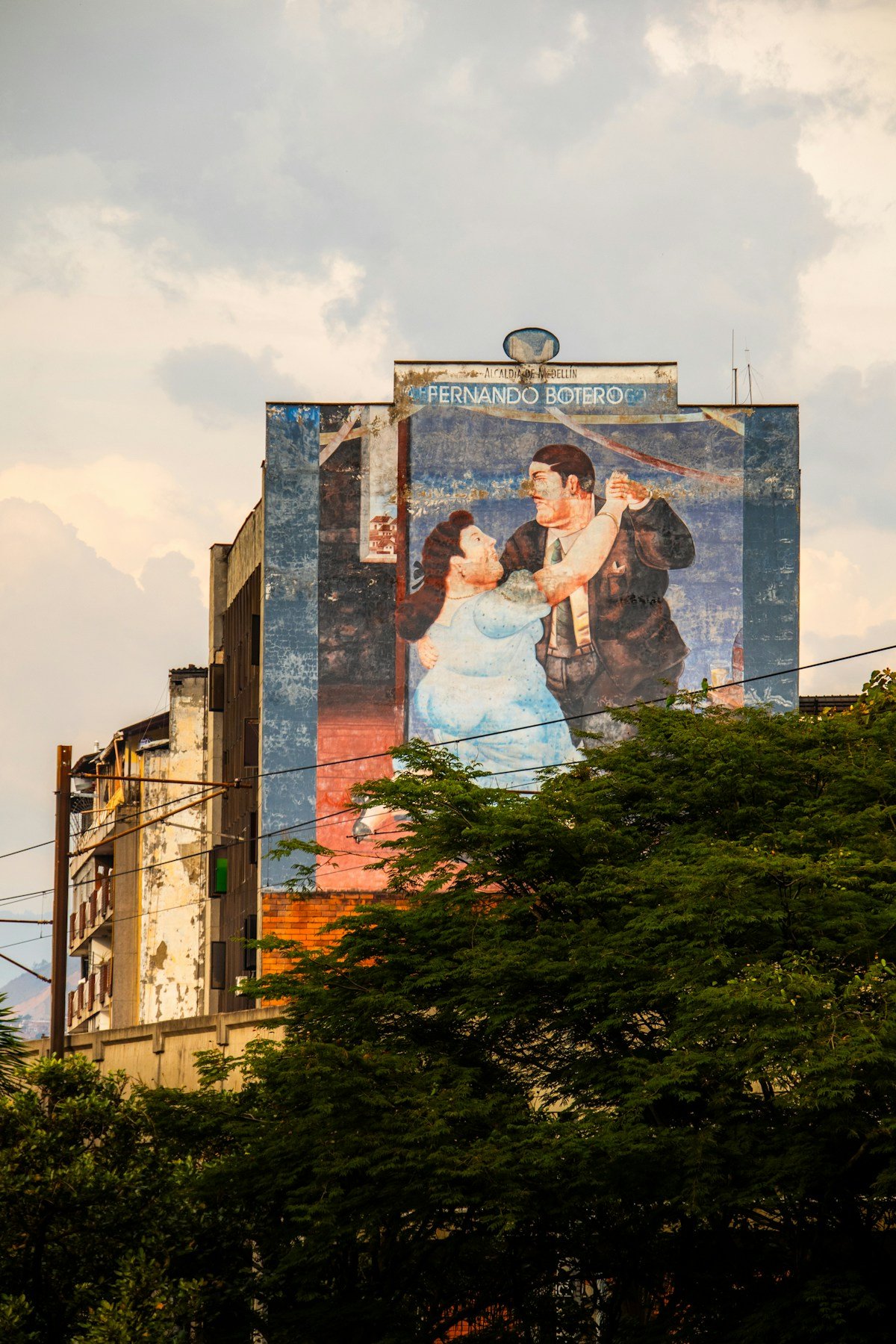
Any honest Medellin city tour should include Plaza Botero in El Centro, an open square containing 23 bronze sculptures donated by artist Fernando Botero - Medellin’s most famous son. The adjacent Museo de Antioquia holds more than 100 Botero paintings and sculptures (entry approximately COP 25,000, closed Monday).
Parque de las Luces, two blocks east, is a civic square surrounded by restored public buildings that anchor El Centro’s ongoing rehabilitation. The neighbourhood is busy and commercial - a very different energy from El Poblado, where most tourists base themselves - and worth an hour of walking even without a guide.
Full-Day Combined Tour
Several operators run a combined day tour covering:
- Morning: El Centro walking tour (Botero Plaza, La Candelaria, Parque de las Luces)
- Midday: Cable car Lines K and L, Parque Arví
- Afternoon: Comuna 13 guided graffiti tour
Price for full-day combined tours: approximately COP 180,000–240,000 (USD 44–58) per person including transport, entry fees, and guide. Medellin City Tours and Gringo Tuesdays both offer versions of this itinerary.
Book a Guided Tour
A local guide adds significant value in Commune 13 - the murals have specific histories that are not obvious without explanation, and community-based guides grew up in the neighbourhood. Verified GYG options with free cancellation, prices as of 2026:
| Tour | Duration | From Price | |
|---|---|---|---|
| Medellin: Comuna 13 Graffiti Tour, Cable Car & Street Food | 3 hours | from $39 | Book |
| Medellin City Tour & Comuna 13 Experience | 9 hours | from $73 | Book |
| Browse all Medellin tours | - | - | Browse |
Prices are per person. Most tours depart from El Poblado or the city centre with flexible pick-up points.
Difficulty and Logistics
Difficulty: Easy to moderate. Walking is on paved streets and staircases. The escalators remove the main climb in Comuna 13.
Duration: Half-day (3–4 hours) for one area; full day (6–8 hours) for a combined tour.
Best time: Mornings are cooler. Medellin sits at 1,500 metres and rarely gets uncomfortably hot - average temperature year-round is around 22°C. The city has no true dry or wet season; light afternoon rain is common year-round.
Safety: Stick to the established tourist route in Comuna 13. The graffiti corridor around the escalators is very well-visited and safe during daylight. Avoid venturing off the marked paths independently, particularly in lower sections of the barrio after dark.