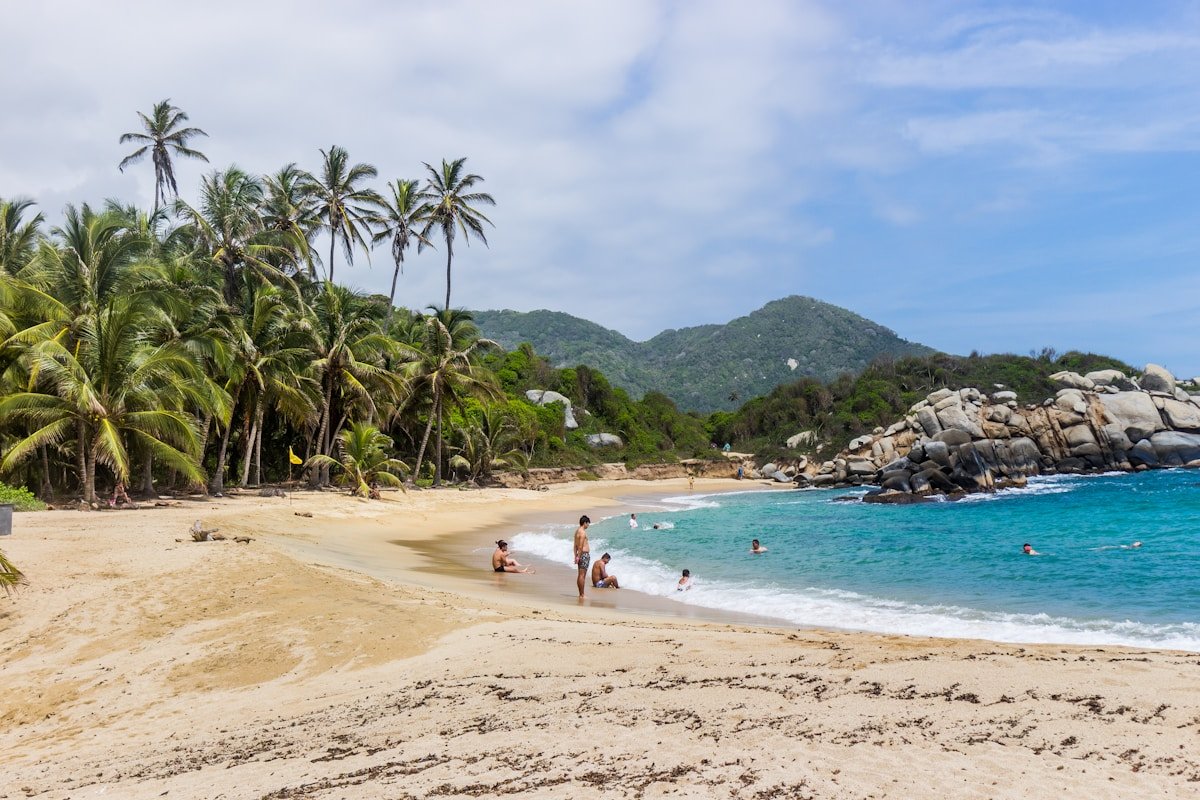
Tayrona National Natural Park (Parque Nacional Natural Tayrona) stretches along 85 kilometres of Colombia’s Caribbean coast between the city of Santa Marta and the Palomino River. It is one of the most visited protected areas in Colombia, and for good reason: the park combines jungle-covered mountains falling directly into the Caribbean Sea with a string of isolated beaches sheltered behind giant granite boulders and coral reefs.
The park covers approximately 15,000 hectares of land and 3,000 hectares of ocean. Within its boundaries: cloud forest and tropical dry forest, two rivers, more than 300 bird species, jaguars, pumas, howler and capuchin monkeys, and the remains of ancient Tairona settlements predating the Spanish conquest. The beach section that most visitors come for - the stretch from Arrecifes to Cabo San Juan del Guía - is a 1.5–2.5 hour walk from the park entrance.
Essential Information at a Glance
| Detail | Information |
|---|---|
| Location | 34 km from Santa Marta city centre |
| Entry fee (foreigners) | Approximately COP 64,000 as of 2026 |
| Entry fee (Colombians) | Approximately COP 19,000 as of 2026 |
| Opening hours | 8am–5pm (no new entries after 4pm) |
| Park closure | Approximately February–March each year (varies) |
| Best months | December–April (dry season) |
| Hike to Cabo San Juan | 1.5–2.5 hours from entrance depending on starting point |
Important: The park closes for a period each year - usually 4–6 weeks between approximately February and mid-April - to allow ecological recovery after the peak high season. The exact dates vary annually. Check with PNN Colombia (the national parks authority) or your hostel in Santa Marta before travelling, especially in February.
Getting There from Santa Marta
By bus: Minibuses and colectivos to Tayrona depart from the Mercado Público and from near the Parque de los Novios in Santa Marta throughout the morning. Cost: approximately COP 12,000–16,000 per person. Travel time: 45–60 minutes to the main El Zaíno park entrance. Return buses run throughout the afternoon; the last reliable departure is around 4:30–5pm.
By taxi: A private taxi from Santa Marta to El Zaíno runs approximately COP 50,000–80,000. Return journeys must be arranged in advance - few taxis wait at the park.
By organised tour: Day tours from Santa Marta are the easiest option - all logistics handled, no navigating buses to the park entrance, and guides who know which trails have open swimming. GYG-listed options with free cancellation, prices as of 2026:
| Tour | Duration | From Price | |
|---|---|---|---|
| From Santa Marta: Tayrona National Park Guided Tour | 11 hours | from $78 | Book |
| Tayrona Park & Cabo San Juan - Group Tour (Sendaria Travel) | 10.5 hours | from $57 | Book |
| Santa Marta: Tayrona Park Private Hike to Cabo San Juan | 9 hours | from $152 | Book |
| Browse all Santa Marta tours | - | - | Browse |
Tours typically include hotel pick-up in Santa Marta, transport to El Zaíno, park entry, and a bilingual guide. Note that the park charges a foreigner entry fee (COP 55,000 as of 2026) on top of any tour price - check whether this is included before booking.
From Cartagena: 3.5–4.5 hours by bus to Santa Marta (COP 35,000–55,000), then onward to the park. An early departure from Cartagena (5–6am) allows a full day at the park.
Inside the Park: The Route to the Beaches
El Zaíno Entrance to Cañaveral (30 minutes on foot or by shuttle)
From the main El Zaíno entrance, you can walk or take a horse-drawn cart shuttle to Cañaveral (approximately COP 6,000–10,000 by cart). Cañaveral has a small visitor centre, toilets, a basic restaurant and the start of the main hiking trail.
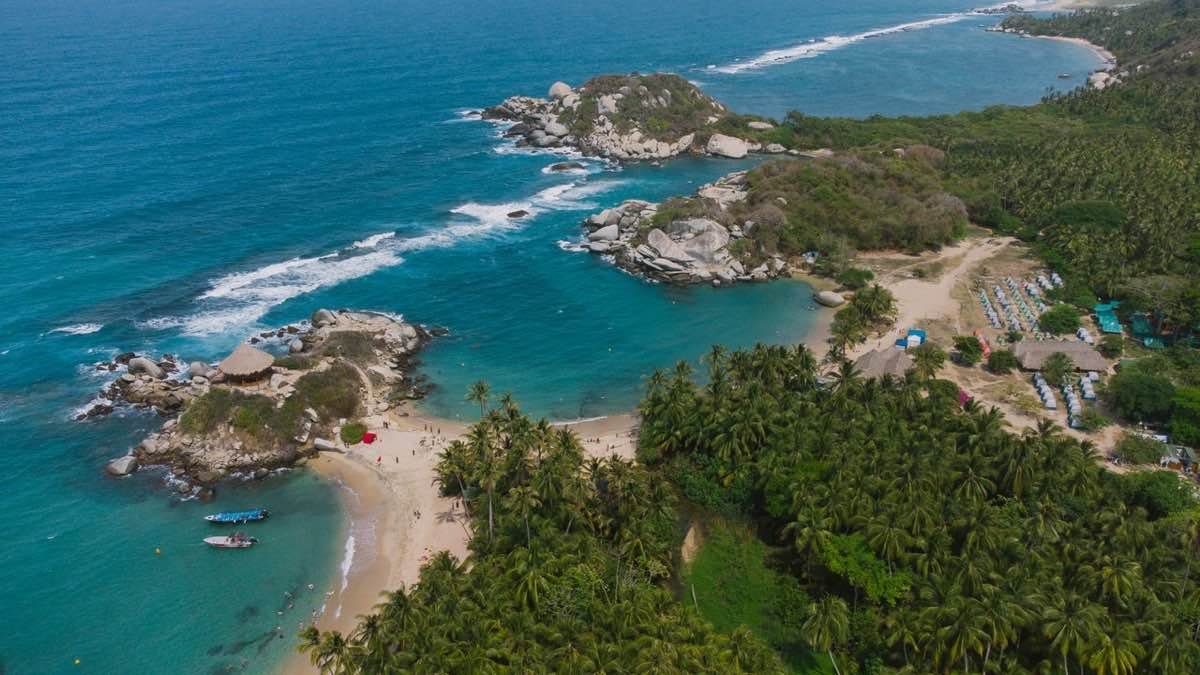 The coves around Cabo San Juan del Guia from above.
Note: Swimming is not permitted at Cañaveral beach itself - the current there is strong and there have been fatalities. The sign warnings are serious; do not ignore them. Swim only at designated safe beaches further along the trail.
Cañaveral to Arrecifes (30–45 minutes)
The trail passes through dry tropical forest with excellent birdwatching opportunities. Howler monkeys are frequently heard (and sometimes seen) along this section. Arrecifes has accommodation, hammock rental, a restaurant and the park’s most prominent “no swimming” signs - the surf here looks inviting but the rip currents are among the strongest in the park.
Arrecifes to La Piscina (20 minutes)
La Piscina (“the pool”) is a small, sheltered cove with calm, swimmable water. This is where most day visitors swim. The cove is enclosed by granite boulders and a shallow reef; the water is typically calm even when the open ocean is rough. The name is apt - on a flat day, the water is genuinely pool-like.
La Piscina to Cabo San Juan del Guía (20–30 minutes)
The final section to Cabo San Juan is the most scenic stretch of the trail. Cabo San Juan is a headland with two beaches divided by a large granite boulder: one facing north (rougher, more powerful surf) and one facing southwest into a sheltered cove (calmer, better for swimming). A palm-thatched platform structure on the boulder between the beaches is one of the most photographed spots in Colombia.
The total hiking time from El Zaíno entrance to Cabo San Juan is approximately 1.5–2.5 hours depending on pace and stops.
The Beaches
La Piscina
Calm, sheltered, swimmable. The best swimming beach for most visitors, especially children and nervous swimmers. Sometimes crowded by early afternoon. Gets direct afternoon sun. No snack vendors directly on the beach - bring water and food.
Cabo San Juan del Guía
The park’s iconic beach. Two coves, one calm and one with surf, divided by a granite boulder headland. The southwest-facing cove is swimmable in normal conditions. Sunrise here (facing northeast toward open ocean) is outstanding. The restaurant at Cabo San Juan serves grilled fish, arroz con coco (coconut rice) and fresh juices at approximately COP 20,000–45,000 per plate - pricey by mainland standards but reasonable given the location.
El Pueblito (Chairama) - Off the Beach Trail
A less-visited section of the park reached by hiking uphill from Cabo San Juan (approximately 45 minutes). El Pueblito (officially Chairama) contains the remains of a pre-Columbian Tairona settlement: stone circles, terracing and pottery fragments. A Kogi indigenous guide is required to visit and is usually arranged by park staff at the entrance; confirm availability before committing to this route. The hike is steep and exposed - not recommended in the midday heat.
Accommodation Inside the Park
Staying overnight inside Tayrona allows you to reach the beaches before the day-visitor crowds and to experience the jungle at dawn and dusk - the birdwatching window.
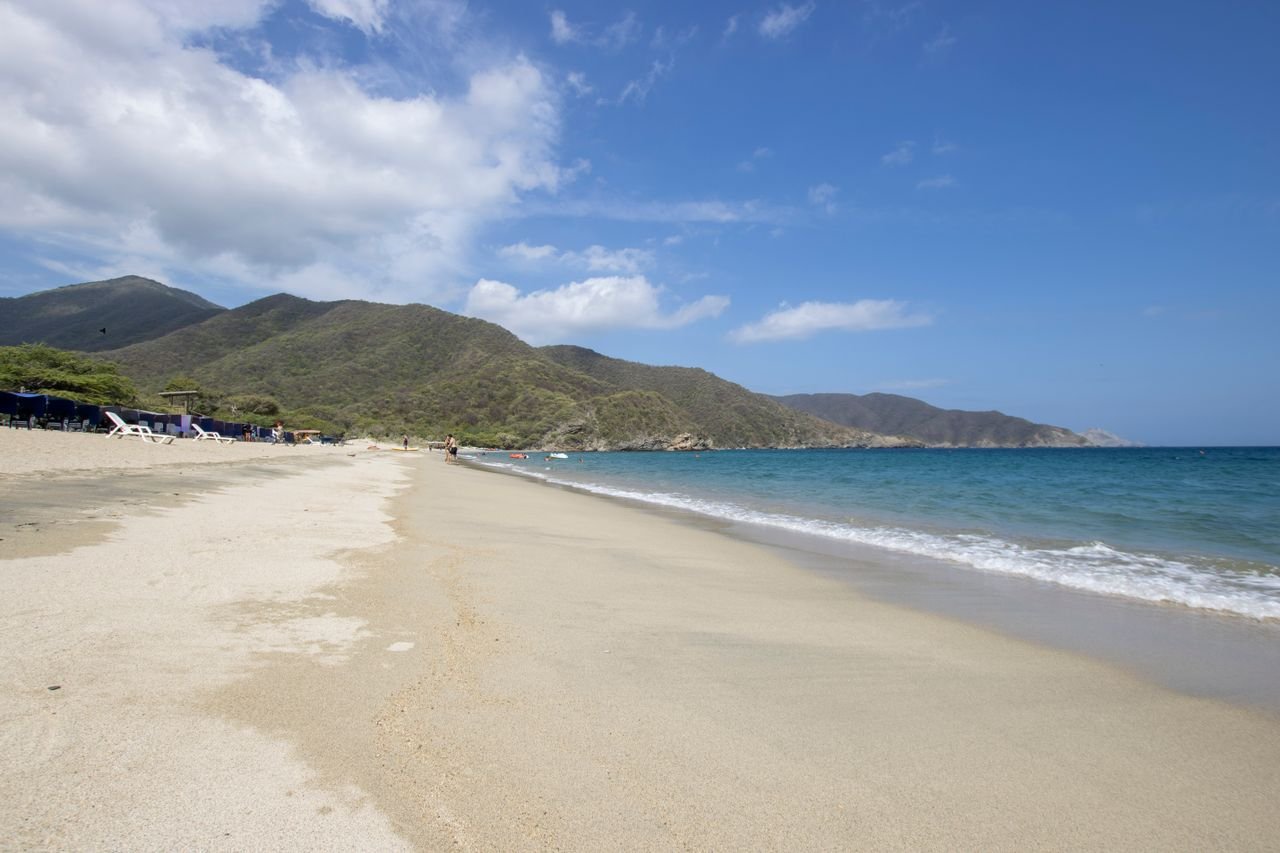 Calm stretches of sand lie between the rocky headlands.
Ecohabs at Cañaveral (Aviatur): The park’s official eco-cabins, operated by Aviatur. Thatched-roof cabins with en-suite bathroom, fans (no air conditioning), and a restaurant. Prices from approximately COP 580,000–950,000 per night for a double in 2026. Booking is essential weeks in advance in December–January and at Semana Santa.
Camping and hammocks at Cabo San Juan: The cheapest overnight option inside the park. Hammock rental with mosquito net under the palm-thatched platform: approximately COP 40,000–60,000 per person per night. Tent camping is also possible (bring your own, or rent at the site): approximately COP 30,000–50,000 per person. The platform at Cabo San Juan is worth paying for - it has better ventilation and better views than ground camping.
Arrecifes: Basic hammock rental and a few bungalows at approximately COP 120,000–220,000 per person. Less scenic than Cabo San Juan but quieter.
Book all overnight accommodation through the PNN Colombia website or via the on-site administrator - do not rely on third-party platforms for availability accuracy.
What to Bring
- Cash: very few ATMs inside the park; bring enough for food, drinks and tips
- Water (minimum 2 litres per person - buy at the entrance kiosk)
- Sunscreen SPF 50+ (reef-safe preferred in the ocean)
- Insect repellent (DEET-based; mosquitoes and sand flies are active at dawn and dusk)
- Comfortable sandals or lightweight trainers (the trail is wide and flat; hiking boots are not necessary unless you are doing El Pueblito)
- Dry bag or ziplock bags for electronics near the water
- Snacks - the park restaurants are the only food source and they are expensive
Wildlife and Birdwatching
Tayrona has exceptional birdwatching even for non-specialists. The transition zone between dry and humid tropical forest makes it a site of unusually high diversity - over 300 species recorded. Commonly seen species include toucans (yellow-throated toucan), scarlet macaws, various hummingbirds, osprey and magnificent frigatebirds over the coast. Howler and white-faced capuchin monkeys are frequently visible on the trail to Cabo San Juan. Tayras (a large weasel-like animal) occasionally cross the path near Arrecifes. Jaguars and pumas exist in the park but sightings are rare and largely confined to interior sections away from the beach trail.
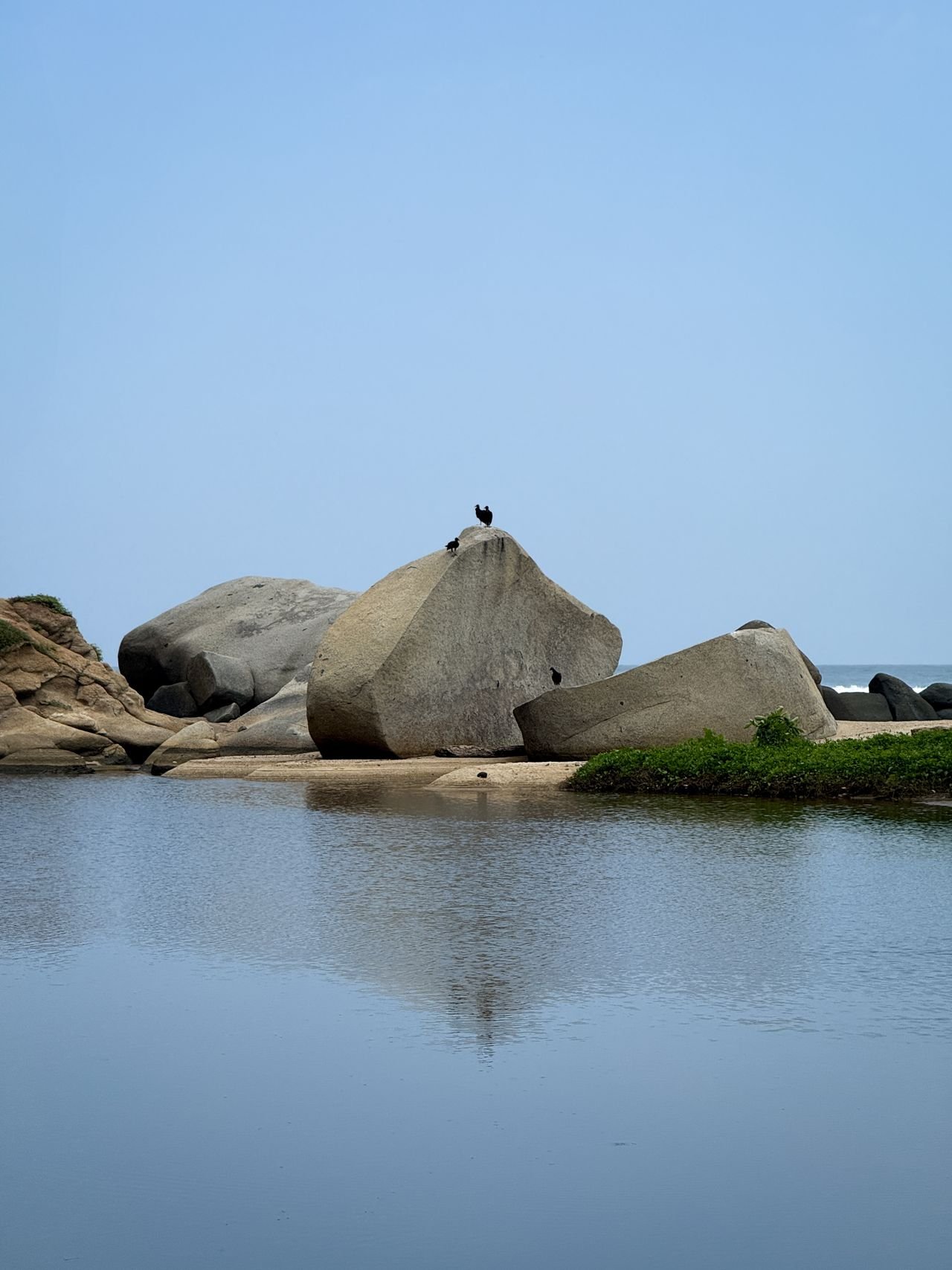 Granite boulders are the signature feature of Tayrona’s shoreline.
Day Trip vs Overnight Stay
Day trip: Feasible from Santa Marta if you depart by 7:30–8am and return by 4:30pm. Gives enough time for the full beach trail and a swim at La Piscina or Cabo San Juan. The limitation is that the best light and wildlife is in the early morning before most day visitors arrive.
Overnight: Strongly recommended if you have the flexibility. The trail to Cabo San Juan in the early morning (before 7am, after the overnight guests have it to themselves) is a different experience from the midday crowds. Staying 2 nights allows for El Pueblito or a more relaxed pace. Make sure your travel insurance for Colombia covers trekking and activity days before you go.