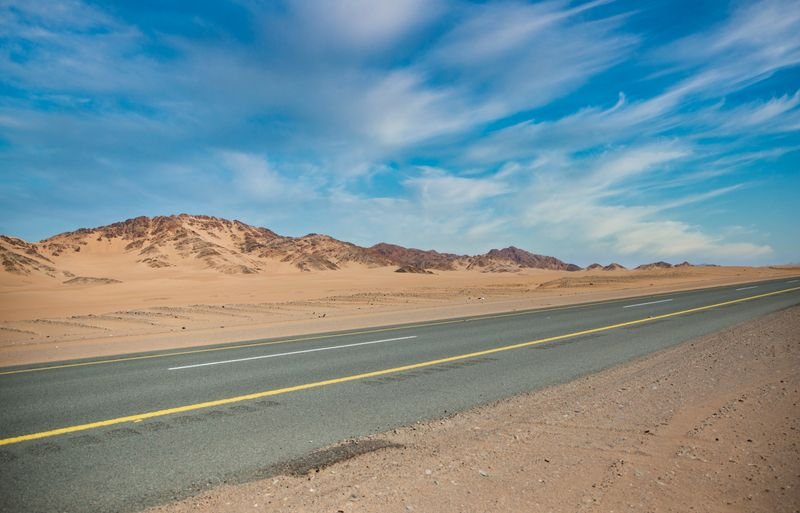
La Guajira is the most logistically demanding region in Colombia. The northernmost point of South America, it is a semi-arid desert peninsula where paved roads end at Uribia and the rest of the journey happens on sand tracks, dry riverbeds, and unmarked paths through indigenous Wayuu territory. Getting here right means understanding which parts require a 4WD, what the distances actually involve, and why cash is the only currency that works past the last town.
Using Riohacha as Your Base
Riohacha, La Guajira’s capital, is where every La Guajira trip starts and ends. The city has the region’s main bus terminal, ATMs, pharmacies, fuel stations, and the best range of hotels. Flights connect Riohacha to Bogotá daily (approximately 1 hour 45 minutes) via Avianca and LATAM; the Almirante Padilla Airport is 15 minutes from the city centre by taxi (COP 15,000–20,000).
From Riohacha you can reach:
- Uribia - 80 km northeast, approximately 1.5 hours by paved road (last town before the desert tracks)
- Cabo de la Vela - 155 km from Riohacha, approximately 3 to 3.5 hours total (1.5 hours paved to Uribia, then 1.5–2 hours on dirt track)
- Punta Gallinas - 260 km from Riohacha, approximately 5 to 6 hours total including the dirt road and a short boat crossing
These times assume a well-maintained 4WD in dry conditions. Rainy season (September to November) can add 1 to 2 hours per leg as tracks flood.
The 4WD Requirement Beyond Uribia
Everything past Uribia requires a high-clearance 4WD vehicle. The tracks to Cabo de la Vela alternate between compacted red clay, loose sand, and dry river crossings. At Punta Gallinas, the final approach crosses deep dune fields where even experienced drivers get stuck.
There is no car rental that will take you onto these tracks with a standard vehicle, and no insurance company will cover desert driving in La Guajira. The options are:
- Guided tour with 4WD included - the standard and recommended approach for all visitors
- Hire a local driver with a 4WD - possible through your Riohacha hotel, typically COP 350,000–500,000 per day for the vehicle and driver; confirm the driver knows the route to Punta Gallinas specifically, as not all do
- Independent 4WD rental - theoretically possible from Barranquilla or Cartagena, but operators may restrict desert use in their contracts; factor in fuel (long distances, poor fuel economy on sand) and note that fuel is available in Uribia but nothing beyond
Riohacha to Cabo de la Vela
Distance: 155 km | Paved: 80 km (to Uribia) | Dirt track: 75 km
The track from Uribia to Cabo de la Vela crosses the flat Guajira scrubland. In the dry season (December–April) it is straightforward in a 4WD - well-worn and navigable without a guide if you know the direction. In the rainy season, sections flood and the clay surface becomes slippery. The journey takes 1.5 to 2 hours from Uribia in dry conditions.
Cabo de la Vela is a small Wayuu fishing village with a handful of rancherías (Wayuu guesthouses) directly on the beach. The kite-surfing spot at Playa del Pilón de Azúcar and the lighthouse walk above the bay are both within 2 km of the village on foot.
Fuel note: Top up in Riohacha and again in Uribia. There is no fuel beyond Uribia.
Riohacha to Punta Gallinas
Distance: 260 km | Journey time: 5 to 6 hours
Punta Gallinas is the northernmost point of mainland South America and requires the most planning of any destination in La Guajira. The route goes via Uribia and then northeast through the desert toward Puerto Bolívar before turning north into the dunes.
The final section crosses the Bahía Hondita - a shallow tidal bay - by small motorboat (approximately 10 minutes, usually included in tour packages). On arrival, a short walk through dunes brings you to the famous Taroa dunes, where orange sand drops directly into the Caribbean Sea.
Most visitors to Punta Gallinas stay 1 or 2 nights at one of the family-run lodges near the beach. Options include Hospedaje Punta Gallinas and several smaller unnamed rancherías - book through your tour operator or directly by phone (WhatsApp works intermittently in this area with a Claro or Tigo SIM). Prices are typically COP 80,000–150,000 per person per night including meals, as of 2026.
Ranchería Accommodation Logistics
Beyond Riohacha, accommodation is almost exclusively rancherías - Wayuu family guesthouses, typically comprising a hammock shelter, basic meals of fish and fried plantain, and shared outdoor facilities. They are run by Wayuu communities, mostly off-grid (solar and generator), and payment is exclusively cash.
Key logistics to know:
- Cash only - no card machines exist at rancherías or in any settlement beyond Uribia
- Electricity - generators typically run from 6pm to 10pm; charge devices during those hours
- Water - brought in by truck; use sparingly and do not expect showers with pressure
- Booking - most rancherías can be booked through WhatsApp; your tour operator will handle this as part of a package, which is the simplest approach
- Food - rancherías include meals by default; dietary restrictions are very difficult to accommodate in this remote area
The Cash Warning
There are no ATMs past Uribia. This is not an edge case - it is a firm practical reality that catches many visitors unprepared. Withdraw sufficient cash in Riohacha before departure:
- Riohacha ATMs: Bancolombia (Calle 1 near the seafront), Davivienda, Banco de Bogotá (city centre)
- Daily ATM limits apply - if you need a large sum, allow a day in Riohacha to make multiple withdrawals
- US dollars and euros are not reliably accepted outside of large cities; bring Colombian pesos
Budget guide per person for a standard 3-day/2-night Cabo de la Vela + Punta Gallinas tour:
- Tour cost: COP 350,000–600,000 (depending on group size, operator, itinerary)
- Additional meals/drinks: COP 50,000–100,000
- Tips for ranchería hosts and boat captains: COP 20,000–50,000
- Emergency reserve: COP 150,000 minimum
Choosing a Tour Operator in Riohacha
La Guajira tours range from well-run operations with insured vehicles and knowledgeable guides to informal arrangements with unlicensed drivers. The difference matters at Punta Gallinas - a driver who doesn’t know the route across the dunes risks getting stuck overnight.
What to look for:
- Licensed operators registered with Colombia’s tourism authority (ask to see the RNT - Registro Nacional de Turismo number)
- Group size - smaller groups (4–8) mean more flexible schedules and faster driving
- Vehicle condition - ask about the age and tyre condition of the 4WD; older vehicles with worn tyres fail more often on soft sand
- What’s included - confirm whether hammock accommodation, all meals, boat crossing (for Punta Gallinas), and water are included; some operators charge separately for meals
Recommended approach: book through your Riohacha hotel, which typically works with vetted local operators and can mediate any issues. The tourist information office in Riohacha (Alcaldía building, Calle 1) also maintains a list of registered operators. For a wider selection of organised La Guajira tours departing from major cities, browse options with GetYourGuide.
Riohacha City Transport
Within Riohacha itself, taxis are the standard option - most city journeys cost COP 8,000–15,000. Mototaxis operate in the city (COP 5,000–8,000 per journey) and are faster for short distances. There is no Uber or app-based ride service in Riohacha as of 2026.
The main bus terminal (Terminal de Transporte de Riohacha) is on Calle 15 with Carrera 7, about 10 minutes by taxi from the seafront hotels. Direct buses to Barranquilla depart frequently (3.5–4 hours, COP 35,000–55,000); buses to Santa Marta take approximately 4 hours (COP 40,000–60,000); and buses to Bogotá take 18 hours overnight (COP 120,000–180,000).
For where to stay in Riohacha before heading into the desert, see our La Guajira hotels guide.