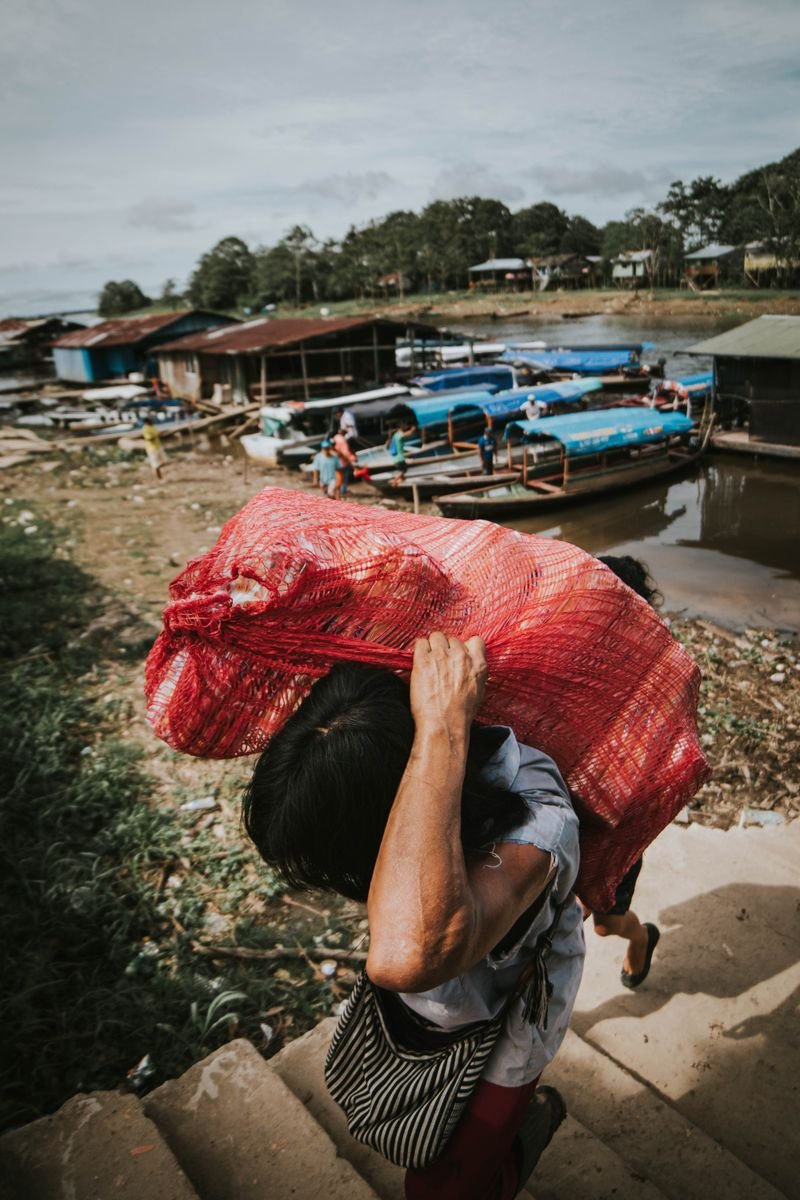
Leticia occupies a unique position in Colombia: it is the only sizeable Colombian settlement in the Amazon basin, surrounded on three sides by the rainforest and on the fourth by the Amazon River, which forms the border with Brazil. There are no roads connecting it to the Colombian highway system. Getting here, and moving around once you arrive, requires a different mindset than any other Colombian city.
How to Reach Leticia: Flights Only
There is no road to Leticia. The Amazon jungle separates the city from the Colombian road network by hundreds of kilometres of roadless rainforest. The only way to reach Leticia from elsewhere in Colombia is by air.
Alfredo Vásquez Cobo International Airport (airport code: LET) is located 1.5 km north of Leticia’s city centre. It is technically an international airport due to its position at the tri-border - the runway also serves the adjacent Brazilian city of Tabatinga.
Direct flights from Bogotá: Avianca and LATAM both operate daily direct flights from El Dorado International Airport (BOG) to Leticia. Flight time is approximately 1 hour 50 minutes. Fares vary considerably - book 3 to 4 weeks in advance for prices in the COP 250,000–450,000 range one-way; last-minute tickets can exceed COP 700,000. Check fares with the Aviasales flight search for current pricing.
From Medellín: Satena (Colombia’s state-owned regional airline) operates routes to Leticia from Medellín’s Olaya Herrera Airport on some schedules, with connections at El Dorado. Verify schedules directly with Satena, as regional routes change frequently.
Airport to city: The airport is close enough to walk (20–30 minutes in the heat) or take a moto-taxi (COP 5,000–8,000, 5 minutes). Taxis are available but less common. If you are continuing to a jungle lodge, your lodge will often arrange a boat pickup from the port, so confirm logistics at the time of booking.
The Yellow Fever Requirement
Before booking flights, confirm your yellow fever vaccination status. Colombia requires proof of yellow fever vaccination for travel to the Amazonas department, and Leticia is its capital. This is enforced - airlines including Avianca and LATAM have been known to check vaccination certificates at check-in for Leticia flights.
Practical points:
- Vaccination must be given at least 10 days before arrival to take effect
- Under current WHO guidelines, the yellow fever vaccine is valid for life (not 10 years as under older rules)
- In Colombia, vaccination is available free at public health centres (Centros de Salud) in Bogotá, Medellín, Cali, and other major cities - bring your ID/passport
- You will receive a yellow International Certificate of Vaccination (often called the Carnet Amarillo) - keep this document with your passport
- Private travel clinics are faster but charge approximately COP 80,000–150,000 for the vaccine and certificate
Crossing to Tabatinga, Brazil
The Colombian city of Leticia and the Brazilian city of Tabatinga share a continuous urban area - you can walk from one to the other without any dramatic border ceremony. The crossing is a pedestrian street near the main boulevard.
What to know:
- No formal checkpoint on foot - you can walk across without stopping at a booth, though technically you should exit-stamp your Colombian visa at Migraciones Colombia (office near the Leticia side of the crossing) if you plan to spend significant time in Brazil
- For day trips: most travellers visit Tabatinga for its larger supermarkets, Brazilian pharmacies, and the port without getting any stamp - this is tolerated in practice for short visits
- For longer stays in Brazil: get your entry stamp at the Polícia Federal office in Tabatinga (Rua Marechal Mallet, near the port)
- Currency: Tabatinga uses Brazilian Real (BRL). The Leticia/Tabatinga area has a de facto two-currency economy - both Colombian pesos and Brazilian reais are accepted in many establishments near the border, but not at ideal exchange rates. Bring both if you plan to spend time on both sides
- Leticia ATMs: withdraw Colombian pesos in Leticia before crossing; Brazilian ATMs in Tabatinga dispense reais
The shared airport runway is officially in Colombia but functions as the international airport for both cities. Departing from Tabatinga to Brazil is therefore possible from the same terminal as Leticia–Colombia flights.
Crossing to Santa Rosa, Peru
The Peruvian hamlet of Santa Rosa sits on a small island in the Amazon River directly across from Leticia and Tabatinga. It is reachable by motorised canoe (chalupa) from the Leticia port in approximately 10 minutes.
Santa Rosa is a small border outpost - the main attraction is the triple frontier viewpoint and the novelty of setting foot in three countries in one afternoon. Peruvian immigration (Migraciones Peru) is in the building near the boat dock and can stamp your passport if you want official entry documentation.
Practical notes:
- Boat cost: COP 15,000–25,000 per person each way from the Leticia port; prices should be agreed before boarding
- Peruvian sol: not strictly necessary for a short visit - basic drinks and snacks at the Santa Rosa market accept Colombian pesos at informal exchange rates
- Onward travel into Peru: not practical from Santa Rosa without a significant river journey; travellers going deeper into Peru (to Iquitos) take speedboats or slow boats from Santa Rosa/Tabatinga - a major multi-day undertaking
Transport Within Leticia
Leticia’s urban area is compact - most points within the city are reachable in 15 to 20 minutes.
Moto-taxis
The dominant transport mode in Leticia. Moto-taxi drivers wait at the airport, the port, the market, and most hotel intersections. A short city journey costs COP 4,000–7,000 per person; airport to city centre COP 5,000–8,000. Always negotiate the price before riding - most drivers are honest but prices aren’t metered. If you have luggage, your driver will strap it to the bike or recommend a car taxi for larger loads.
Taxis
Car taxis exist but are less common than moto-taxis. City journeys cost COP 12,000–20,000. Your hotel can call one on request. There is no app-based taxi service in Leticia.
River boats within the immediate area
The Leticia port (Puerto Fluvial) is the hub for river travel. Short-distance boats serve:
- Tabatinga (Brazil): 10–15 minutes across the river, COP 15,000–25,000
- Santa Rosa (Peru): 10 minutes, COP 15,000–25,000
- Puerto Nariño: 2.5 to 3 hours upriver (COP 25,000–40,000 per person on a shared express boat); the gateway to monkey islands and Lago Tarapoto
- Jungle lodges: most lodges pick up guests from the Leticia port by their own boat; confirm pickup times when booking
Express boats to Puerto Nariño generally depart at 8am, 10am, and 2pm from the main port; schedules shift seasonally. Arrive 15 minutes early to secure a seat.
Walking
The central market, main restaurants, and most budget hotels in the Avenida Internacional and Parque Orellana area are walkable. The river port is about 10 minutes on foot from the centre. Walk in the early morning or late afternoon to avoid the midday heat (30–34°C year-round).
Booking Jungle Lodges
Leticia’s jungle lodges range from simple riverside cabins to multi-day package operations with guided excursions. Unlike other Colombian cities, there is very little walk-up accommodation in the jungle - most lodges require advance booking.
Key logistics:
- Book at least 1–2 weeks in advance for peak season (June–August and December–January); 3–4 days is usually sufficient in low season
- Transport to the lodge is always by river - confirm which port the pickup leaves from (Leticia main port vs. a smaller dock)
- Packages typically include: accommodation, all meals, guided excursions (piranha fishing, caiman spotlight, dolphin swim, community visit), and boat transfers. Day rates are usually COP 200,000–500,000 per person depending on the lodge standard and group size
- Communication: jungle lodges often have satellite phone or limited WhatsApp connectivity; response times can be slow - be patient and follow up by phone if email goes unanswered
- What to bring: cash for tips and any extras (sodas, additional excursions), yellow fever certificate, sunscreen, insect repellent with DEET, a headtorch, and light waterproofs
For guided Amazon tours including multi-day jungle packages and wildlife excursions, browse options via GetYourGuide. For hotels in Leticia city itself - useful for nights before or after a lodge stay - see hotels in Leticia.
Getting Back: Departure Tips
Leticia’s airport is small with limited facilities. Arrive at least 1.5 hours before domestic flights and 2 hours before any international connection. Security checks are standard. The café inside the terminal is the only food option airside - the small eateries and fruit stalls opposite the airport entrance are a better option before check-in.
Check your airline’s luggage policy before arriving with bulky gear: birding and photography equipment can exceed standard allowances, and oversize luggage handling is limited at LET.