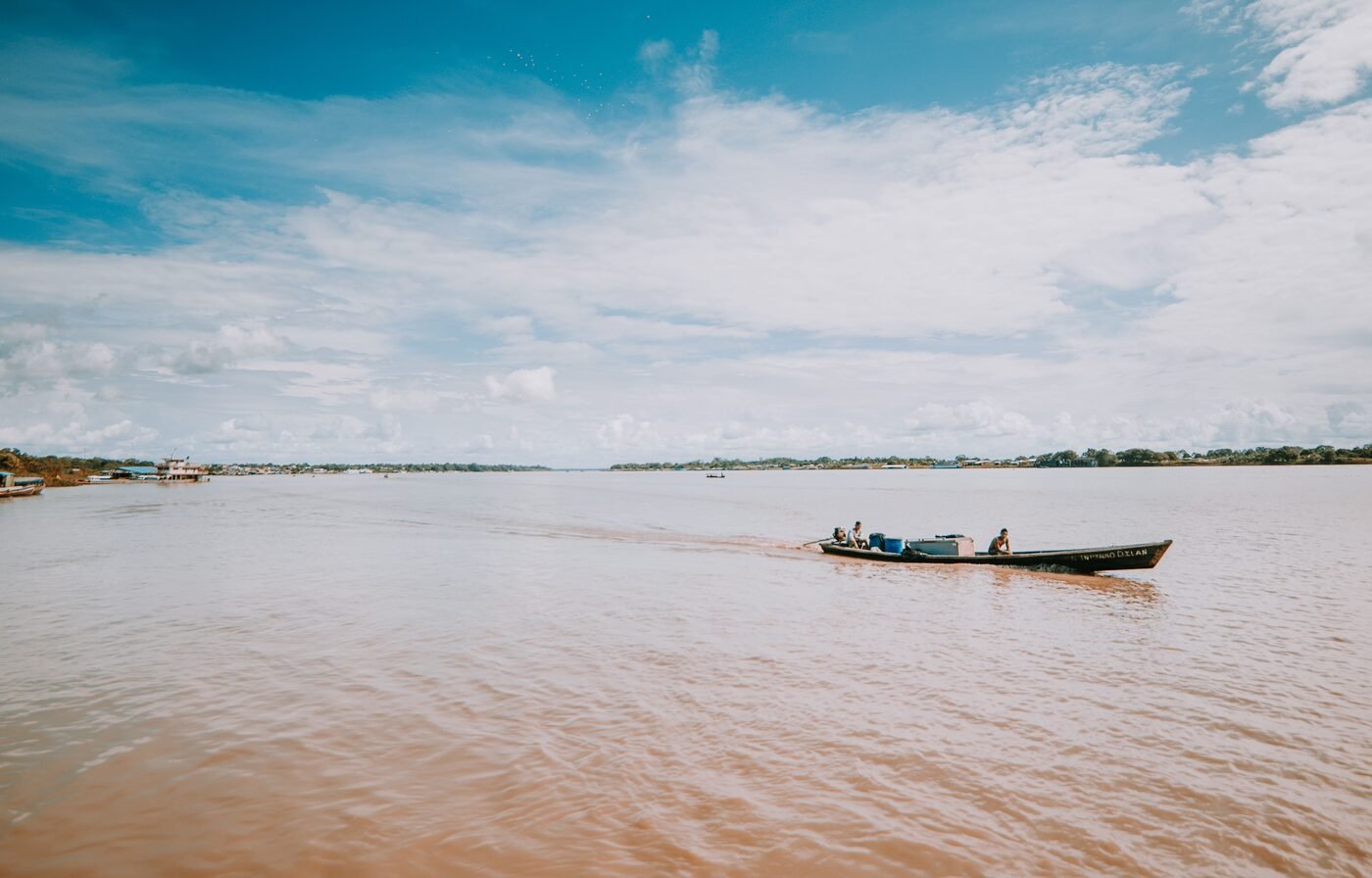
Leticia sits at the end of Colombia, accessible only by air, where the Amazon River forms the border with Brazil and Peru simultaneously. The city itself is compact and logistically functional rather than conventionally attractive - but what it gives access to is extraordinary. The Colombian Amazon is one of the most biodiverse ecosystems on the planet, and Leticia is the only real entry point to it from the Colombian side.
Most activities here happen on or near the water. The Amazon and its tributaries, the flooded forest, the riverbanks at dusk - these are where the wildlife concentrates and where the most memorable experiences occur. Budget at least three nights to do any of this properly.
Pink River Dolphin Watching
The pink river dolphin (boto) and the grey river dolphin (tucuxi) are both resident in the Amazon waterways around Leticia and Puerto Nariño. The boto - which turns fully pink at maturity - is the larger of the two and considered a culturally significant animal in Amazonian indigenous traditions. They are not shy: encounters where dolphins surface within a few metres of a canoe are common, particularly in the calmer tributaries and lake systems.
The best area for dolphin encounters is Lago Tarapoto, accessible from Puerto Nariño (87 km upstream from Leticia, approximately 2.5 hours by fast boat costing COP 50,000 one way). The lake system is flanked by giant Victoria amazonica water lilies - leaves up to two metres in diameter - and the surrounding forest holds caimans, macaws, and river otters. A guided boat trip on Lago Tarapoto costs approximately COP 60,000 to 100,000 per person as of 2026.
Piranha Fishing
Piranha fishing is one of the most accessible Amazon activities and requires no special skills. Local guides supply a bamboo rod, a short length of monofilament, a hook, and a piece of raw meat as bait. The technique involves dangling the bait at the surface of a slow-moving creek or tributary and jigging it gently until a piranha takes it. Most visitors catch several within an hour.
Red-bellied piranhas are the species most commonly caught. They are edible - piranhas are a standard protein in Amazonian communities and some lodges will cook your catch as part of the experience. The fishing itself is safe as long as you don’t put your fingers in the water when a piranha is on the hook.
Tours from Leticia port charge approximately COP 80,000 to 150,000 per person for a half-day piranha fishing trip including transport by canoe. All-inclusive jungle lodge packages usually include piranha fishing as a standard excursion.
Caiman Spotting at Night
The Amazon caiman population around Leticia is large enough that night boat excursions reliably result in sightings. Guides use a torch to scan the water’s surface; caiman eyes reflect red in the beam, revealing animals that would otherwise be invisible in the darkness. Spectacled caimans - the most common species - range from 1.5 to 2.5 metres and are not aggressive unless provoked. Black caimans, significantly larger, are occasionally seen in quieter waterways.
Night excursions run from approximately 7pm and last two to three hours. Most jungle lodges include caiman spotting as part of their standard guided programme. Standalone tours from the port cost approximately COP 100,000 to 150,000 per person.
Monkey Island (Isla de los Micos)
Isla de los Micos is a small river island approximately 40 km from Leticia where several species of Amazon monkey - squirrel monkeys, woolly monkeys, capuchins, and others - have become accustomed to visitors. The island was a banana plantation in a previous life and the monkeys were introduced by a previous owner; they are not truly wild. That said, the experience of sitting on a riverbank while squirrel monkeys climb across your head is genuinely entertaining.
A half-day trip from Leticia to Isla de los Micos costs approximately COP 80,000 to 120,000 per person by boat, usually combined with a visit to an indigenous community. Book through the port tourist office or through your accommodation.
Indigenous Community Visits
Several Tikuna and Yagua communities near Leticia welcome visitors and offer organised tours of their villages, crafts, and cultural practices. The Tikuna are the largest indigenous group in the Colombian Amazon; the Yagua are known for their traditional blowpipe hunting skills and feather-and-seed adornments. Both communities offer demonstrations of traditional skills and sell handmade crafts - seed necklaces, woven baskets, carved wooden animals.
The quality of these visits varies significantly by operator and community. The best ones (approximately COP 120,000 to 200,000 per person as of 2026) spend time on genuine cultural exchange and employ community members directly as guides. Avoid operators that treat community visits as performance tourism.
Parque Santander: The Parrot Roost
Every evening at dusk, tens of thousands of parrots and parakeets return to roost in the trees of Parque Santander in central Leticia. The noise is extraordinary and the sight - wave after wave of green birds banking over the colonial buildings - is genuinely spectacular. It costs nothing, requires no booking, and lasts about 45 minutes. Go between 5:30pm and 6:30pm. This is one of the most memorable urban wildlife spectacles in South America.
The Triple Frontier
The borders of Colombia, Brazil, and Peru meet in the Amazon River at Leticia. Crossing into Tabatinga (the adjoining Brazilian city) is informal - you walk or take a mototaxi across, show your passport, and you are in Brazil. A ten-minute boat crossing from the port reaches Santa Rosa, Peru. Many visitors tick all three countries in an afternoon; the experience is logistically interesting but experientially modest. Tabatinga has a slightly larger range of shops and a different atmosphere from Leticia. Santa Rosa is a small port town with a military post and a few restaurants.
Passport required: Even for the informal Leticia–Tabatinga crossing, carry your passport. Brazil has occasional document checks at the main road crossing point.
Jungle Lodges
The most complete Amazon experience in the Leticia area is a multi-night stay at a jungle lodge - a riverside or forest lodge where all excursions, meals, and guiding are included. The standard of lodges ranges from basic (hammocks, shared outdoor facilities, generator power for a few hours) to genuinely comfortable (private cabins, hot water, library, naturalist guides).
Heliconia Lodge, approximately 35 km upriver, runs two-night packages from approximately COP 700,000 per person including airport transfer, all meals, and three guided excursions daily. Tanimboca Nature Reserve, accessible by road thirty minutes from the airport, offers treehouse accommodation and zipline access to the canopy from approximately COP 400,000 per person per night all-inclusive. Amazon Açaí Lodge suits shorter stays with packages from approximately COP 600,000 per person for two nights.
For accommodation options and detailed booking information, see our where to stay in Leticia guide. For transport, costs, and planning essentials, the full Leticia travel guide covers everything you need before you arrive.
Where to stay: Search hotels in Leticia on Booking.com