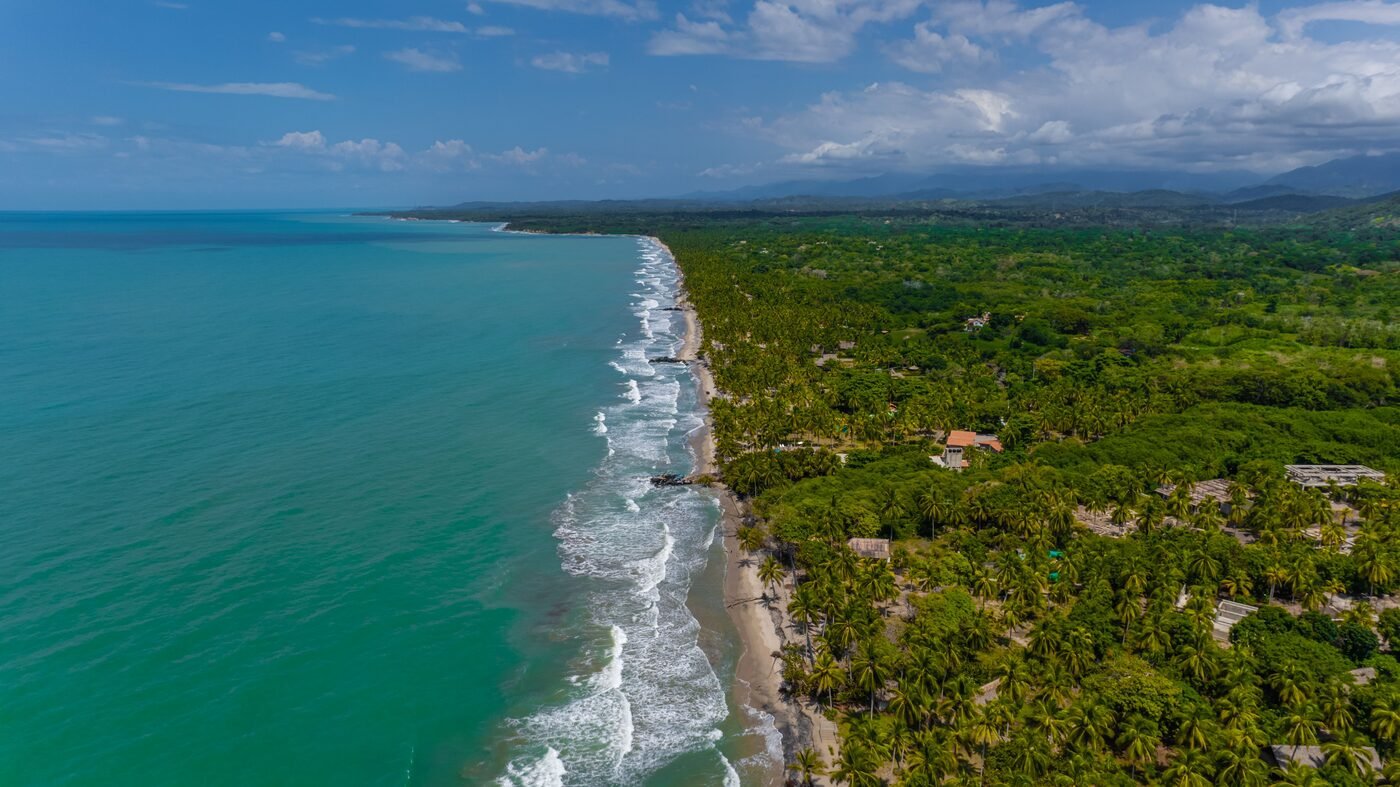
Palomino sits at the point where the Sierra Nevada de Santa Marta reaches the Caribbean - mountains meeting sea within a few kilometres of each other, with a clear-water river running between them. The village has the relaxed pace that travellers seek and rarely find: beach bars that open when the owner arrives, hammock camps under palm trees, a social scene that organises itself around river tubing in the mornings and sunset watching in the evenings.
The infrastructure is deliberately simple. There are no high-rise hotels, no cruise ship piers, no entrance queues. Getting here takes a bus from Santa Marta (1.5 to 2 hours) and a mototaxi from the highway. The reward is a stretch of Caribbean coast that still feels like it belongs to the people who live there.
River Tubing on the Río Palomino
Tubing the Río Palomino is the activity that put the village on the backpacker map and remains its signature experience. The Río Palomino descends cold and clear from the Sierra Nevada foothills and meets the Caribbean at the western end of the beach. The tubing route covers approximately 2 to 3 km of river through forest, with enough current to move you at a pleasant pace without requiring any effort.
The full run takes 30 to 45 minutes. Operators at the beach - there are several clustered near the main beach access path - charge approximately COP 25,000 to 40,000 per person including the inflated rubber ring and a guided walk back upstream. The walk back takes about 20 minutes through riverside forest. Guides point out birds and occasionally iguanas on the riverbank.
Go in the morning. By early afternoon the river gets busier and the experience is better with fewer people sharing the same stretch. December to April is the driest period when the river is clear; after heavy rain it turns muddy but remains float-worthy.
Tip: Wear shoes or sandals that can get wet - the river entry and exit points have rocky sections.
The Beach
Palomino Beach runs several kilometres of wild Caribbean coast. Palm trees lean over the sand, the Sierra Nevada provides a backdrop, and the beach is wide enough that even in high season it never feels crowded. The surf conditions that make swimming risky create excellent wave-watching instead - the break at the river mouth is consistent and photogenic.
Walking the beach at sunrise or sunset is the most straightforward activity in Palomino and one of the best. In the early morning you share it with local fishermen hauling nets; by 6am the light is extraordinary and the beach almost empty. In the late afternoon the beach bars at the hostel stretch set up chairs, cold beers appear, and the social life of the village concentrates here until dark.
The beach runs northeast from the river mouth toward the Arrecifes border of Tayrona National Park. Walking northeast for 40 minutes reaches a wilder, more isolated stretch with fewer people.
Sierra Nevada Day Hikes
The Sierra Nevada de Santa Marta rises from sea level to 5,775 metres within 45 km - the steepest coastal gradient of any mountain range on earth. The foothills above Palomino are home to Kogui indigenous communities who have maintained their territory and culture in relative isolation throughout the colonial period and into the present.
Several tour operators in Palomino offer guided day hikes into the lower Sierra for approximately COP 60,000 to 120,000 per person, including visits to Kogui villages where access has been negotiated through community agreements. These hikes cover 3 to 5 hours of walking through shade forest, river crossings, and farms. A longer two-day trek goes higher into the Sierra to waterfalls and viewpoints with clear-day visibility to the Caribbean. Prices for the overnight version are approximately COP 250,000 to 350,000 per person including accommodation, meals, and guide.
Note: Photography of Kogui communities and sacred sites requires permission. Guides will advise on what is and is not appropriate. Follow these instructions - the Kogui have complex views on outside visitors and operators who respect their protocols maintain access for future tours.
Horseback Riding
Horseback riding along the beach and into the lower Sierra is offered by several operators for approximately COP 50,000 to 100,000 per person for 1 to 2 hours. The beach route - walking along the waterline at the pace of a slow horse - is the most popular option. The sunset timing (departing approximately one hour before sunset) works particularly well as the light changes across the water.
Riding into the foothills takes longer (3 to 4 hours) and involves river crossings and forested paths; this version is more demanding and suits riders with some prior experience.
Yoga Retreats
Palomino has developed a small but established yoga retreat scene, with several beach-adjacent hostels running daily classes. Sessions typically cost COP 20,000 to 40,000 drop-in. Some accommodations include yoga classes in their room rate. The combination of beach, forest, and quiet makes this genuinely a reasonable place to come for a multi-day retreat rather than just adding a yoga class as an afterthought.
The Dreamer and Finca Escondida both run multi-day retreat programmes; check their current schedules before arrival as programmes vary by season.
Eating and Drinking
Palomino’s restaurant scene is small and informal. Several beach bars serve fried fish, coconut rice, and patacones throughout the day. El Paraíso and La Choza del Mar are two consistently well-reviewed options for fresh grilled fish near the beach, with meals in the COP 25,000 to 45,000 range. Fresh coconut juice (agua de coco, COP 5,000 from vendors on the beach) is cold and good.
The beach bar scene gets more social in the evenings, with music, beers, and hammock seating until late. It is not a late-night destination - most people are in bed by midnight.
Practical Notes
Getting there: Buses from Santa Marta’s terminal, COP 15,000 to 25,000, approximately 1.5 to 2 hours. Drop off at the Palomino highway turn, then mototaxi COP 2,000 to 3,000 to the beach.
ATM: There is no ATM in Palomino. Bring cash from Santa Marta or Riohacha for everything - accommodation, food, activities, mototaxis.
Mobile coverage: Patchy but usable on the Colombian carriers (Claro, Movistar) in the village. Coverage drops quickly in the Sierra foothills.
For accommodation options across every price point from hammock camp to eco-lodge, see our where to stay in Palomino guide. For how to get there and broader Caribbean coast planning, see the Palomino travel guide.
| Tour | Duration | From Price | |
|---|---|---|---|
| Browse Palomino tours and river experiences | - | - | Browse |
Where to stay: Search hotels in Palomino on Booking.com