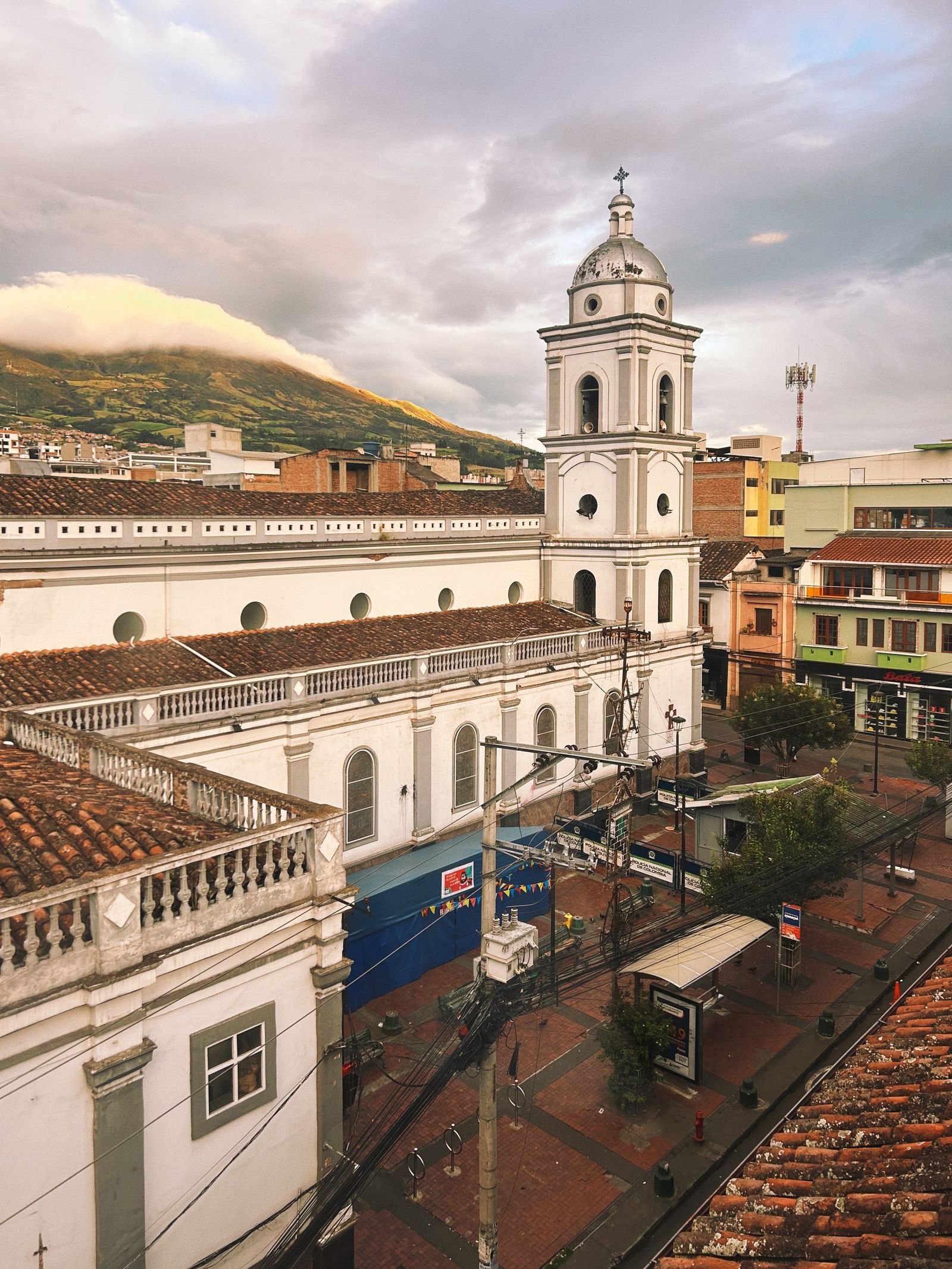
Pasto Travel Guide: Carnaval, Las Lajas and La Cocha
Plan your trip to Pasto: the Carnaval de Negros y Blancos, Las Lajas sanctuary, Laguna de La Cocha, Nariño food, hotels and how to get there.
Pasto sits at about 2,500 metres in Colombia’s far south-west, a few hours from the Ecuadorian border and well away from the standard Bogotá-Medellín-Cartagena loop. The city of roughly 450,000 is the capital of Nariño department, and it rewards travellers with three headline experiences: one of Latin America’s most unusual carnivals, a neo-Gothic church built across a river gorge, and a high-altitude Andean lake with a nature-reserve island. Add cold evenings, serious home cooking and almost no tourist crowds outside January, and Pasto is a good detour if you are already in Popayán or crossing to Ecuador.
The city lies in a valley below the Galeras volcano, which is active and visible from many streets. The old centre is compact: the Plaza de Nariño, the cathedral and the main churches are all within a short walk of each other. Expect cool weather all year (daytime 14 to 18°C, nights as low as 7 to 10°C), frequent drizzle, and a pace that is slower and more reserved than the Caribbean coast.
Getting There and Around
By air: Antonio Nariño Airport (PSO) is near Chachagüí, about 40 km north of the city. Flights from Bogotá take roughly 1 hour 20 minutes. A taxi to the centre costs approximately COP 60,000 to 90,000 as of 2026 and takes 45 to 60 minutes; shared minivans cost less.
By bus: The Terminal de Transportes sits a short taxi ride from the centre. From Popayán the road takes around 5 hours, from Cali roughly 8 to 9 hours, and from Bogotá a long overnight 18 to 20 hours. Buses to Ipiales, the gateway to Las Lajas and the Ecuador border at Rumichaca, leave frequently.
Getting around: The centre is walkable. Taxis are cheap and use a meter or fixed fares for short rides. For day trips, colectivos and buses from the terminal are the budget route; a private driver or a guided tour from Pasto removes the logistics. Plan the Popayán leg using our Popayán travel guide.
Carnaval de Negros y Blancos
The Carnaval de Negros y Blancos is why most visitors come. It runs from 2 to 7 January each year and was inscribed on UNESCO’s Representative List of the Intangible Cultural Heritage of Humanity in 2009. The festival blends Andean, Amazonian and Pacific traditions, and its calendar is built around a simple idea: one day to be black, one day to be white.
- 2 January: Arrival of the Castañeda family, the symbolic carnival family.
- 3 January: Carnavalito, the children’s parade.
- 4 January: Celebrations continue with cultural parades and music.
- 5 January: Día de los Negros. Everyone paints each other black, in a tradition linked to the day off once granted to enslaved people.
- 6 January: Día de los Blancos and the Desfile Magno. Talcum powder and foam cover the city, and the large float parade is the climax of the week.
- 7 January: Closing events and the Desfile de las Culturas.
Practical advice: wear clothes you will throw away, protect your phone and camera in sealed bags, and avoid contact lenses. Bring warm layers because it is cold at night. Grandstand seats for the main parade are sold ahead, while street viewing is free but crowded from mid-morning. Hotel rates rise sharply and many properties require multi-night stays. Our where to stay in Pasto for carnival guide lists named hotels and booking timing. Also see the broader Colombia festivals and events calendar.
Sanctuary of Las Lajas
The Santuario de Las Lajas is the most photographed building in southern Colombia. The neo-Gothic basilica was built across the Guáitara river canyon near Ipiales during the 20th century, on the site of a reported Marian apparition in the 18th century. A stone bridge connects the church to the hillside, and the apse is set directly against the rock face.
Go early to beat the tour buses. Walk down the covered path from the viewpoint, cross the bridge, and look inside at the votive plaques that cover the walls. Entering the church is free to visitors, though parking and other site services may charge small fees, so carry some cash. The trip is a full day from Pasto: about 2 to 2.5 hours each way by bus or colectivo to Ipiales, then a short ride to the sanctuary. If you are continuing to Ecuador, Las Lajas is a natural stop before the Rumichaca border crossing.
Laguna de La Cocha
Laguna de La Cocha, also called Lago Guamuez, is a large Andean lake roughly 25 to 30 km east of Pasto at about 2,800 metres. The village of El Encano on the shore is the base: wooden pier, trout restaurants, and lanchas that cross to the Isla de la Corota, a small protected island and nature sanctuary with cloud-forest vegetation and birdlife.
Plan a half-day. Take a colectivo or taxi from Pasto (about 40 minutes), eat fried or grilled trout at one of the lakeside restaurants, then take the boat across to the island and walk its short trail. The lake is often misty and cold, so bring a rain jacket. Wooden cabins around the shore offer overnight stays if you prefer to wake up at the water.
What to Eat in Pasto
Nariño cooking is distinct from the rest of Colombia, and it is worth planning meals around it.
- Cuy (guinea pig): roasted whole, usually with potatoes and peanut sauce. A regional speciality served in family restaurants, normally priced as a premium dish.
- Empanadas de añejo: fried corn-and-cheese turnovers served with ají. Cheap and found on the street and in bakeries.
- Lapingacho: a griddled potato and cheese cake, often with chorizo.
- Hornado pastuso: slow-roasted pork, a weekend favourite.
- Canelazo and chocolate: hot drinks for cold evenings.
The Plaza de Nariño area and the surrounding streets have plenty of simple restaurants offering set lunches (almuerzo corriente) from roughly COP 15,000 to 25,000 as of 2026.
Things to Do in the City
- Plaza de Nariño and the Cathedral: the civic heart, flanked by the Governor’s Palace. Evening is the best time, when locals gather.
- Churches: several colonial-era churches around the plaza are free to enter outside services; the white bell-towered church in our lead photo is typical of the centre.
- Barniz de Pasto: the regional craft of decorating wood with coloured mopa-mopa resin is unique to Nariño. Look for it in craft shops around the centre.
- Galeras volcano: the volcano is monitored and parts of its slopes are restricted. Check conditions with local authorities, and treat any approach as a guided-only, season-dependent excursion.
- Museums: check local opening hours, as many small museums close on Mondays and over lunch.
Where to Stay
Pasto has a small hotel stock. For carnival, book in October. Outside January you will find more choice and lower rates. In our verified shortlist, Hotel V1501 is the top-end option, Hotel Fernando Plaza and Hotel San Blass Boutique cover the mid-range, and Hotel Cafe y Miel is a budget guesthouse; full details, rates and areas are in where to stay in Pasto. Compare live availability on Booking.com via our Pasto hotel link.
Best Time to Visit
January is the peak, driven by carnival. The drier months are generally June to September, while March to May and October to December are wetter. Pasto is cool in every month, so pack layers regardless of season. Holy Week also draws domestic visitors, and combining it with Popayán’s processions is a popular southern route. See our best time to visit Colombia page for national context.
Practical Tips
- Altitude: at about 2,500 metres, take it easy on arrival day.
- Cash: carry pesos for boats, colectivos and small restaurants outside the centre.
- Safety: Nariño borders Ecuador. Travel by day, stay on main roads, and check government travel advisories before heading beyond the standard Las Lajas and La Cocha routes.
- Language: English is rarely spoken outside hotels. Basic Spanish helps.
- Budget: as of 2026 a comfortable trip costs approximately COP 180,000 to 350,000 per day excluding carnival week.
For more on the region, browse tours in Colombia and the full list of Colombia city guides.