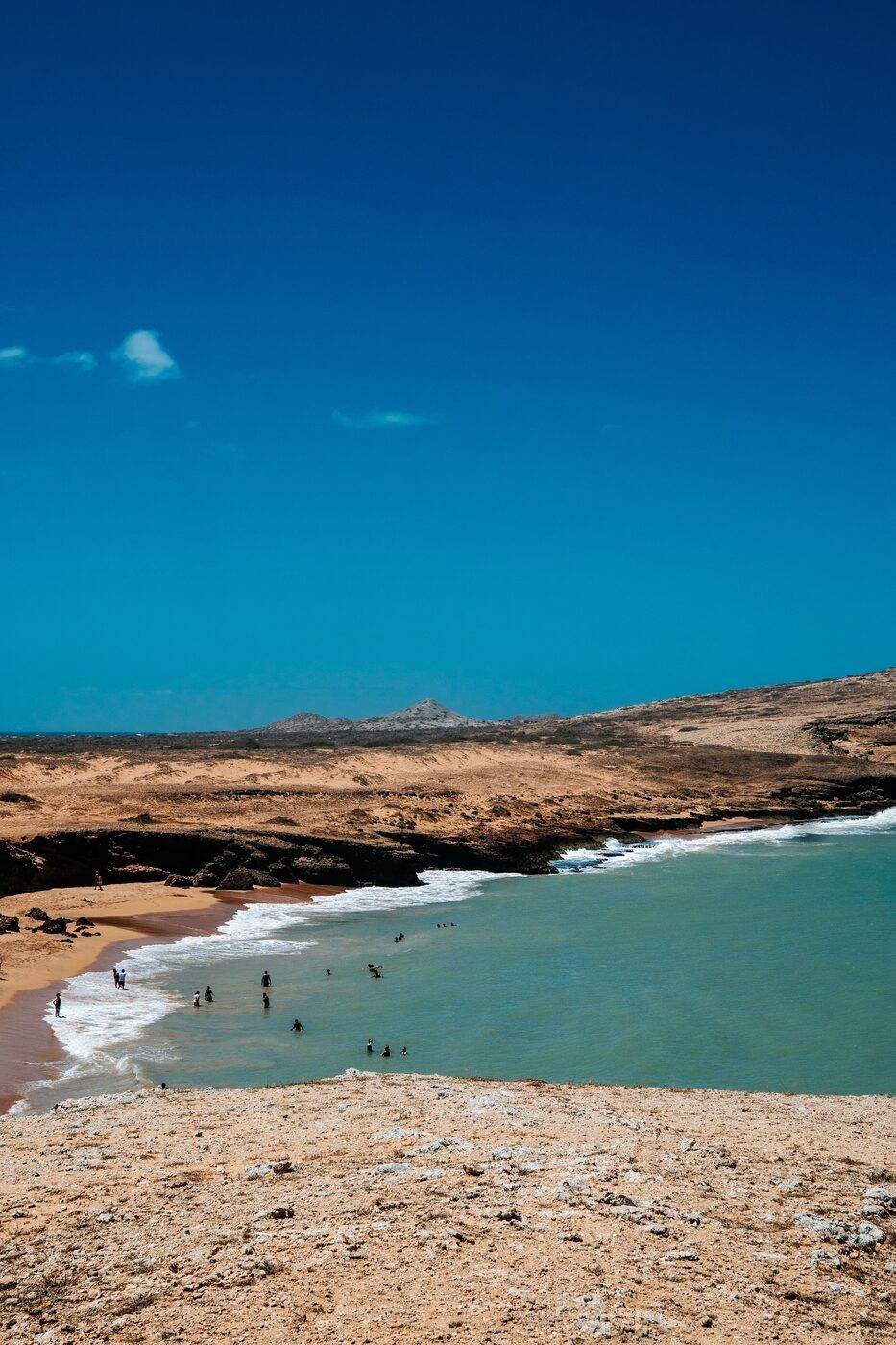
La Guajira has no hotels in the conventional sense beyond Riohacha. Once you leave the department capital and head north onto the peninsula, accommodation means rancherías - Wayuu family guesthouses where hammocks or simple beds replace hotel rooms, families replace staff, and the desert or Caribbean coast replaces the city view. This is not a shortcoming of the destination: it is the point. Staying in a ranchería is the closest most visitors will get to Wayuu daily life, and the experience of eating fish with a family on a cactus-fenced terrace while the sun sets over the desert is not replicable in any conventional hotel.
Here is how to think about accommodation across the different areas of La Guajira.
Riohacha: Base City Hotels
Riohacha is the department capital, a functioning coastal city with an international airport (RCH), a malecón, and a range of conventional hotels. It is the logistical hub - most tour operators are based here, the airport receives flights from Bogota and Medellin, and travellers typically spend a night here before and after the peninsula circuit.
Budget - COP 70,000 to 150,000 per night
Hotel Maioure is a well-regarded budget property near the malecón, with clean rooms, reliable air conditioning, and a helpful owner who can arrange tours to Cabo de la Vela and Punta Gallinas. Double rooms from approximately COP 90,000 per night as of 2026. The neighbourhood is calm and within walking distance of the beachfront.
Hotel Castillo del Mar sits directly on the Riohacha malecón with rooms facing the Caribbean. A mid-budget option that trades interior size for location - the beachfront views and proximity to the evening walk make it a reasonable choice. Rooms from approximately COP 120,000 as of 2026.
Mid-range - COP 200,000 to 400,000 per night
Hotel Arimaca is the most established mid-range property in Riohacha, popular with business travellers and tour groups. Air conditioning, a pool, and a restaurant on site. Rooms from approximately COP 220,000 per night. A practical choice if you want reliable infrastructure before heading onto the desert.
Hôtel Los Flamencos is a comfortable modern property near the city centre with a pool and standard hotel amenities. Double rooms from approximately COP 250,000 as of 2026. Reliable for a one-night layover.
Cabo de la Vela: Rancherías
Cabo de la Vela is a small fishing village approximately four hours north of Riohacha by 4WD. Accommodation here is exclusively in rancherías - family-run guesthouses operated by Wayuu families. There are no paved roads, no reliable electricity supply, and no phone signal for most Colombian carriers beyond basic voice calls. Generators run for a few hours in the evening.
What to expect: Simple beds or hammocks in cactus-and-thatch structures, shared outdoor bathing facilities (bucket shower), meals cooked by the family (typically fried fish, rice, plantain, fresh coconut juice), and generator electricity from approximately 6pm to midnight. Most rancherías are clustered in the village near the fishing boats and along the beach toward the Pilón de Azúcar hill.
Ranchería Jarrinapi is one of the most frequently recommended by visitors and operators - family-run, well-organised, with meals included in the rate. Prices at most Cabo de la Vela rancherías run approximately COP 60,000 to 100,000 per person per night including meals, though this varies significantly by season and negotiation. Book through a Riohacha tour operator or directly via WhatsApp if you have a contact number.
Ranchería Ualaüya and Ranchería Utta are two other established family guesthouses near the beach. All follow a similar format; the main variables are proximity to the beach, meal quality, and the specific family’s hospitality.
Punta Gallinas: The Northernmost Lodges
Punta Gallinas sits at the northernmost tip of South America, approximately two to three hours from Cabo de la Vela by 4WD across deteriorating desert tracks. It is the most remote accommodation in Colombia reachable by road.
Ranchería Laaüchon is the best-known accommodation at Punta Gallinas, operated by the Pushaina family and well-regarded for organisation and meals. The setting - a lagoon with flamingos visible from the eating area, with the Caribbean and the Dunas de Taroa sand dunes within walking distance - is exceptional. Packages including 4WD transport from Riohacha, accommodation at both Cabo de la Vela and Punta Gallinas, and all meals typically run COP 350,000 to 600,000 per person for two nights, depending on group size and season.
Other rancherías at Punta Gallinas include accommodation run by the Epiayu and Sijona families. Capacity across all options is small - typically 8 to 20 guests total at peak periods - making pre-booking essential for December and July.
Practical Notes
What to bring: Power bank (electricity is unreliable), water purification tablets or sufficient bottled water for the trip (rancherías provide some water but supply is limited), mosquito repellent (coastal lagoon areas), cash in pesos (no ATMs beyond Riohacha), sunscreen and hat (UV is extreme at sea level and on the sand).
Tour packages: The most practical way to book La Guajira accommodation is through a tour package from Riohacha or Santa Marta. These handle all ranchería reservations, transport, and meals as part of the circuit price. Individual prices at rancherías are rarely posted online - the tour operator model is how most visitors access them.
Food: Most rancherías serve the same menu: fried fish, chicken, rice, patacones (fried plantain), and fresh juice. There are no restaurants in Cabo de la Vela or Punta Gallinas beyond ranchería dining. Vegetarians should advise tour operators in advance; options are limited but basic plant-based meals are manageable with preparation.
Search hotels in La Guajira on Booking.com
For what to see and do on the peninsula, see our things to do in La Guajira guide. For full transport and itinerary planning, the La Guajira travel guide covers routes, timing, and the full peninsula circuit.