Colombia is one of the most affordable destinations in South America for travellers who know how to move through it. Buses and shared jeeps cover most of the routes at a fraction of flight prices. Menús del día (set lunches) feed you well for COP 10,000–18,000. Hostels in every city offer clean dorms from COP 45,000–70,000. Three weeks here, done properly, can come in under COP 1.5M per week - including accommodation, food, local transport and activities.
This itinerary moves south to north: Bogota → Coffee Region → Medellin → Cartagena → Santa Marta. Total bus time is significant but that is the trade-off. Every sector below is doable without flying.
Week 1: Bogota and Surrounds
Days 1–3: Bogota
Getting there: Bogota El Dorado (BOG) is the main international entry point. The TransMilenio bus from the airport runs COP 3,200 into the city centre. Avoid metered taxis unless using InDriver or Cabify apps - negotiate first.
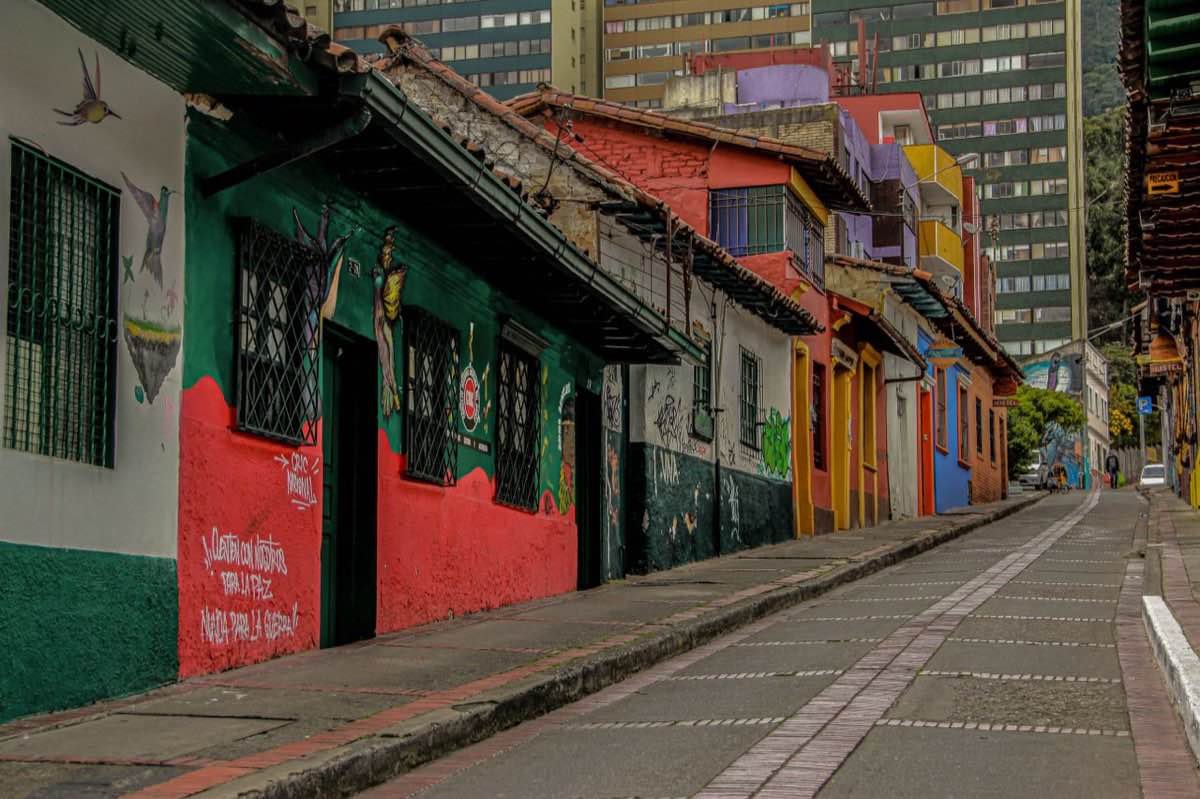 La Candelaria, Bogota’s historic centre and budget hostel base.
Where to stay: La Candelaria has the most budget hostels. La Pinta Hotel Boutique Hostel (dorms from COP 55,000) and Masaya Bogota (dorms from COP 65,000, Chapinero) are both well-run. Stay in La Candelaria for the central location.
Search hotels in Bogota on Booking.com
Free and cheap Bogota:
- Plaza Bolívar and the colonial streets of La Candelaria - no entry fee
- Museo del Oro (Gold Museum) - COP 5,000 for foreigners; FREE on Sundays
- Monserrate cable car (COP 28,000 round trip) - the must-do city viewpoint
- Graffiti tour of La Candelaria - tip-based, most guides ask COP 25,000–40,000
- Paloquemao market - the enormous indoor produce market, free to wander and cheap to eat (market meals from COP 8,000)
Eating cheap in Bogota: Every neighbourhood has a tienda that does a menú del día. In La Candelaria, look for chalkboards outside - soup, main, juice and a small dessert for COP 12,000–18,000. For street snacks, the empanada carts near Plaza Bolívar charge COP 2,000–4,000 each.
Day 4: Villa de Leyva Day Trip (Optional)
Villa de Leyva is 3.5 hours from Bogota by bus (COP 28,000–40,000 each way from Terminal del Norte). The town has one of the largest plazas in South America, fossils in the local museum (COP 5,000) and good walking around the desert-like surroundings. Works as a day trip or overnight.
Days 5–7: Salento and the Coffee Region
Overnight bus from Bogota to Armenia (8–9 hours, COP 60,000–80,000) then shared jeep to Salento (45 minutes, COP 12,000–16,000). The bus saves versus flying: a flight would cost COP 150,000–200,000 plus airport transport.
Budget in Salento: Dorms at Plantation House Salento start from COP 60,000. The menú del día at El Punto at the top of the main steps runs COP 12,000–15,000.
Cocora Valley hike: COP 5,000–8,000 each way by chiva jeep. The trail itself is free. Rubber boot rental at the trailhead is COP 10,000. A full day out including boots and jeep costs under COP 30,000.
Coffee farm: Ask your hostel to arrange a small-farm visit rather than a packaged tour - family farms in the hills around Salento often charge COP 15,000–25,000 for a guided walk and tasting. The packaged options (Finca El Ocaso etc.) run COP 30,000–45,000 but include more detail.
Week 2: Medellin, Guatapé and Surrounds
Days 8–9: Medellin
Bus from Armenia to Medellin (4.5 hours, COP 45,000–65,000) - significantly cheaper than flying. Arrive at Terminal del Norte, then Metro to El Poblado or Laureles (COP 3,400).
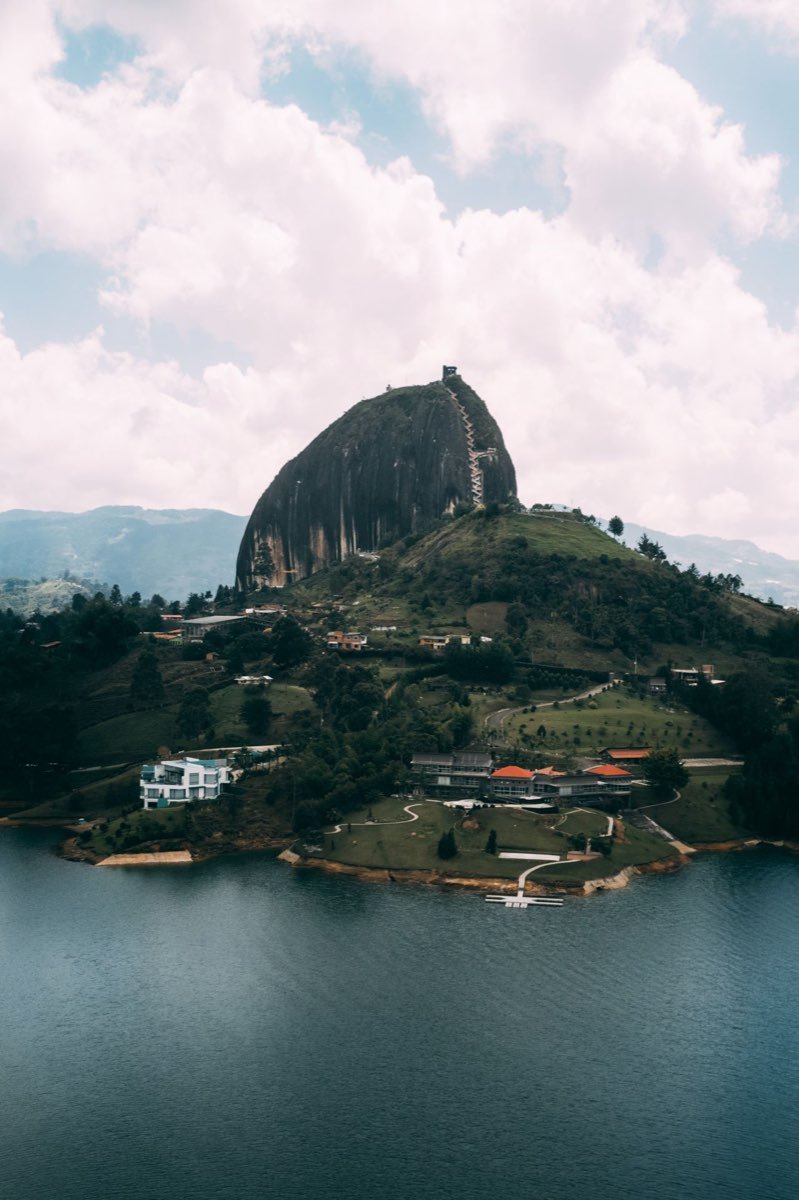 The Guatape reservoir, an easy budget day trip from Medellin.
Where to stay: Black Sheep Hostel (El Poblado, dorms from COP 58,000), Selina Medellin (Laureles, dorms from COP 60,000). El Poblado is pricier for bars and restaurants; Laureles is more authentic and cheaper.
Search hotels in Medellin on Booking.com
Free in Medellin:
- Commune 13 escalators - free, 6am–10pm
- Graffiti tour of Commune 13 - guided by local youth, COP 40,000 (the money goes to the community)
- Parque El Poblado - evening people-watching, free
- Botero Plaza and Museo de Antioquia - plaza is free; museum is COP 18,000
Cable cars: Metro + cable Line K to Santo Domingo (COP 3,400 each way with Metro card) gives tremendous valley views without entering Parque Arví. If you want Parque Arví, add Line L (COP 8,500 return).
Day 10: Guatapé Day Trip
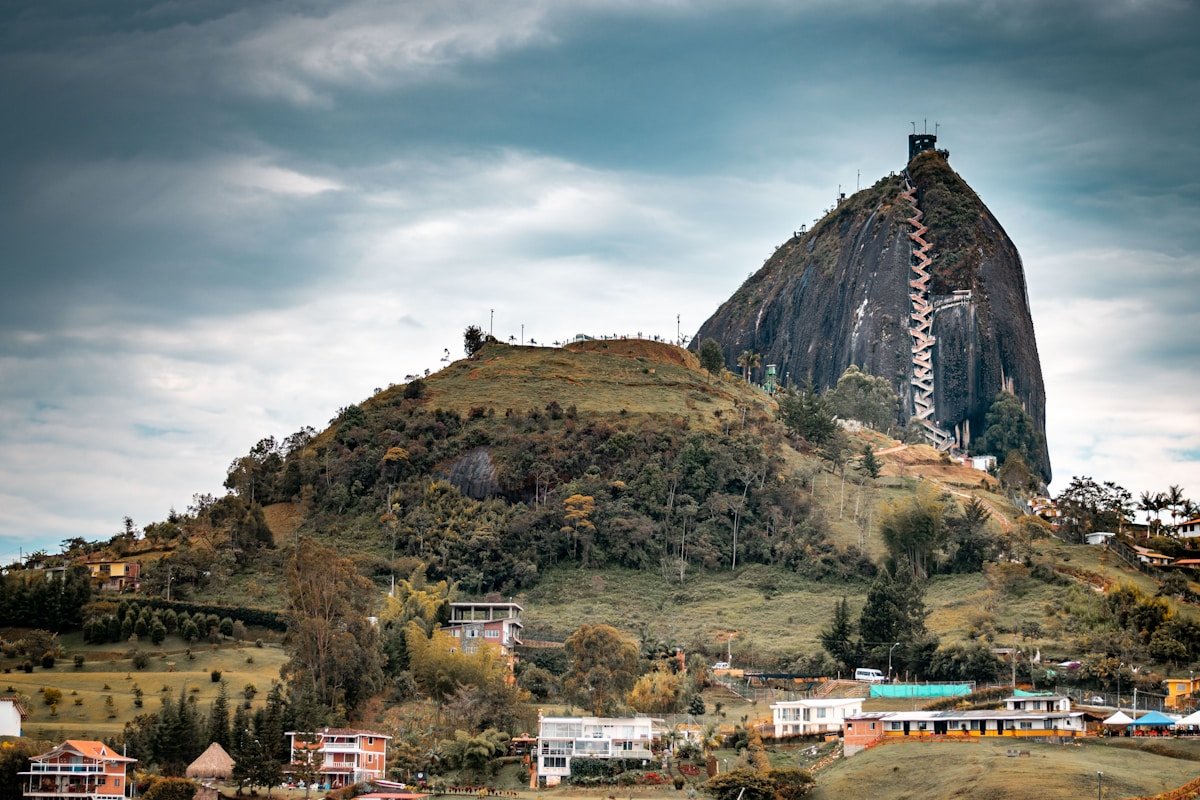
Bus from Medellin Terminal del Norte to Guatapé (2 hours, COP 20,000–25,000 each way; buses every 30–40 minutes from 7am). Climb La Piedra del Peñol for COP 22,000. Wander the painted streets and eat at a waterside restaurant for COP 30,000–45,000. Total day trip cost: approximately COP 100,000–120,000 per person including transport, entry and lunch.
Days 11–12: Santa Fe de Antioquia (Optional Detour)
A quieter alternative to another city night. Santa Fe de Antioquia is 2.5 hours from Medellin (COP 20,000 by bus). The colonial architecture is stunning, the town is largely tourist-free, and temperatures are 10°C warmer than Medellin. Stay at Casa de las Palmas (doubles from COP 120,000) and eat at the market square.
Week 3: Caribbean Coast
Days 13–15: Cartagena
Overnight bus from Medellin to Cartagena (12–14 hours, COP 80,000–120,000 with Berlinas del Fonce or Copetran) - this is the budget option. A flight takes 1 hour and costs COP 200,000–350,000; your call on how much your time is worth.
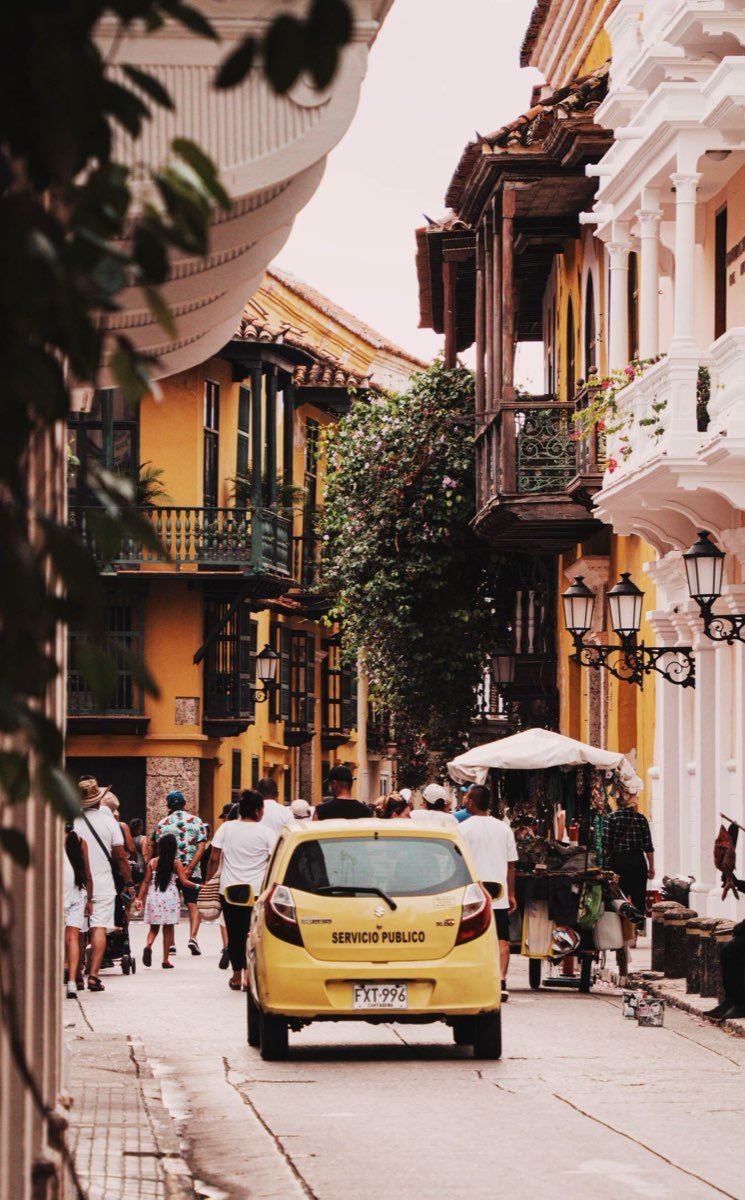 Colonial house fronts in Cartagena’s walled city, a short walk from Getsemani.
Where to stay: Getsemaní, just outside the walled city, has Cartagena’s best value accommodation. El Viajero Hostel in Getsemaní has dorms from COP 55,000. The walled city has more expensive but atmospheric options from COP 350,000+.
Search hotels in Cartagena on Booking.com
Free and cheap Cartagena:
- Walking the Las Murallas (city walls) - free
- Getsemaní street food - ceviche from COP 10,000, grilled corn from COP 3,000
- The Castillo San Felipe - COP 35,000 for foreigners (worth it for the scale of the fortress)
- Sunset from the walls near Café del Mar (COP 18,000–30,000 for a drink on the wall terrace - cheaper than the cocktail bars inside the walls)
Skip: The rosario islands day trips are COP 80,000–120,000 and often include snorkelling in mediocre conditions during the rainy season. If the budget is tight, skip and save for San Andrés or Tayrona.
Days 16–18: Santa Marta and Tayrona
Bus Cartagena to Santa Marta (3.5–4.5 hours, COP 35,000–55,000). Santa Marta has cheaper accommodation and food than Cartagena, plus it’s the base for Tayrona.
Tayrona National Park: Shared minibus from Santa Marta market area to El Zaino entrance (COP 8,000–12,000 each way). Entry fee is approximately COP 62,000 for foreigners (as of 2026). Inside, food is available at the hammock camps at the beaches - fish plates run COP 30,000–45,000. A hammock at Cabo San Juan camp costs COP 35,000–60,000 per night. Stay overnight in the park to experience it at dawn, when most day visitors have not arrived.
Days 19–21: Wind Down
Use the final days for Taganga (fishing village 20 minutes from Santa Marta, free beach) or the Palomino river and beach (COP 15,000–20,000 by bus from Santa Marta). Palomino has budget cabaña accommodation from COP 50,000 and one of the best rivers-into-sea combinations on the Caribbean coast.
Fly home from Simón Bolívar Airport Santa Marta (SMR) or return to Bogota by overnight bus (COP 90,000–120,000) for an international departure.
3-Week Budget Summary (Per Person, 2026 Estimates)
| Category | Daily Budget | 21-Day Total |
|---|---|---|
| Accommodation (dorm) | COP 55,000–70,000 | COP 1.15M–1.47M |
| Meals (3 per day) | COP 30,000–50,000 | COP 630,000–1.05M |
| Local transport | COP 10,000–20,000 | COP 210,000–420,000 |
| Activities + entries | COP 10,000–30,000 | COP 210,000–630,000 |
| Intercity buses | - | COP 500,000–800,000 |
| Total | COP 70,000–120,000/day | COP 2.7M–4.4M |
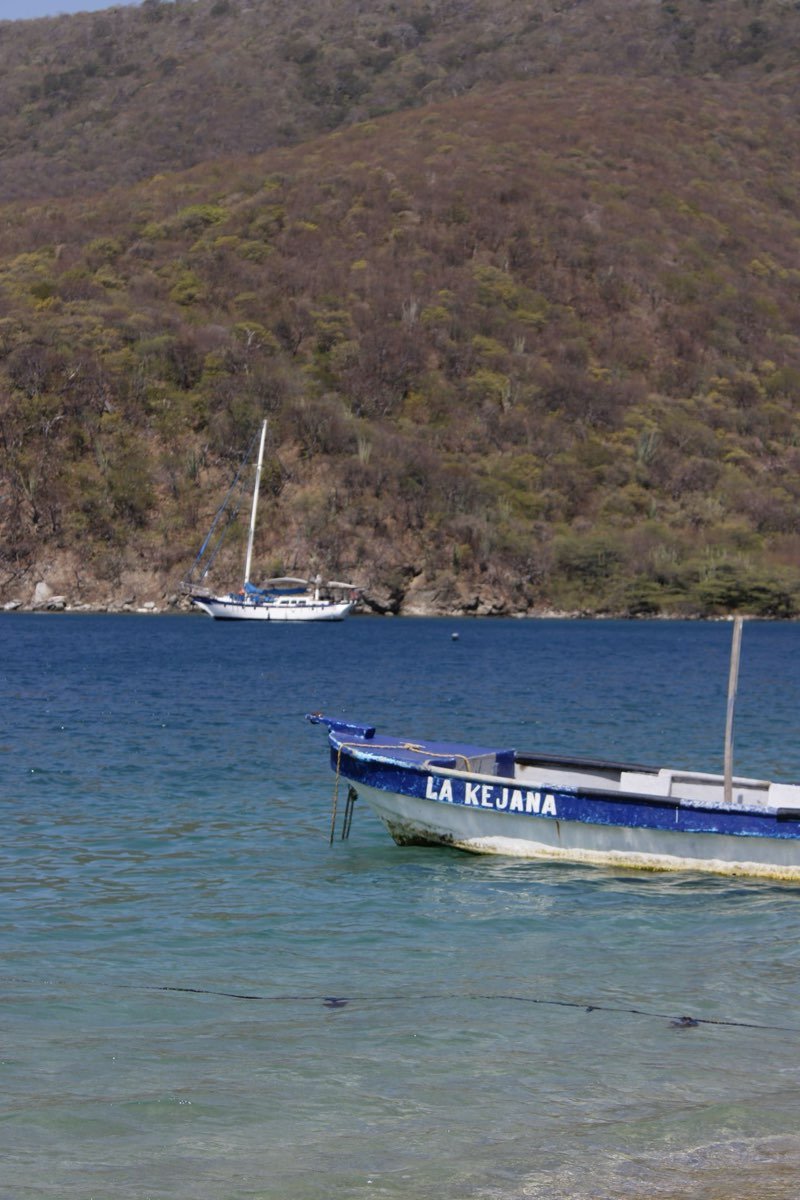 Boats off Santa Marta on the Caribbean coast.
Key Budget Tips
- Menú del día: Every local restaurant offers a fixed lunch from COP 10,000–18,000. Use it every day and your food costs drop dramatically.
- Buses over flights: The Bogota–Armenia overnight bus (COP 60,000–80,000) versus a flight (COP 150,000–200,000) saves COP 100,000+ per person. Compare intercity bus prices with Omio to check fares across operators before buying at the terminal.
- Free days in every city: Most major museums are free on Sundays. The Gold Museum in Bogota and several Medellin museums run no-charge Sundays.
- Metro over taxis: Medellin’s Metro is reliable and cheap. Avoid taxis when the Metro runs to your destination.
- Avoid Semana Santa and December: Prices for hostels and buses double during Colombian holiday peaks. Travel in May–June or September–October for best value.
- Haggle gently at markets: Not at restaurants, but for craft goods and jeep/tuktuk rides in smaller towns, a polite negotiation saves 20–30%.
- Free tours vs paid tours: Walking tours in Bogota and Medellin often run on a tip model (COP 20,000–40,000 suggested). When a guided activity is worth paying for - Tayrona, Lost City, coffee farms - Colombia tours compares operators and lets you book with free cancellation.
Book Your Trip
- Flights - Find the best fares to Colombia · flights guide
- Travel Insurance - Get covered before you go · insurance guide
- eSIM - Stay connected from landing · eSIM guide
- Airport Transfers - Pre-book your transfer from Bogota or Medellin · airport guide
- Car Rental - Compare prices across providers
- Hotels - Hotels in Bogotá · Hotels in Salento · Hotels in Medellín · Hotels in Cartagena · Hotels in Santa Marta
- Tours & Activities - Browse Colombia tours on GetYourGuide
Related reading: New International Routes to Bogotá &, Vegan Cartagena and Vegan Medellin.