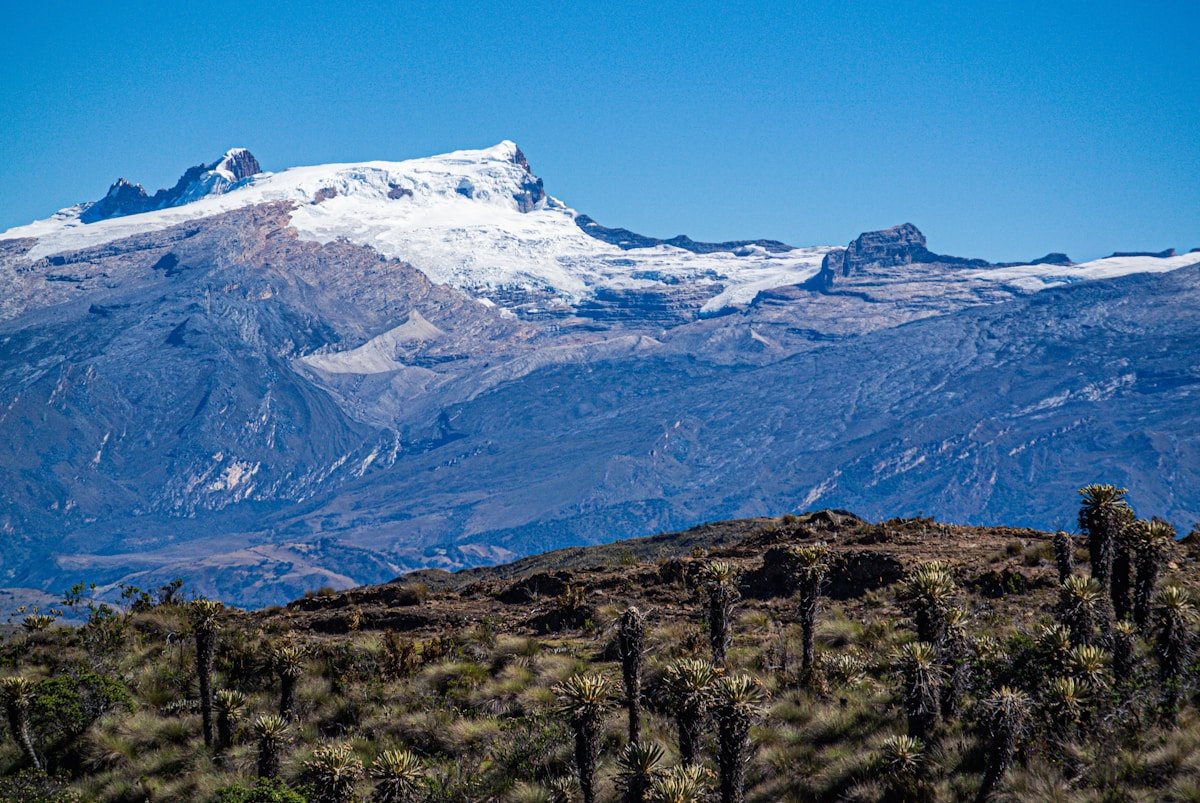
The Sierra Nevada del Cocuy is Colombia’s most dramatic mountain range and contains the country’s largest remaining glaciated area. The massif rises to 5,330 metres at Alto Ritacuba Blanco and covers roughly 300,000 hectares of paramo, glaciers, and high-altitude lagoons. For serious trekkers, the El Cocuy circuit ranks among the finest mountain walks in South America.
Access rules and permits change, so we confirm them with Parques Nacionales Naturales de Colombia before every trek.
The national park protects the U’wa Indigenous people’s territory and the ecosystem. Access is managed through a permit system and daily visitor quotas. Understanding these logistics before you go prevents wasted journeys.
What the Trek Involves
The Sierra Nevada del Cocuy circuit is typically completed in 4-7 days depending on pace and the specific route chosen. The core route crosses the highest accessible passes (above 4,800m), visits multiple glacial lagoons, and passes beneath permanently snow-capped peaks. Daily hiking distances are 12-20 kilometres with significant elevation change.
The terrain is demanding. Trails cross rocky paramo - the high-altitude Andean grassland ecosystem characterised by frailejones (Espeletia) plants - as well as boulder fields, stream crossings, and high-altitude mud. Acclimatisation to the altitude is the most important preparation step.
Route overview (classic 5-day circuit):
- Day 1: El Cocuy town → Hacienda La Esperanza trailhead → Laguna de la Plaza (4,200m) camping
- Day 2: Cross Paso de la Sierra (4,760m) → Laguna Grande de La Sierra → El Playón camping
- Day 3: Alto Ritacuba sector → viewpoint toward the glacier → Laguna de Los Patos
- Day 4: Traverse through Rincón del Bachué sector → Hacienda El Sisuma
- Day 5: Return hike to trailheads and transport back to El Cocuy town
Variations exist for 4-day and 7-day versions. Some trekkers extend the route to include the southern sector around Laguna La Pintada.
Operators and Guiding Services
Guided services are available from El Cocuy town and from operators based in Bogota who package multi-day trips including transport.
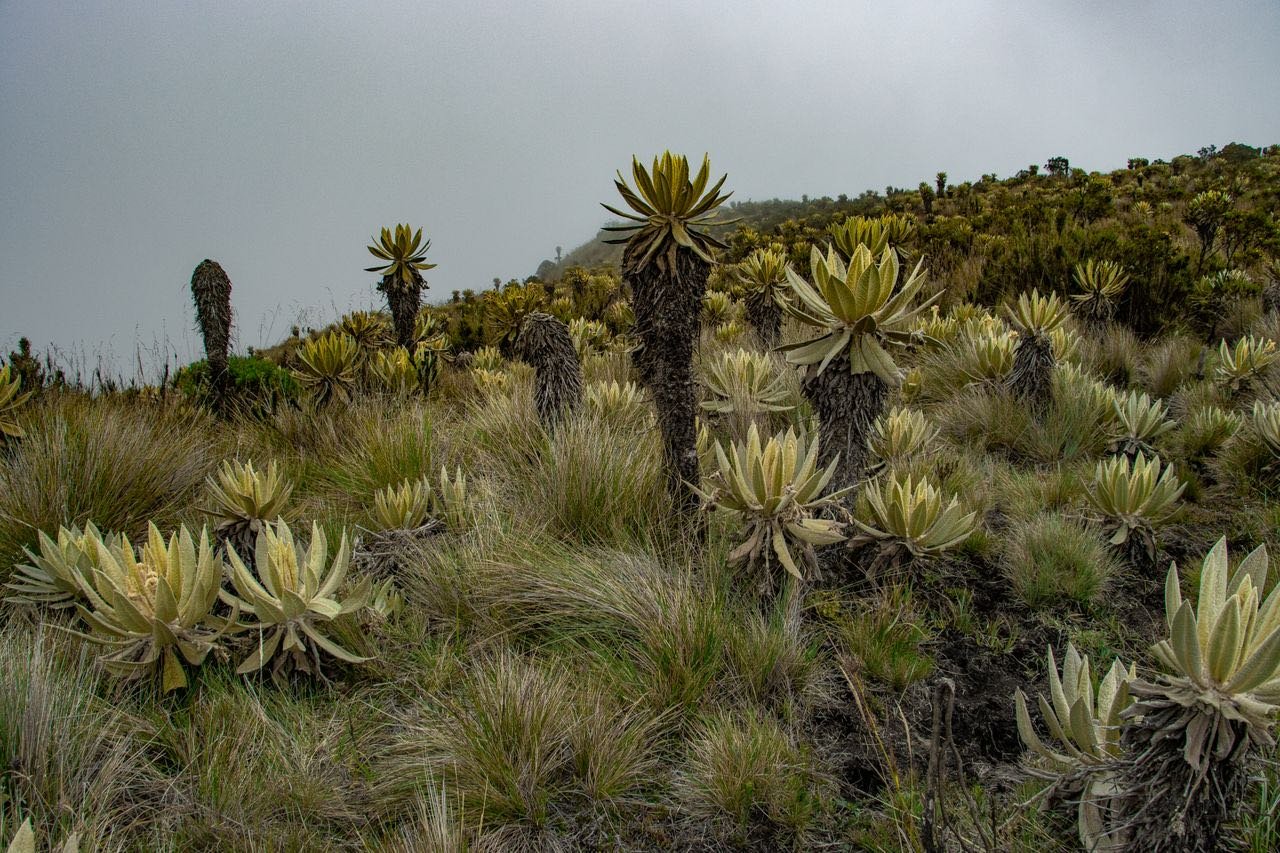 Frailejones in mist, typical of Colombian paramo at altitude.
Local Guides from El Cocuy Town
The most cost-effective option. Local guides are available at the park entrance and through guesthouses in El Cocuy. Ask at Hospedaje Casa Escondida or Los Frailes hostel - both maintain contacts with reliable local guides.
- Day guide: approximately COP 150,000-200,000 per day as of 2026
- Full circuit guide: approximately COP 800,000-1,200,000 for a 5-day circuit (single group)
- Mule rental for gear: approximately COP 80,000-120,000 per mule per day
Bogota-based Operators with El Cocuy Packages
Several Bogota outdoor companies package the El Cocuy circuit as an all-inclusive multi-day trip including private transport from Bogota, accommodation at the base camp haciendas, and guiding.
- Caminandes Colombia - operates regular El Cocuy group departures, approximately COP 1,500,000-2,200,000 per person for 5-day all-inclusive package including transport from Bogota as of 2026
- Colombia Viajes y Turismo - similar package pricing
- Guías y Montañas - specialises in technical mountain routes including El Cocuy, approximately COP 1,800,000-2,500,000 per person for guided 5-day trip with Bogota transport
You can also browse Bogota tours for operators offering El Cocuy adventure packages that include transfers and guides departing from Bogota.
What’s typically included in all-inclusive packages: Return transport from Bogota, accommodation at base haciendas, all meals, park permit, experienced guide, emergency equipment. What’s typically excluded: Personal trekking gear, travel insurance, optional porter.
Permits and Logistics
Park Permits
Permits must be purchased through the Parques Nacionales Naturales de Colombia reservation system. The easiest way is online at the PNN Colombia website before travel. Costs as of 2026:
- Foreign visitors: approximately COP 82,000 per person
- Colombian nationals: approximately COP 30,000 per person
The park enforces a daily visitor quota for the high zones. In peak season (December-February), permits sell out 2-4 weeks in advance. Do not arrive expecting walk-up entry in peak season.
Getting to El Cocuy
El Cocuy town is approximately 450km northeast of Bogota.
By bus: Buses to El Cocuy depart from Bogota’s Terminal de Transportes Norte. The journey takes 8-10 hours and costs approximately COP 70,000-90,000 as of 2026. Libertadores company operates this route. An alternative is to take a bus to Capitanejo or Socha and connect from there.
By small aircraft: Charter flights from Bogota to El Cocuy airstrip are occasionally available through operators, reducing travel to approximately 1 hour. This is significantly more expensive - contact operators for pricing.
Acclimatisation
This is non-negotiable. El Cocuy town sits at 2,750m - significantly lower than the 4,500-4,900m you’ll be hiking at. Spend a minimum of 2 nights in El Cocuy before the high circuit. Symptoms of altitude sickness (headache, nausea, fatigue) that appear in the first 24 hours are normal - do not ascend until they resolve. Coca leaves, available from local stores, are a traditional Andean aid. Diamox (acetazolamide) is used by some trekkers - consult a doctor before using it.
Accommodation at the Base
The trek’s starting and ending points are the haciendas at the foot of the mountain, approximately 1 hour by 4WD from El Cocuy town.
- Hacienda La Esperanza: The main gateway for the northern circuit. Basic dormitory accommodation from approximately COP 40,000 per person per night; meals approximately COP 20,000-30,000. Owned by the Flórez family who have guided in the area for decades.
- Hacienda Sisuma: Southern sector base. Similar pricing and facilities.
In El Cocuy town:
- Hospedaje Casa Escondida: Doubles from approximately COP 80,000/night
- Los Frailes Hostel: Dorms from approximately COP 40,000, doubles from approximately COP 80,000; the owner Rafael is an excellent source of current trail conditions
Search hotels in Cocuy Colombia on Booking.com
Camping
Wild camping is permitted in designated zones within the park. You must be self-sufficient with food, cooking equipment, and a tent rated for sub-zero temperatures. Nights at 4,200m in the circuit camping areas regularly drop to -5C to -8C. A sleeping bag rated to at least -10C is essential.
Essential Gear
Non-negotiable:
- Waterproof jacket and trousers
- Trekking boots with ankle support (waterproof)
- Thermal base layers (top and bottom)
- Fleece mid-layer
- Warm hat, balaclava, gloves
- Sleeping bag rated -10C
- Trekking poles (knee protection on steep descents)
- Sunscreen SPF50 (UV at 4,500m is intense even on cloudy days)
- Water purification tablets or filter (lagoon water is drinkable when purified)
- Emergency whistle and basic first aid kit
Strongly recommended:
- Gaiters for mud and stream crossings
- Waterproof stuff sacks for sleeping bag and clothing
- Altitude sickness medication (consult doctor)
- Satellite communicator or emergency beacon (no mobile signal on the circuit)
Best Season
Primary window: December to February The main dry season delivers the most reliable clear skies and stable trail conditions. January is considered the single best month - visibility to the glaciers is excellent and the paramo is in its most photogenic state. Daytime temperatures above 4,000m are 5-12C. Night temperatures drop to -5C to -10C.
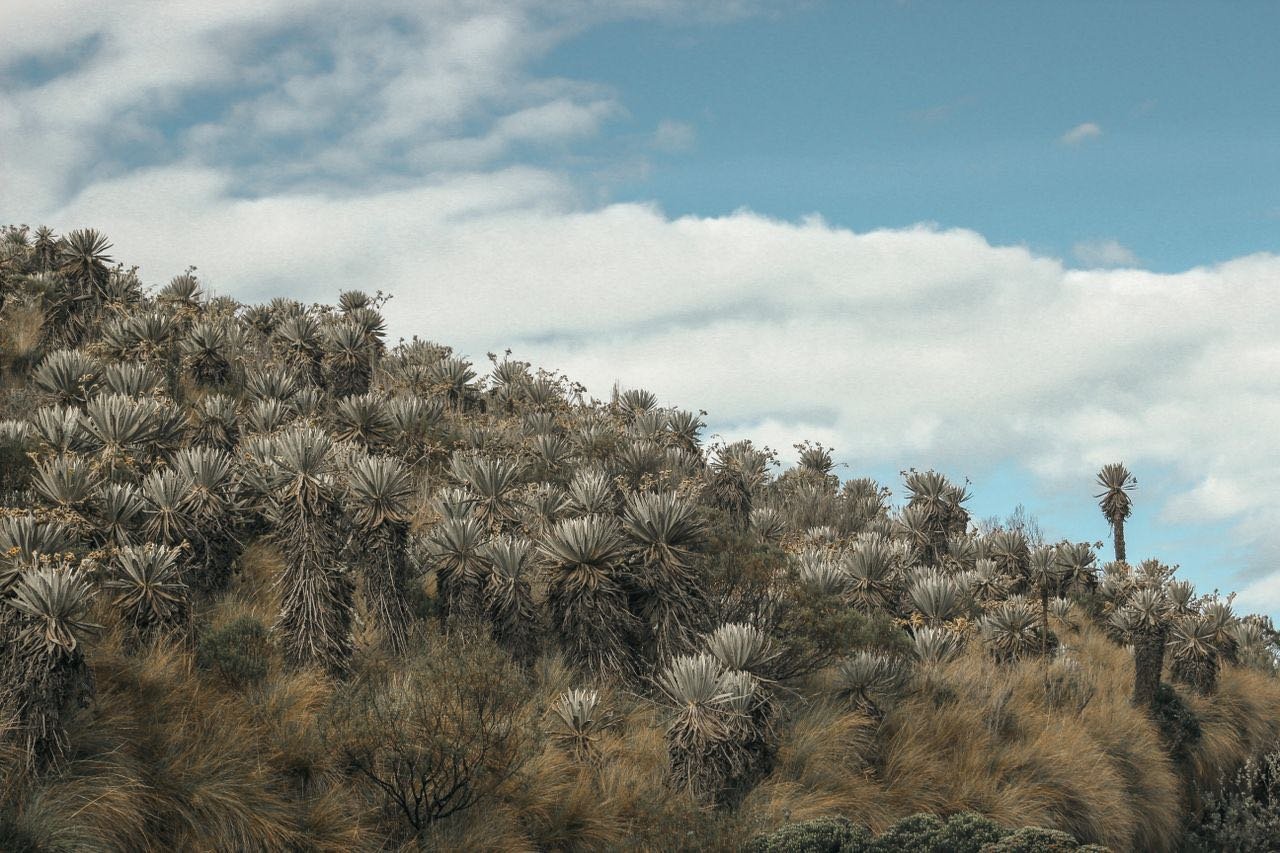 Frailejones cover a paramo slope on a clear day.
Secondary window: June to early July A shorter, less reliable dry window. Weather is more variable than December-February but avoids the peak December crowds. Trail conditions are acceptable for fit, well-prepared trekkers.
Avoid: March through November (except June-early July) The wet season makes the circuit genuinely difficult. Trails become muddy and slippery, passes are frequently cloud-covered, and temperatures feel colder in persistent rain. Safety risks from exposed rocky terrain in wet conditions are real. The circuit is not impossible in the wet season but delivers a significantly inferior experience.
Difficulty and Fitness
The El Cocuy circuit is rated strenuous to very strenuous. It is not a technical mountaineering route, but it requires:
- Ability to hike 6-8 hours per day for 4-7 consecutive days
- Comfortable carrying a 10-15kg pack at altitude
- Strong knees for steep descents on loose or rocky terrain
- Mental resilience in cold, potentially wet conditions
Previous high-altitude trekking experience (above 3,500m) is a significant advantage. If you have only trekked at low altitude, acclimatise carefully and consider hiring a guide who can adjust pace.
Health and Safety
Altitude sickness: The main risk. Ascend slowly, drink 3-4 litres of water daily, eat light, avoid alcohol in the first 3 days. If symptoms worsen (confusion, inability to walk straight, severe headache that doesn’t improve with ibuprofen), descend immediately.
Weather changes: Conditions above 4,500m can shift from sunshine to blizzard conditions in under an hour. Always start early to reach high passes by midday before afternoon weather deteriorates.
Mobile signal: There is no mobile network coverage on the high circuit. Inform someone of your planned route and expected return date. Many guides carry satellite communicators.
Insurance: Standard travel insurance typically does not cover trekking above 4,500m. Obtain specialist trekking insurance that covers high-altitude rescue and evacuation before departure. Travel insurance for Colombia with adventure activity cover is available through EKTA.
Related reading: Purace National Park Hike.