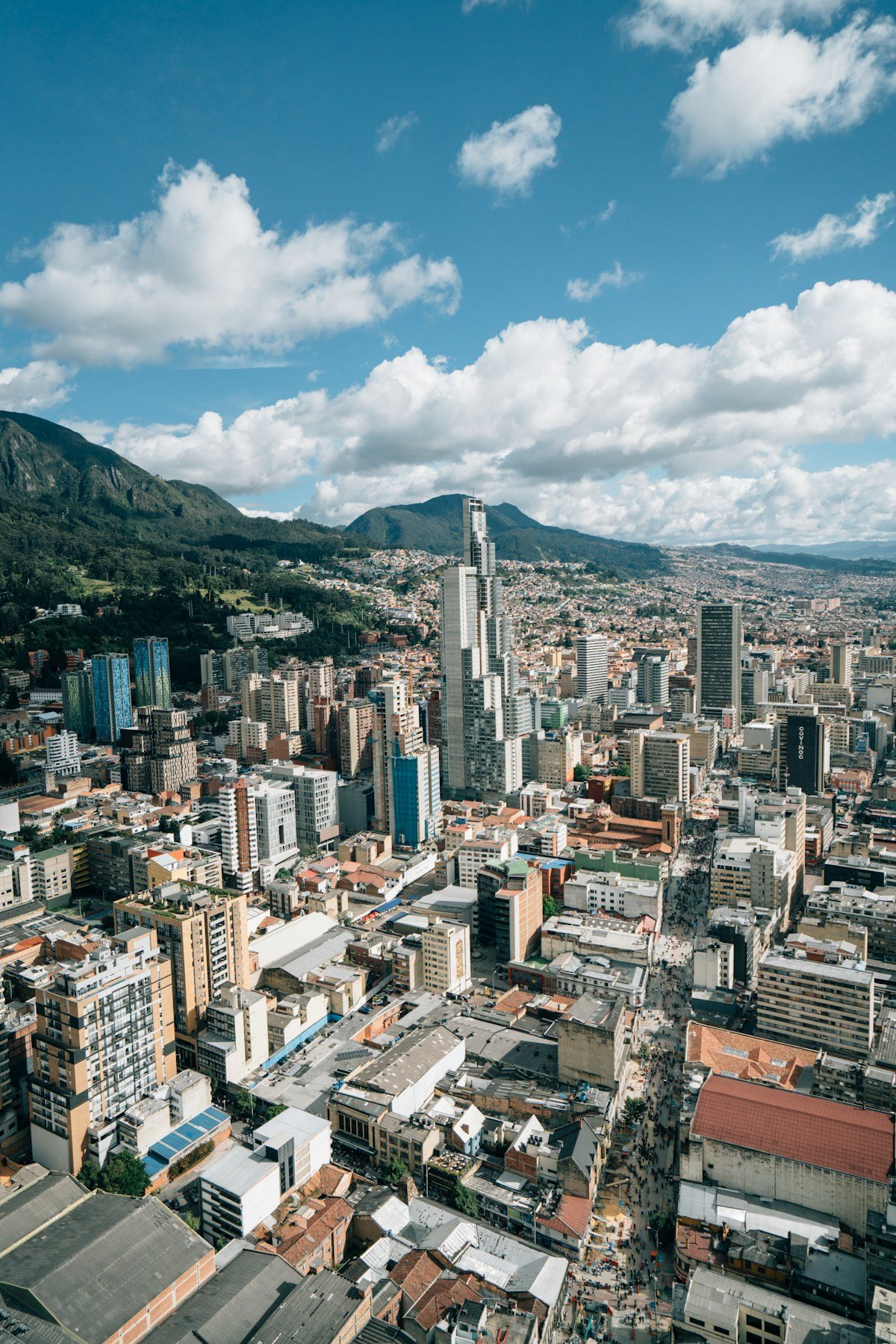
Bogotá sits at 2,600 metres in the Eastern Andes, and that elevation defines the city’s climate in a way that surprises most first-time visitors. There are no hot seasons and no cold seasons as a beach traveller would understand them - instead, there are two relatively dry periods and two wetter periods, all at cool, sweater-weather temperatures. Rain falls mainly in the afternoon. Mornings across most months are crisp and often clear.
The Two Dry Seasons
December to February: Bogotá’s primary dry season. Rain is less frequent, humidity drops, and the city’s famous blue-sky days arrive reliably. Late December brings Christmas light installations across the major parks, and early January is one of the best weeks of the year - dry, manageable crowds, and comfortable temperatures.
June to August: A secondary dry season sometimes called “verano” or “mitad de año.” It is slightly wetter than December–February but still considerably drier than the April–May or October–November peaks. The Bogotá Book Fair falls just before this window (April–May), and the July and August period is popular with European travellers.
The Wet Seasons
March to May: The first wet season. Afternoons bring frequent rain, often heavy but usually short. Mornings are often clear enough for Monserrate, the Gold Museum, or La Candelaria walking tours. The Iberoamerican Theatre Festival (April, even years) and Bogotá International Book Fair (late April to early May) fall in this period - cultural travellers consider this one of the best times to visit despite the rain.
September to November: The second and usually wetter of the two rainy periods. October is typically the wettest month. Rock al Parque (September), one of Latin America’s largest free rock festivals, draws large crowds to Parque Simón Bolívar regardless of drizzle.
Find tours and experiences in Bogotá
Month-by-Month Breakdown
January
One of Bogotá’s best months. The dry season is established, Christmas and New Year’s holiday crowds have largely cleared after January 6 (Epiphany), and temperatures are comfortable. The city feels calm and functional rather than festive-hectic. Good for museums, coffee shop working, and day trips to Villa de Leyva or the salt cathedral at Zipaquirá.
Weather: 14–19°C days, 7–10°C nights. Clear mornings, minimal rain. Crowds: Moderate - dropping after January 6. Best for: Independent exploration, day trips, cultural visits.
February
Quieter than January with similar dry weather. A good month for budget travellers - accommodation prices are lower than the December–January peak without compromising on weather quality. The Barranquilla Carnival (February, occasionally early March) is a 3-hour bus or flight away and can be combined with a Bogotá stay.
Weather: 14–18°C days. Dry, occasionally overcast. Crowds: Low to moderate. Best for: Budget-conscious visitors, slow travellers, combining with Barranquilla Carnival.
March
The transition into the first wet season. Early March is often still dry; by late March, afternoon rain is becoming regular. Temperatures are comfortable. Semana Santa (Holy Week, March or April) brings a surge of domestic travel and raises prices noticeably across the city.
Weather: 15–19°C days, increasing afternoon rain from mid-month. Crowds: Normal to high during Semana Santa. Best for: Early-March visits; Semana Santa processions in La Candelaria.
April
Mid-rainy season but arguably Bogotá’s richest cultural month. The Iberoamerican Theatre Festival (every two years, even years) transforms the city with international performances across venues and streets. The Bogotá International Book Fair typically begins in late April. Rain falls most afternoons but mornings are usually clear.
Weather: 14–18°C. Daily afternoon rain averaging 70–90mm for the month. Crowds: High during Feria del Teatro and Book Fair; moderate otherwise. Best for: Theatre and literary events, cultural tourism, bookshops.
May
The Book Fair continues into early May and is one of the largest in the world, drawing publishers and readers from across Latin America. Rain remains frequent. Mornings are the best window for outdoor activities.
Weather: 14–18°C. Wet afternoons. Similar to April. Crowds: High during Book Fair week; moderate afterwards. Best for: Bogotá International Book Fair visitors.
June to August
The mid-year dry season. June is slightly transitional but July and August are the most reliably dry months after December–January. Temperatures are comfortable - July averages slightly lower daytime highs than January. Bogotá receives more international tourism in July than any other month outside December. The Independence Day celebrations (July 20) involve parades and public events across the city.
Weather: 13–18°C. July and August are the driest mid-year months. Crowds: Moderate to high in July–August, with international visitors. Best for: Outdoors, walking tours, Monserrate, cycling on the Ciclovía (every Sunday).
September
Rock al Parque (usually last weekend of September) is a free three-day festival in Parque Simón Bolívar attracting 300,000–400,000 people. Rain is increasing but the city operates normally. Accommodation remains reasonably priced.
Weather: 13–17°C. Rain increasing. Crowds: Very high during Rock al Parque weekend; normal otherwise. Best for: Music festival tourism, quieter museum visits between showers.
October
Bogotá’s wettest month. Afternoons are reliably rainy, and mornings can be overcast. The Bogotá International Film Festival (BIFF, October) offers a cultural counterpoint to the weather. Not ideal for outdoor activities or Andean day trips, but the city’s indoor culture - museums, restaurants, the Gold Museum, Botero collection - is entirely unaffected.
Weather: 12–16°C. Heaviest rainfall of the year. Crowds: Low tourist numbers; mostly domestic visitors. Best for: Film festival, museum visits, budget travel.
November
Rain eases through November as the second wet season winds down. By mid-November, dry days are becoming more frequent. Accommodation prices remain low. The Christmas light installations along Avenida Eldorado and in major parks typically begin in late November.
Weather: 13–18°C. Rain decreasing through the month. Crowds: Low to moderate. Best for: Budget travel before the December price rise, early Christmas lights.
December
The festive season transforms Bogotá. Christmas light displays across Parque Nacional, Parque El Virrey, and the Eje Ambiental draw evening crowds of Bogotanos and domestic tourists. The dry season returns fully by mid-December. From December 20 to January 2, the city sees its annual domestic tourism peak - prices rise 25 to 50 percent above normal, but availability is generally better than Cartagena.
Weather: 14–19°C. Dry from mid-month. Crowds: High from December 20 onwards. Best for: Christmas atmosphere, light displays, New Year celebrations in Parque 93 and Zona Rosa.
What to Book in Advance
December 20 to January 6: Book accommodation 3 to 4 weeks ahead in Bogotá. Boutique hotels in Zona Rosa and Chapinero fill first.
Book Fair and Iberoamerican Theatre Festival (April–May): Book 3 to 4 weeks ahead; city fills with domestic and regional visitors.
Rock al Parque weekend (September): Book accommodation the week before - some visitors come without reservations, but options shrink near the festival.
June to August: 2 to 3 weeks ahead is sufficient for most options.
Getting There
El Dorado International Airport is one of South America’s largest hubs. Domestic connections to Medellín (30 min), Cartagena (1 hour), Cali (1 hour), and Santa Marta (1.5 hours) are frequent. International direct flights arrive from Miami, Madrid, New York, Toronto, Lima, Buenos Aires, and other Latin American cities. From the airport to Chapinero or Zona Rosa: taxi app (InDriver, Cabify) approximately COP 40,000–65,000 depending on traffic.