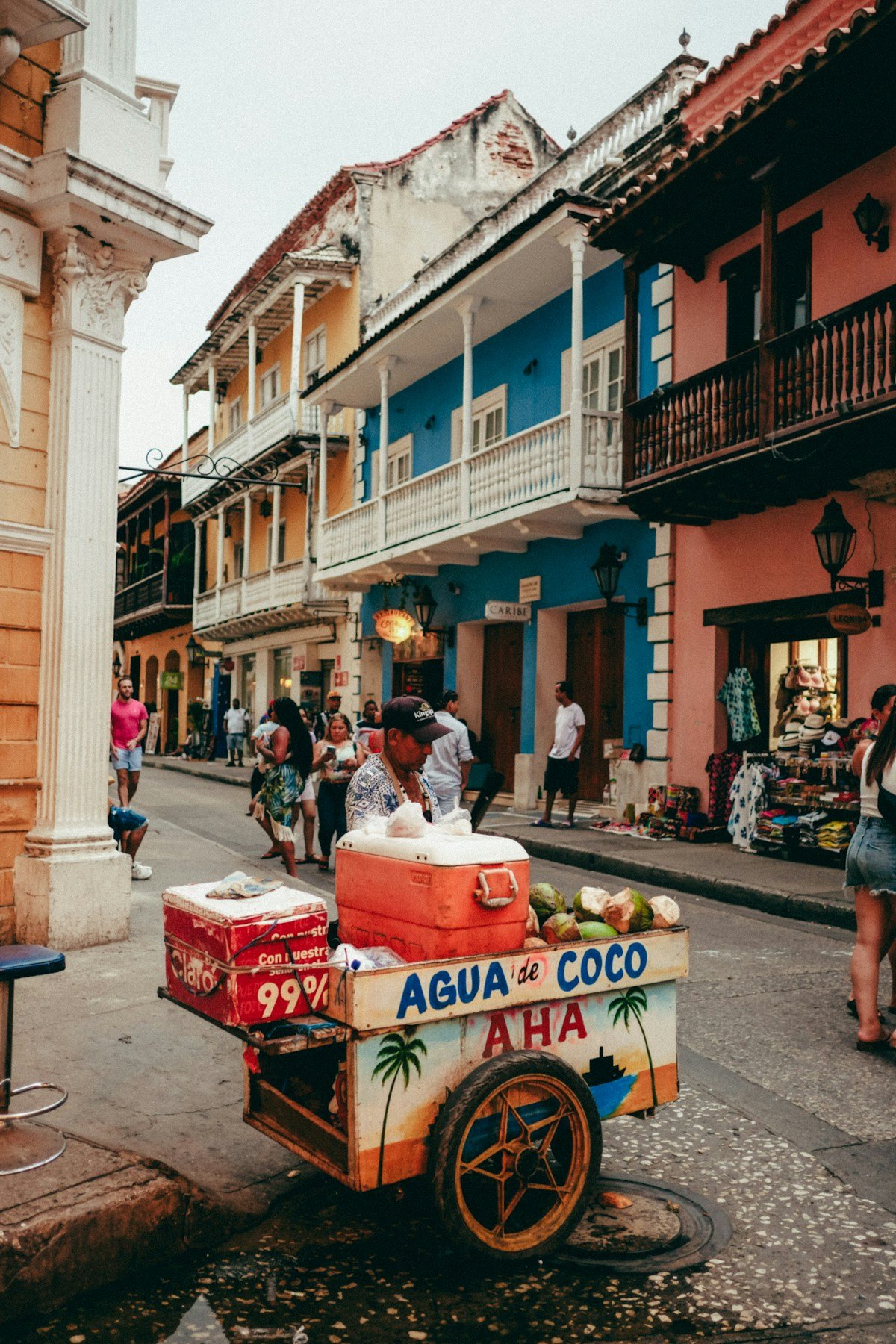
Cartagena’s food scene is shaped by the Caribbean sea on one side and the history of African, indigenous and Spanish culture on the other. The walled city has restaurants that have earned serious international attention. Getsemaní, just outside the walls, has street food that is cheaper and often more interesting. The islands offshore offer fresh-caught seafood in open-air huts with sand underfoot.
You can eat well here at every budget level. This guide covers the main zones, the dishes and the specific spots worth seeking out.
Getsemaní - Street Food and Local Eating
Getsemaní is Cartagena’s most authentic neighbourhood and the place to eat cheaply and well. The barrio sits immediately south and east of the walled city, connected by the Calle de la Media Luna. In recent years it has gentrified significantly - boutique hotels, craft cocktail bars and murals on every wall - but the street food culture remains intact.
What to Eat in Getsemaní
Ceviche costeño: Not the Peruvian-style acid-cured version but a Caribbean interpretation: shrimp, fish or a mix, marinated in lime and seasoned with ketchup, mayonnaise, hot sauce and onion. Polarising if you know Peruvian ceviche but genuinely delicious on its own terms. From carts on Calle Larga and around Parque del Centenario, a serving runs COP 10,000–15,000.
Agua de coco: Vendors push carts through the streets selling fresh coconuts macheted open to order. COP 3,000–5,000 for the coconut water; they will scrape the interior flesh for COP 1,000–2,000 more. Essential in the heat.
Arepa de huevo: Deep-fried arepa stuffed with a whole egg - a Caribbean coast speciality. Street versions cost COP 3,000–6,000 and are sold from wooden kiosks near the plaza. The best versions have a slightly crisp exterior and a soft, runny egg centre.
Patacones: Twice-fried green plantain rounds, served flat and golden. Eaten with guacamole, ceviche or hogao (tomato and onion sauce). Street versions from COP 3,000–5,000; at restaurants they arrive as a side for COP 8,000–15,000.
For sit-down restaurant picks across Getsemaní - from Demente’s modern coastal cooking to Alquímico’s rooftop bar - see our best restaurants in Cartagena guide.
The Walled City: What to Eat
Inside the walls, prices are higher than Getsemaní but the quality at the better kitchens is genuine. The dishes to look for rather than specific restaurants:
Pargo rojo al ajillo: Whole red snapper fried or grilled and finished with garlic oil. Sit-down restaurants in the walled city charge COP 60,000–90,000 for a full portion; the same fish at Bocagrande runs COP 45,000–65,000. The price difference often reflects sourcing - the better restaurants work directly with day boats.
Camarones al coco: Shrimp cooked in a coconut milk reduction with a ginger or lime finish. Caribbean rather than tropical-sweet; the sauce thickens from reduction, not starch. A starter portion runs COP 45,000–65,000.
Arroz de lisa: A Cartagena speciality occasionally on older menus - rice cooked with the salted, smoked roe of lisa (mullet). Intensely savoury, rarely found inland. Ask whether a restaurant carries it; it is not guaranteed.
The Essential Dish: Cazuela de Mariscos
Every visit to Cartagena should include at least one cazuela de mariscos - a thick casserole of shrimp, fish, crab and/or clams cooked in a base of tomatoes, onion, herbs and coconut milk, then thickened with cream. It arrives in a clay or iron pot, served with coconut rice and patacones. This is the signature of Caribbean coastal cooking and is better in Cartagena and Santa Marta than anywhere inland. Expect to pay COP 45,000–75,000 at a mid-range restaurant.
Bocagrande and Lagito
Bocagrande is the modern beach district immediately south of the walled city - high-rises, beachfront restaurants and less atmosphere but cheaper prices than inside the walls.
El Boliche Cebichería (Carrera 2 No. 6-117, Bocagrande): A solid mid-range seafood spot popular with locals. The ceviche mixto (mixed ceviche) runs COP 35,000–45,000; the whole fried snapper (pargo frito) with coconut rice and salad is approximately COP 55,000–70,000.
Along the Bocagrande beachfront, numerous restaurants set up plastic tables on the sand from midday. Quality is variable - walk along and look at what other tables are eating rather than reading menus. Whole grilled fish with rice, salad and a cold beer runs COP 45,000–65,000 at the better spots.
The Islands: Rosario Islands and Barú
The most relaxed seafood meals in the Cartagena area happen on the islands themselves. On the Rosario Islands (1.5 hours by boat from Muelle Turístico), open-air restaurants on the beach serve grilled fish, ceviche and arroz con coco (coconut rice) under palm-leaf roofs. Prices are not cheap - expect COP 50,000–80,000 for a fish plate - but the setting is unbeatable.
On the Barú Peninsula, reached by boat or a rough road south of the city, the restaurants at Playa Blanca beach are more rustic. Fresh pargo frito with patacones and a cold beer runs approximately COP 50,000–65,000. Go on a weekday if possible - Playa Blanca is crowded with day-trippers at weekends.
Drinks and Dessert
Ron (rum) and refajo: Cartagena drinks rum. The local brands - Ron Viejo de Caldas and Tres Esquinas - are cheap and used for mixing. A rum and fruit juice at a Getsemaní bar costs COP 15,000–25,000.
Corozo juice: A tart, deep red juice made from a native Caribbean palm fruit. Found at juice stalls in markets and some restaurants. COP 4,000–7,000. Very refreshing and distinctive.
Cocadas: Coconut sweets sold by vendors on the streets of both the walled city and Getsemaní. Variations include coconut with panela (raw cane sugar), toasted coconut, and coconut with anis seed. COP 2,000–4,000 each.
Take a Guided Food Tour of Cartagena
Cartagena’s best food is divided between the tourist-facing restaurants of the walled city and the authentic cooking of Getsemaní and the Mercado de Bazurto - and without a guide, most visitors never reach the latter. A guided food tour typically covers Getsemaní street food (arepa de huevo, ceviche costeño, and patacones from the Plaza de la Trinidad vendors), a morning walk through Bazurto market with a local guide explaining the Caribbean ingredients, and often a hands-on cooking class for cazuela de mariscos or arroz con coco. It is also one of the most direct ways to understand the African and indigenous roots of the coastal cuisine beyond what any restaurant menu can convey. Book a Cartagena food tour
Practical Notes
- High season crowds: During December–January and July, the walled city restaurants are very full. Book dinner ahead or eat early (before 7:30pm) to secure a table without a reservation.
- Service: Service in upscale Cartagena restaurants is often slower than you expect - the pace is deliberate and unhurried. Don’t confuse it with inattention.
- Street food safety: The street food in Getsemaní is generally fine. Stick to vendors with visible traffic (fresh coconut water is inherently safe; cooked items turn over quickly if the cart is busy).
- Humidity and heat: July–August peaks at 32–34°C with high humidity. Eat lunch early (noon–1pm) or late (2pm+) to avoid the peak midday heat while walking between restaurants.
- Sit-down restaurants: For curated picks by tier - from Carmen’s tasting menus to reliable mid-range spots in Getsemaní - see our best restaurants in Cartagena.
- Food tours: Food and cooking tours in Cartagena covers Caribbean market visits, street food walks through Getsemaní and hands-on Colombian cooking classes in the Old City.
Where to Stay in Cartagena
For the best access to the food neighbourhoods covered here, the walled city puts you steps from Carmen, La Cevichería, and the Getsemaní street food circuit. Bocagrande is cheaper but adds a taxi ride to most of the above. Search hotels in Cartagena to compare across both areas.