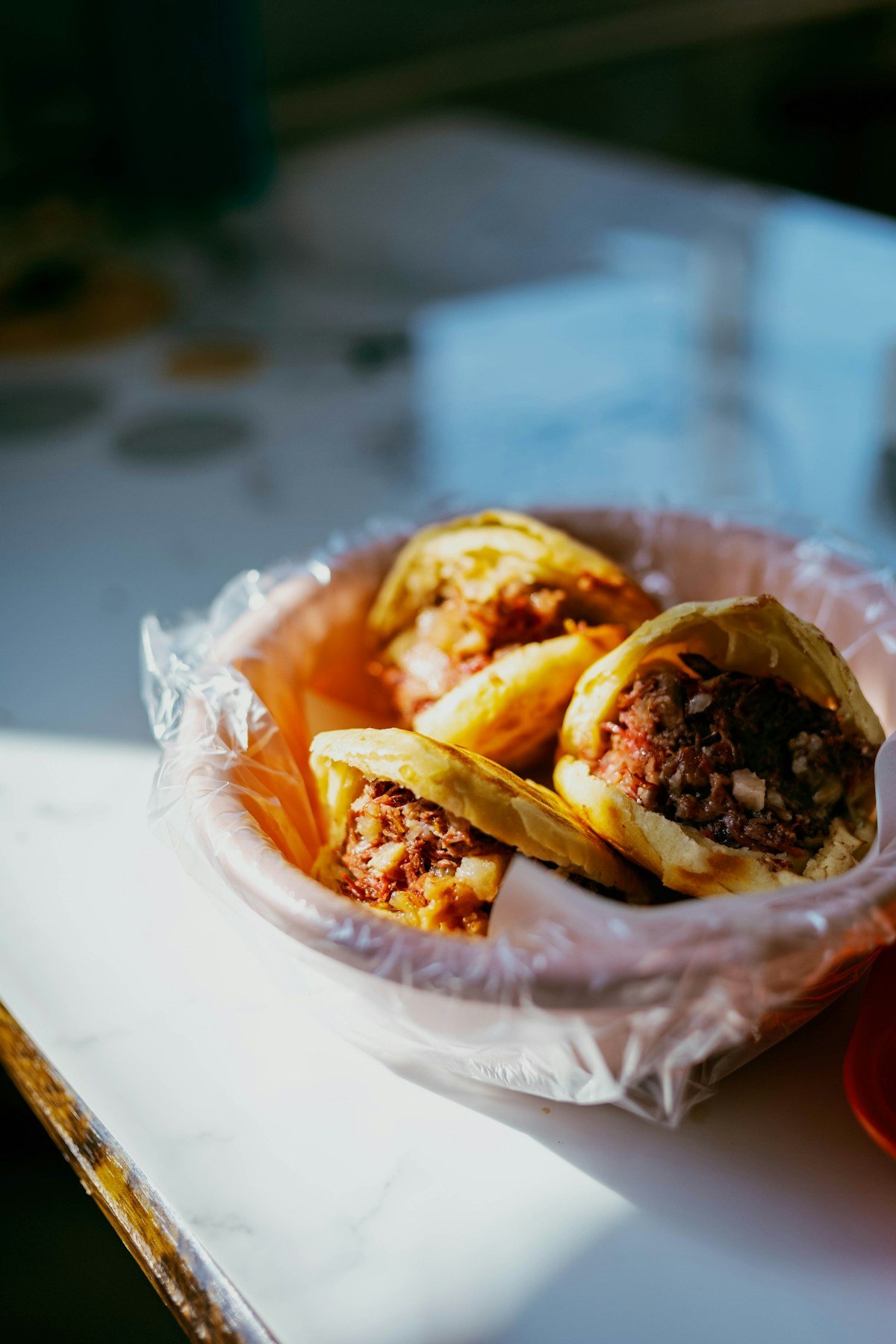
Colombian food is regional, filling and deeply underrated. The country’s geography drives much of the variety: the cold Andean highlands produce hearty potato-based soups and corn dishes; the coasts bring fresh seafood and coconut rice; the Amazon and llanos regions contribute river fish and yuca. You will eat differently in Bogota, Cartagena and Leticia even if you order the same category of dish.
This guide covers the essential dishes, what to expect from them and where they are best found.
The Non-Negotiables
Bandeja Paisa
The most famous Colombian dish and the one most foreigners encounter first. A bandeja paisa is a divided plate - originally from Antioquia department, home of Medellin - that typically includes red beans cooked with pork, white rice, ground beef (carne molida), chicharrón (fried pork belly), fried egg, fried plantain, blood sausage (morcilla), arepa and avocado. Some versions add mazamorra (a corn dessert) on the side.
It is an enormous portion and was historically designed for agricultural workers who needed a full day’s calories in one meal. In Medellin, you can eat it for COP 20,000–30,000 at a local restaurante or up to COP 55,000 at a tourist-facing spot. El Ají near El Poblado and Hacienda in Laureles both do solid versions.
Ajiaco
Bogota’s signature dish and the city’s most comforting meal. Ajiaco is a thick chicken soup made with three types of native potato (papa criolla, pastusa and sabanera), guascas herb and corn on the cob. It is served with a side of thick cream, capers and avocado to stir in. The combination of papas criollas (small yellow potatoes that dissolve into the broth) and the grassier guascas gives it a flavour that cannot be replicated exactly anywhere else.
Find it at La Puerta Falsa on Calle 11 in La Candelaria (one of the oldest restaurants in Bogota, open since 1816) for approximately COP 22,000–28,000. Virtually every traditional restaurante in Bogota serves it.
Arepas
Arepas are the daily bread of Colombia - a flat, round cake made from ground corn masa, cooked on a griddle or over charcoal. But “an arepa” covers enormous regional variety:
- Arepa paisa (Antioquia): plain, white, thin, eaten with butter and cheese
- Arepa de choclo (Coffee Region): sweet yellow corn, often served with cheese melted on top
- Arepa de huevo (Caribbean coast): deep-fried and stuffed with egg - a Barranquilla speciality found across the coast
- Arepa boyacense (Boyacá): thicker, richer, made with fresh cheese inside
Street arepa carts operate across every city from 5am. Prices run COP 2,000–8,000 depending on type and region.
Empanadas
Every country in South America has empanadas; Colombia’s version uses corn masa rather than wheat pastry. They are typically smaller than Argentine empanadas, fried rather than baked, and filled with potatoes and meat (beef or chicken). In the south of Colombia (Nariño and Cauca departments), empanadas are a significant point of local pride.
Street empanadas at carts cost COP 2,000–4,000 each and are usually accompanied by a small cup of ají - a fresh hot sauce made from chillies, onion and coriander.
Regional Dishes Worth Seeking Out
Sancocho
A slow-cooked stew that varies significantly by region. Sancocho trifásico (three meats) is a Bogota favourite made with beef, chicken and pork together in a light broth with plantain, yuca, corn and coriander. Sancocho de pescado is the coastal version using river or sea fish. In the llanos (eastern plains), it is cooked with beef and large yuca chunks. A restaurant bowl runs COP 18,000–30,000.
Cazuela de Mariscos
A Cartagena and Caribbean coast staple: a rich, thick seafood casserole of shrimp, fish, crab and clams in a cream and coconut milk base. Found at seafood restaurants along the Boca Grande waterfront and inside the walled city. Expect to pay COP 45,000–75,000 for a proper portion at a restaurant like La Cevichería (Calle Stuart, Cartagena).
Ceviche Costeño
The Colombian Caribbean version of ceviche differs from Peruvian ceviche: it is marinated rather than “cooked” in acid, and it often includes ketchup, mayo and hot sauce in a style called ceviche de camarón. Street portions in Getsemaní (Cartagena) cost COP 10,000–15,000. Sit-down restaurant ceviche runs COP 30,000–50,000.
Lechona
A Tolima department speciality: a whole suckling pig stuffed with rice, peas and spices, then slow-roasted for up to 10 hours. It is a dish cooked for celebrations - you are most likely to encounter it at market stalls or during festivals in Ibagué or Espinal. A serving runs COP 15,000–25,000.
Fritanga
A platter of fried and grilled meats common in the highlands - chicharrón, blood sausage, offal, papa criolla and sometimes corn on the cob. It is working-class, late-night food, found at fritangas (street stalls that fire up from around 6pm). Per-piece prices start at COP 3,000–8,000.
Street Food
Obleas
Thin wafer discs sandwiched with arequipe (dulce de leche), jam, fresh cheese or a combination. They are everywhere in Bogota - carts at Parque de los Periodistas and near the Gold Museum charge COP 3,000–7,000 depending on the filling.
Mangos Biche
Green mango spiked with salt, lime and chilli powder - sold from ice boxes by vendors in coastal cities and highland markets. COP 2,000–4,000 per bag. In Cartagena the mango vendors push wheeled carts through the old town streets.
Chontaduro
A palm fruit boiled in salt water, indigenous to the Pacific coast and Amazon regions. It has a dense, starchy texture and a mildly earthy flavour. Found at markets in Cali, Buenaventura and occasionally Bogota. A small bag costs COP 3,000–6,000.
Drinks
Tinto
Colombian “tinto” is a small black coffee - not an espresso, but a short, strong brewed coffee. It costs COP 1,500–3,000 at a tienda and is the daily driver. Speciality coffee culture has grown significantly in recent years: Bogota, Medellin and the Coffee Region now have third-wave cafés doing single-origin pour-overs from COP 6,000–15,000 per cup.
Aguardiente
The national firewater: anise-flavoured cane spirit, around 29% ABV. Each department has a brand - Antioqueño in Medellin, Néctar in Bogota, Tapa Roja in Nariño. A 750ml bottle runs COP 30,000–50,000 at a shop. In a bar, expect COP 4,000–8,000 per shot.
Lulada
A cali-specific drink: lulo fruit (similar to a cross between lime and rhubarb) crushed with ice and sugar. Only widely available in Cali. Refreshing, sharp and unlike anything else. From COP 4,000–8,000 at local juice bars.
Champús
A warm (or cold) corn-based drink with lulo, panela, cinnamon and cloves - traditionally associated with Pacific festivals and sold at outdoor markets during Semana Santa. Unusual but worth trying if you encounter it.
Explore Colombian Food on a Guided Tour
The fastest way to eat through Colombia’s regional food culture is with a local guide in each city. Food tours in Bogotá focus on ajiaco, Paloquemao market, and La Candelaria street food; Medellín tours explore the paisa cooking tradition at Plaza Minorista and Mercado del Río; Cartagena tours prioritise the Getsemaní street food circuit and the Mercado de Bazurto, where the Caribbean coast’s ingredient story is most visible. For first-time visitors trying to understand Colombian regional cuisine across a short trip, booking a guided food tour in your first city is one of the most efficient half-days you can spend. Book a food tour in Colombia
Practical Notes
- Menú del día (set lunch): Colombia’s most useful institution. A soup course, a main with rice, beans and protein, a juice and sometimes a small dessert for COP 10,000–18,000. Available in almost every local restaurant between noon and 3pm.
- Ají (hot sauce): Not a staple on tables - you often have to ask for it. Colombian food is not particularly spicy; the heat, where present, comes from the condiment.
- Tipping: Not mandatory, but 10% is expected at sit-down restaurants. Some places add a servicio charge automatically - check the bill.
- Tap water: Tap water is safe to drink in Bogota, Medellin and most cities. In smaller towns and Caribbean coast destinations, use bottled or filtered water.
- Food tours: The best way to sample Colombian food culture beyond your hotel is with a local guide. Food tours in Colombia covers Bogota, Medellin and Cartagena, with market visits, street food walks and cooking classes.
Plan Your Visit
If you’re planning a trip around Colombian food, you’ll likely anchor in two or three cities - Bogotá for the highland cuisine, Medellín for the paisa tradition, and Cartagena for the Caribbean coast. Search hotels in Colombia to find accommodation across all three cities and beyond.