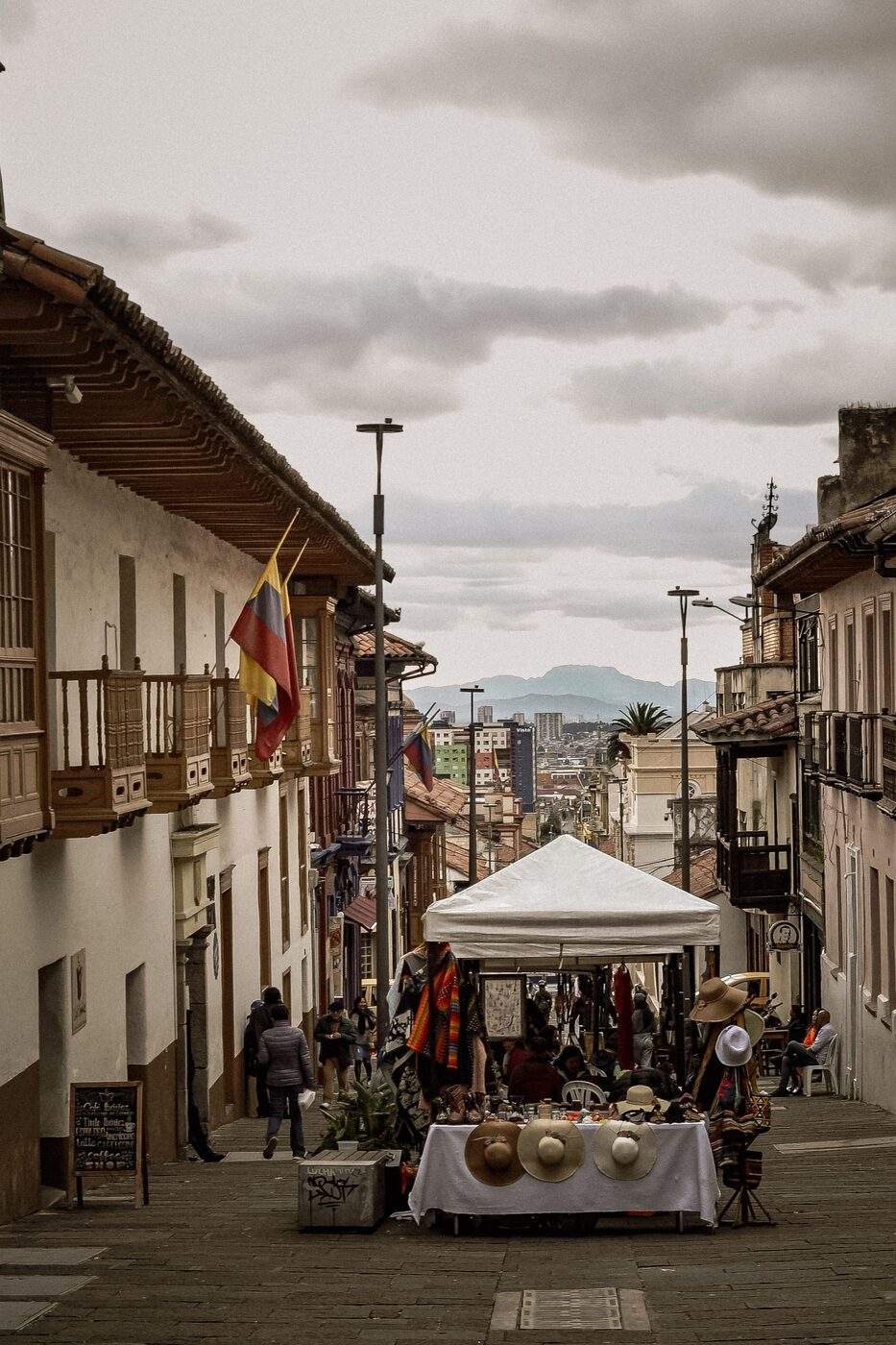
Colombia handles money in a way that rewards preparation and punishes assumptions. The exchange rate produces very large nominal numbers - COP 200,000 sounds significant but is roughly USD 48 as of 2026 - which causes mental miscalculation for visitors not accustomed to dealing in millions. The practical reality is that Colombia is a moderately affordable country for visitors from the US, UK, or EU, with a cost structure that varies dramatically between a backpacker dorm in Taganga and a five-star hotel in Bogotá’s Zona Rosa.
To turn pesos into a trip total, try our Colombia trip cost calculator, which works in US dollars.
Understanding the currency, how to access it, and where spending cash versus card makes sense will save both money and the minor panic of being without cash in a town where the nearest ATM is an hour away.
The Colombian Peso (COP)
The Colombian Peso (symbol: $, code: COP) is the sole legal currency for all domestic transactions. Foreign currencies are not accepted for everyday purchases. The central bank issues banknotes in denominations of COP 1,000, 2,000, 5,000, 10,000, 20,000, 50,000, and 100,000. Coins exist in COP 50, 100, 200, 500, and 1,000 denominations.
Approximate exchange rates as of 2026:
- 1 USD ≈ COP 4,000–4,200
- 1 EUR ≈ COP 4,500–4,700
- 1 GBP ≈ COP 5,200–5,500
These rates fluctuate. Check a live source (Google Finance, XE.com) before travel and again on arrival. The rate has varied significantly over recent years as Colombia’s economy and political environment have shifted.
Mental maths shortcut: Divide COP by 4,000 for a rough USD equivalent. COP 80,000 ≈ USD 20. COP 200,000 ≈ USD 50. COP 1,000,000 ≈ USD 250.
ATMs in Colombia
ATMs (cajeros automáticos) are the most practical way to access Colombian Pesos. They are widely available in major cities and tourist towns, less so in rural areas and smaller municipalities.
Daily withdrawal limits: Most Colombian ATMs cap individual withdrawals at COP 600,000–800,000 (approx USD 145–200) per transaction. Some machines allow multiple transactions per visit, but maximum daily limits from the ATM side are typically COP 1,200,000–1,600,000 (approx USD 300–400) even if your home bank allows more. Check your home bank’s own foreign withdrawal limits separately.
ATM fees: Colombian banks charge ATM fees to foreign cards, typically COP 8,000–15,000 per transaction (approx USD 2–4). Some international banks (Wise, Charles Schwab in the US) refund these fees - check your card’s terms before travelling. To minimise fees, withdraw larger amounts less frequently rather than small amounts repeatedly.
Recommended networks:
- Bancolombia - highest ATM density in the country; generally reliable
- Davivienda - good urban coverage, competitive fees
- Banco de Bogotá - reliable in cities
- ATH (A Toda Hora) - common in smaller towns; sometimes restricts foreign cards
Avoid: Small independent ATMs in tourist areas (common in Cartagena’s Old City) tend to charge higher fees than bank-branch ATMs. Some also use dynamic currency conversion (DCC), offering to charge you in your home currency rather than COP - always decline DCC and pay in COP.
City-Centre Currency Exchange (Casas de Cambio)
If you arrive with USD, EUR, or GBP in cash, licensed casas de cambio offer better rates than airport counters and are a legitimate option in major cities.
Bogotá: The best exchange rates in the capital are found in the financial district around Avenida Jiménez and Carrera 7 in El Centro, and around Usaquén. The Unicentro shopping centre area has several licensed exchange offices with competitive rates.
Medellín: Licensed exchange offices are clustered around El Centro near the Parque Berrío metro station and in El Poblado. Rates in the main tourist neighbourhoods are slightly below financial district rates.
Cartagena: The Old City (Centro Histórico) has numerous exchange offices but rates vary widely. Cross-check two or three before transacting. Street money changers around the clock tower are well-documented scammers - do not use them.
What to bring: A government-issued ID (passport) is required for all formal exchange transactions in Colombia. Some offices photograph documents. This is standard procedure, not suspicious.
Credit and Debit Card Acceptance
Card acceptance in Colombia follows a predictable geography: excellent in major cities and tourist infrastructure, patchy in rural and small-town contexts.
Where cards work well:
- Hotels in Bogotá, Medellín, Cartagena, Santa Marta, Cali
- Mid-range and upscale restaurants in tourist areas
- Shopping centres (centros comerciales)
- Larger tour operators and established activity providers
- SuperMarkets in urban areas (Éxito, Jumbo, Carulla)
Where cash is essential:
- Street food vendors and market stalls
- Buses and minibuses (busetas)
- Smaller restaurants outside tourist districts
- Rural guesthouses and hostels
- National park entry fees at some locations
- Taxis (always confirm before the journey)
Network priority: Visa and Mastercard are the most accepted networks in Colombia. American Express is accepted at four and five-star hotels and some upscale restaurants but not reliably elsewhere. Discover is rarely accepted.
Chip and PIN: Colombia uses chip and PIN for card transactions. Contactless (NFC) payment is increasingly common in Bogotá and Medellín but not consistent elsewhere.
Tipping Culture in Colombia
Tipping in Colombia is customary but not obligatory in the way it is in the United States, and service is not built around tip dependency.
Restaurants: A 10% propina (voluntary service charge) is automatically added to most restaurant bills in Colombia. Under Colombian consumer law, you can refuse this charge - it should be presented as optional. Many visitors pay it as a matter of course; refusing it in a budget restaurant is perfectly normal and accepted without comment. If you refuse the automatic propina and the service was good, a small additional cash tip is appreciated.
Taxis: There is no formal tipping convention for taxis. Rounding up to the nearest COP 1,000 or 2,000 is common for local journeys. For longer journeys where you negotiate a fixed price, the agreed amount is the amount.
Tour guides: Tips are meaningful for guides in Colombia. For a half-day city tour, approx COP 20,000–30,000 per person is appropriate. For multi-day treks (Ciudad Perdida, coffee farm tours), approx COP 30,000–50,000 per guide for the full tour is a reasonable benchmark. Camp cooks and support staff on multi-day treks appreciate COP 10,000–20,000 per person separately.
Hotel staff: Porters and housekeeping in mid-range and upscale hotels: COP 3,000–10,000 per interaction is appropriate. Not expected in budget accommodation.
Hairdressers and services: Not strongly expected but a rounding-up gesture is appreciated.
Scams and Money Safety
Street money changers: Anyone offering to change money on a street corner in any Colombian city is operating a scam. Common techniques include miscounting (fast hands, confusing denominations), counterfeit notes, and distraction robbery. All currency exchange should happen at banks or licensed casas de cambio with signage, fixed premises, and staff who provide receipts.
Counterfeit notes: Counterfeit COP 50,000 and COP 100,000 notes circulate in Colombia. When receiving large notes in change, hold them up to light to verify the security strip. Colombian businesses do this routinely - it is not offensive to do the same.
Dynamic Currency Conversion (DCC): ATMs and card terminals sometimes offer to charge you in your home currency rather than COP. This is always a worse rate than paying in COP. Always select COP.
ATM safety: Use ATMs attached to bank branches during daylight hours or in shopping centres. Avoid standalone ATMs on isolated streets after dark.
Budget Benchmarks (as of 2026)
These are approximate figures to help calibrate daily costs:
| Expense | Approx COP | Approx USD |
|---|---|---|
| Budget hostel dorm | COP 30,000–50,000/night | $7–12 USD |
| Mid-range hotel room | COP 150,000–300,000/night | $36–72 USD |
| Street food meal | COP 8,000–15,000 | $2–4 USD |
| Restaurant meal (mid-range) | COP 30,000–60,000 | $7–15 USD |
| Local beer | COP 4,000–8,000 | $1–2 USD |
| Cocktail (tourist bar) | COP 18,000–35,000 | $4–8 USD |
| City bus fare | COP 2,800–3,500 | $0.65–0.85 USD |
| Medellín Metro single trip | COP 3,000–3,500 | $0.70–0.85 USD |
| Intercity bus (Bogotá–Medellín) | COP 50,000–80,000 | $12–19 USD |
| Domestic flight (1 hour) | COP 150,000–350,000 | $36–84 USD |
Prices as of mid-2026; check current rates and verify prices locally as costs fluctuate with the COP exchange rate and inflation.
Before You Travel
Two practical items worth sorting before departure:
eSIM: Using a Colombian data SIM eliminates roaming charges and lets you use Google Maps, WhatsApp, and InDriver without relying on hotel Wi-Fi. Physical SIMs are available at Bogotá and Medellín airports; an eSIM installed before travel is more convenient. Get an eSIM for Colombia.
Travel insurance: Medical care in Colombian cities (Bogotá, Medellín, Cali) is generally of good quality, but costs for uninsured foreign visitors can be significant. Evacuation coverage is relevant for adventure activities (white-water rafting in San Gil, paragliding near Medellín, trekking to Ciudad Perdida). Compare travel insurance for Colombia.
Plan Your Trip
✈️ Book your flights to Colombia 🛡️ Get travel insurance 📱 Stay connected with an eSIM 🚗 Rent a car