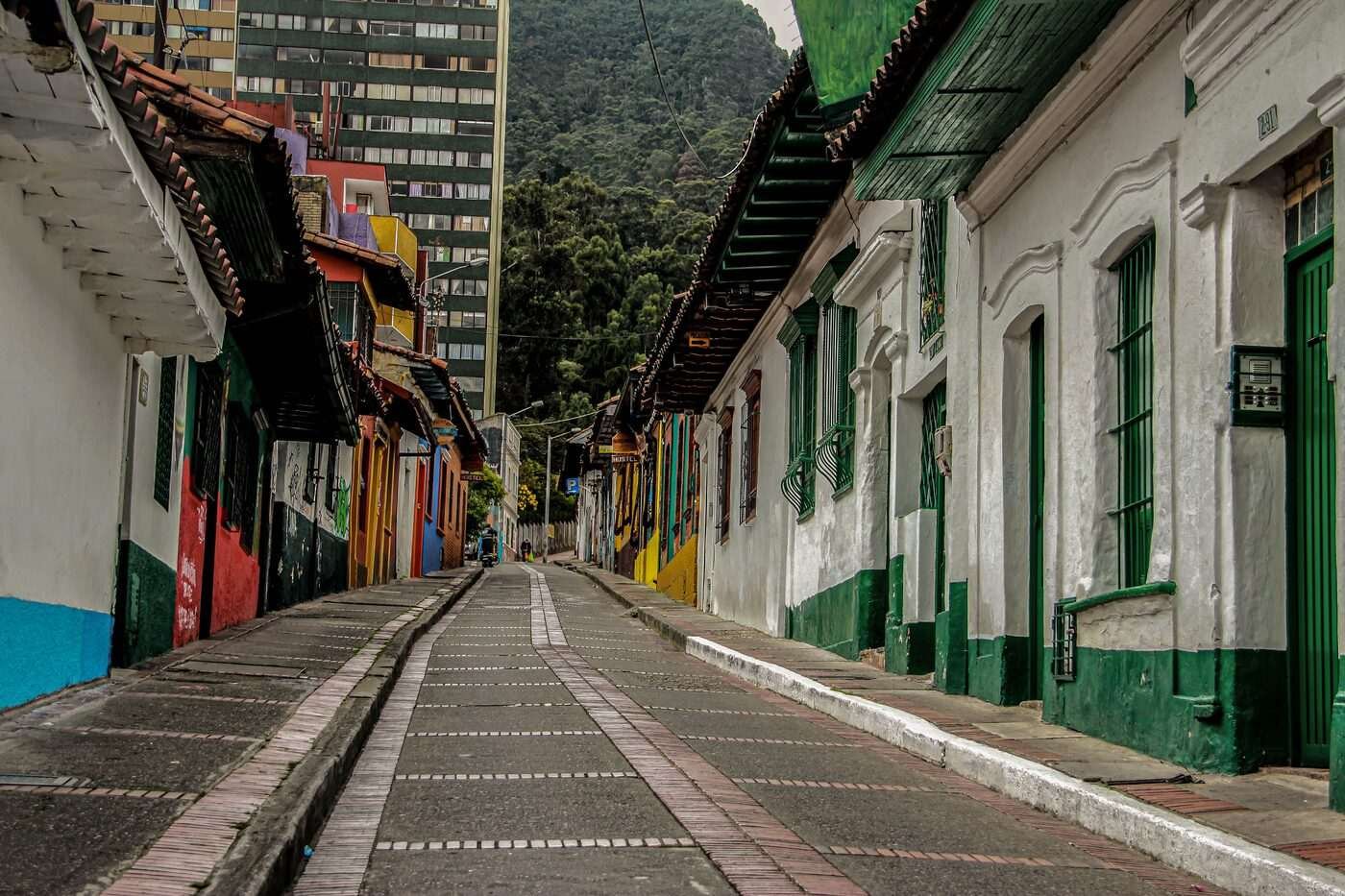
Bogotá is a sprawling high-altitude city - at 2,600 metres, it is higher than any capital in Europe - with a cultural density that surprises most visitors. The Gold Museum houses 55,000 pre-Columbian pieces. La Candelaria contains colonial architecture that survived the 1948 Bogotazo. The street art in the Chapinero neighbourhood is among the best in South America. And within an hour of the city, the Salt Cathedral at Zipaquirá and the sacred Lake Guatavita make for day trips that genuinely cannot be replicated elsewhere.
These are the best tours in Bogotá in 2026.
1. La Candelaria: Downtown Walking Tour
Bogotá: Complete Walking Tour in Downtown (from $18 per person)
The historic centre of Bogotá - La Candelaria - is one of the densest concentrations of colonial and republican architecture in Colombia, and a guided walk significantly increases what you get out of it. A 3-hour tour covers the main circuit: Plaza de Bolívar (the civic heart of Colombia, surrounded by the Capitolio Nacional, the Palace of Justice, and the Liévano Palace); Donación Botero (20 Botero paintings donated to the city, open free of charge); Palacio de Liévano (Bogotá’s city hall); and the narrow streets of the original colonial grid.
A good guide explains the layers of history concentrated in a few blocks: the colonial period, the independence era, the 1948 Bogotazo (the riots triggered by the assassination of Jorge Eliécer Gaitán, which burned much of La Candelaria) and the subsequent reconstruction, and the current tension between preservation and the neighbourhood’s role as a transit point for the city’s homeless population.
Duration: 3 hours | Difficulty: Easy
Includes: Licensed English-speaking guide, route through La Candelaria and Santander Park
Best time: Weekday mornings - fewer crowds at Plaza de Bolívar, most museums open
After the walking tour, the Gold Museum (Museo del Oro) is two blocks from Plaza de Bolívar and worth 1.5–2 hours. It holds the world’s largest collection of pre-Columbian gold objects - over 55,000 pieces - and the backstory of the El Dorado legend is well-explained throughout. Entry is COP 5,000 (approximately $1.20) for international visitors; free on Sundays.
2. Free Walking Tour: Arte, Historia y Café
Bogotá: Free Walking Tour (Arte, Historia y Café) (tip-based; recommended $12–15 tip)
The tip-based walking tour has a different emphasis from the paid version: more contemporary Bogotá - street art in the La Candelaria and Chapinero corridors, the café culture of Usaquén, and the social history of the city’s transformation since the early 2000s. The guides are typically recent architecture or cultural studies graduates with personal connection to the stories they tell.
Duration: 2.5–3 hours | Difficulty: Easy
Departs: Plaza de Bolívar, 10 am and 2 pm daily; confirm times when booking
Languages: English and Spanish; Spanish tours available at additional times
The street art section is the strongest part of the route - Bogotá has invested significantly in commissioned murals since 2011, when Mayor Gustavo Petro decriminalised graffiti in the historic centre. The concentration in La Perseverancia and around the Universidad Nacional is substantial.
3. Salt Cathedral and Lake Guatavita Day Tour
Bogotá: Salt Cathedral & Lake Guatavita Tour with Lunch (from $40 per person)
The single best day trip from Bogotá, combining two sites that justify an entire morning each.
Zipaquirá Salt Cathedral is carved into a working salt mine 60 kilometres north of Bogotá. The cathedral - actually three connected spaces (the Way of the Cross, the main nave, and the lower nave) - is 75 metres long and lit in blue and white against walls of grey salt rock. It feels more like a modern art installation than a conventional church, partly because it was designed in the 1990s by architect Roswell Garavito Pearl rather than built incrementally over centuries. The main nave holds 8,000 people. Entry approximately COP 100,000 (around $24) for international visitors when visiting independently; included in tour packages.
Lake Guatavita (Laguna de Guatavita), about 75 kilometres northeast of Bogotá, is the sacred volcanic crater lake at the centre of the El Dorado legend. Muisca chiefs were reportedly coated in gold dust and paddled into the lake to make offerings - a ceremony that Spanish conquistadors heard about and spent centuries trying to replicate for profit. The lake sits at 3,100 metres in a perfect circular caldera; the walk around the rim takes 45–60 minutes and has expansive páramo views.
Duration: 8–9 hours | Difficulty: Easy; the Guatavita rim walk is short and relatively flat
Includes: Round-trip transport from Bogotá, guide, lunch, Salt Cathedral entry, Guatavita park entry
What to bring: Warm layer - Zipaquirá is cool underground, Guatavita is exposed páramo at altitude
Both sites are manageable independently (public bus to Zipaquirá costs approximately COP 8,000 each way; Guatavita requires a separate bus or taxi), but combining them in a day tour with transport removes the logistical complexity and allows you to do both in one outing.
4. Bogotá Bike Tour
Bogotá City Bike Tour (from $25 per person)
Bogotá is one of the best cycling cities in Latin America - it has over 550 kilometres of dedicated ciclovías (cycle paths), and every Sunday from 7 am to 2 pm, main arterial roads are closed to cars for the Ciclovía, when hundreds of thousands of cyclists, runners, and walkers take over the city.
A guided bike tour covers ground that a walking tour cannot: from La Candelaria through Chapinero, the Parque Nacional, and the wealthy Zona Rosa and Usaquén neighbourhoods in the north - a span of about 12 kilometres that encapsulates Bogotá’s income gradient and architectural range.
Duration: 3–4 hours | Difficulty: Easy - mostly flat urban cycling
Includes: Hybrid bicycle, helmet, guide, water
Best time: Sunday mornings during Ciclovía for a traffic-free Bogotá experience
The Sunday Ciclovía timing is the best option if your schedule allows - the city’s transformation when 80 km of roads close to cars is a genuine urban spectacle and one of Bogotá’s most distinctive institutions.
5. Monserrate and La Candelaria Half-Day Tour
Cerro de Monserrate - the white-church-topped peak visible from anywhere in central Bogotá at 3,152 metres - offers the best aerial view of the city. You can reach it by funicular (COP 33,000 return), aerial tramway (COP 33,000 return), or a 1.5-hour hiking trail (free on weekdays). Most tour operators include Monserrate as part of a half-day itinerary that starts in La Candelaria and uses the funicular or tramway for the ascent.
The view from the summit on a clear day extends over the entire Sabana de Bogotá - a high plateau ringed by Andean peaks. Cloud tends to build from midday; morning visits give better visibility. The sanctuary at the top has a popular restaurant and a small pilgrimage church.
Browse Bogotá tours for current Monserrate packages with La Candelaria.
How to Choose
| Tour | Duration | Best for | From |
|---|---|---|---|
| Downtown Walking Tour | 3 hrs | Colonial history, first visit | $18 |
| Free Walking Tour | 2.5 hrs | Street art, budget travellers | Tip |
| Salt Cathedral + Guatavita | 8–9 hrs | Best full-day excursion | $40 |
| Bike Tour | 3–4 hrs | Urban overview, Ciclovía Sunday | $25 |
| Monserrate + La Candelaria | Half day | Aerial views, photography | $30+ |
Prices per person in USD, as of 2026. All GYG bookings include free cancellation; check individual listings.
Planning Your Bogotá Visit
Allow at least two full days in Bogotá: one for La Candelaria, the Gold Museum, and Monserrate; one for the Salt Cathedral and Guatavita day trip. A third day works well for the bike tour and the Usaquén flea market (Sundays). For restaurants and neighbourhoods, see our Bogotá food guide - Usaquén and Chapinero have the best independent dining. For accommodation, our best hotels in Bogotá covers options across La Candelaria, Chapinero, and Zona Rosa.
For a broader view of Colombia’s top tour experiences, see best tours in Colombia.