Barranquilla’s food scene gets talked about less than Cartagena’s but is arguably more interesting. The city built its identity on immigrant trade - Lebanese, Italian, Arab, and German communities settled around the Magdalena port in the early 20th century - and the result is a coastal Caribbean cuisine that bends in unexpected directions. Alongside the rice, fish, and fried plantain of the coast, you find kibbeh sold from Lebanese family restaurants, Italian trattorias that have been operating since the 1970s, and a street food culture centred on the arepa de huevo that visitors rarely find anywhere else in Colombia.
The dishes to know
Arepa de huevo is Barranquilla’s signature street food and the one thing worth tracking down specifically. The process is labour-intensive: a thick corn dough cake is half-fried until it puffs, slit open while hot, an egg cracked inside, then fried again until the pocket seals. The result is a crunchy exterior giving way to a soft corn interior with a just-set egg at the centre. Served with hogao - a cooked-down tomato and onion sauce - it costs COP 4,000 to 7,000 from a street vendor as of 2026. The Gran Malecón vendors are the most visible source.
Mote de queso is a thick soup made from yam (ñame) and costeño cheese - a firm, salty cheese made on the Caribbean coast from raw cow’s milk. The yam breaks down slowly into the broth, creating a dense, starchy soup that eats like a meal. It is humble, comforting, and almost never found outside the Caribbean coast. Approximately COP 15,000 to 22,000 at a local comedor as of 2026.
Sancocho de guandú uses gandules (pigeon peas) as its base instead of the chicken or beef used in inland versions of sancocho. The peas give the broth a slightly earthier, nuttier quality than the Andean versions. It is a staple at Barranquilla working-class fondas and the dish that Barranquilleros associate with home cooking.
Mojarra frita is the most common fish preparation on the coast. Whole mojarra (a freshwater and coastal fish similar to tilapia) is scored, seasoned with lime and cumin, and deep-fried until the skin is completely crisp. Served with white rice, patacones (smashed and fried green plantain discs), and a lime wedge. At a waterfront restaurant it costs COP 28,000 to 45,000 as of 2026.
Bocachico is a Magdalena River fish that rarely appears on Cartagena menus - Barranquilla’s position at the river mouth gives it access to freshwater species that are genuinely local. It is smaller and bonnier than mojarra but has a distinctive flavour that the coast fish lacks. Often served fried or in a sancocho. Found at inland fondas and market stalls more than tourist restaurants.
Arepa de chócolo - a sweet corn arepa served warm with costeño cheese melted on top - is the common breakfast item and afternoon snack. The corn is ground fresh (or from frozen sweet corn in most places now) rather than from dried masa, giving it a moister, sweeter texture than the standard arepa. Costs COP 2,000 to 4,000 from a bakery or market stall.
Street food and the Gran Malecón
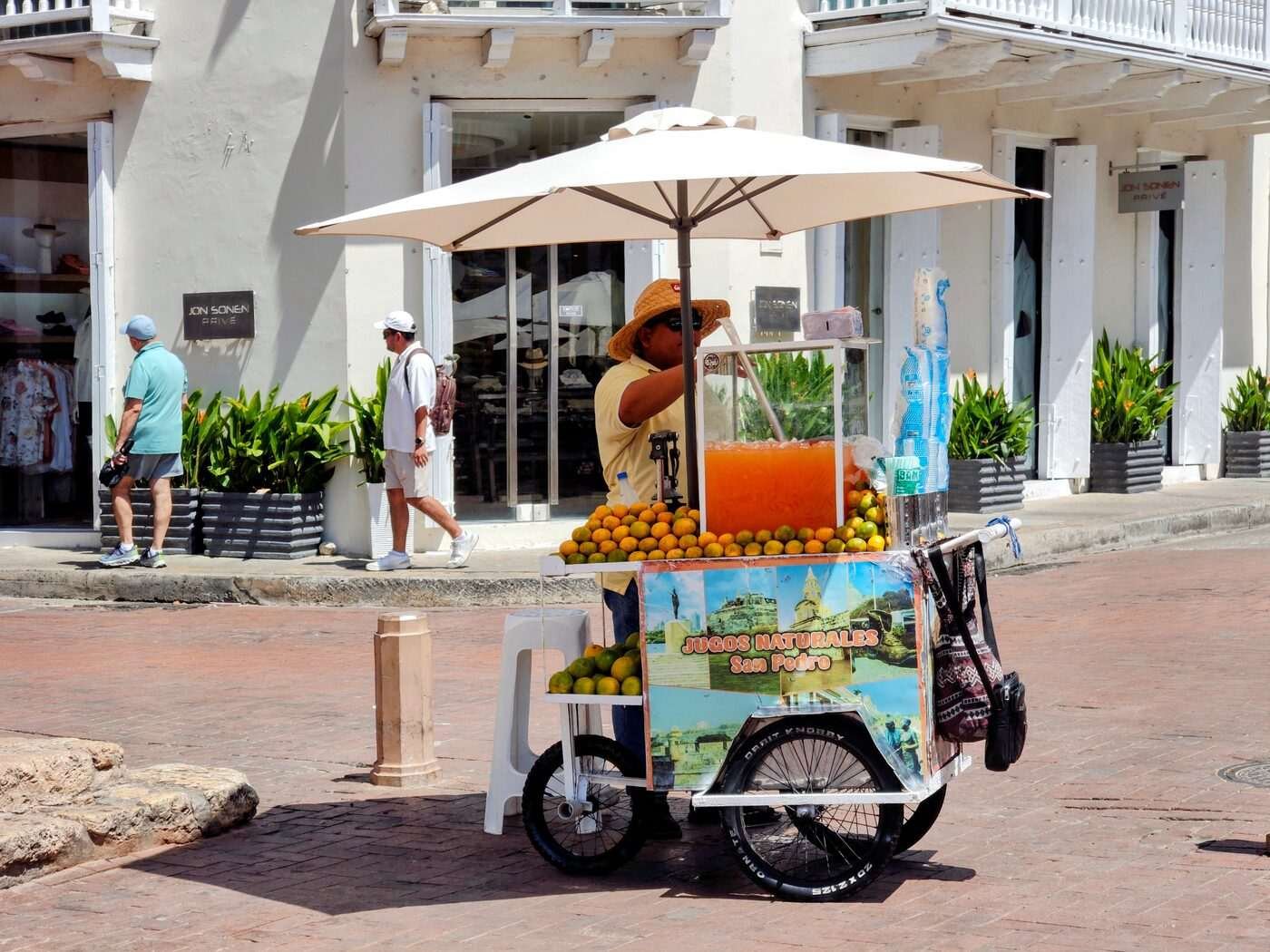
The four-kilometre Gran Malecón promenade becomes Barranquilla’s most concentrated street food zone from about 4pm onward. Vendors set up along the riverfront path selling arepa de huevo, fried fish, buñuelos (fried cheese-dough balls, a coastal version of the national snack), empanadas stuffed with rice and chicken or beef, and fresh fruit juices blended to order - lulo, maracuyá, guanabana, and corozo (a native coastal fruit with a tart, cranberry-like flavour).
The stalls around Muelle 1888 at the southern end are the most established. Prices are low by any measure - a full street food meal runs COP 10,000 to 15,000 if you pick across three or four items. Bring cash; none of the vendors take cards.
The weekend market at Muelle 1888 also includes prepared food from vendors who do not work the weekday evening circuit.
Local restaurants worth knowing
Donde Meme (El Prado, mains from COP 18,000): A locals’ comedor that serves mote de queso and sancocho de guandú to the same crowd every day and closes at 3pm. Cash only, no menu beyond what is written on the board. The mote de queso here is reliably good - dense, salty, genuinely costeño. The chairs are plastic and the tables are close together and that is entirely the point.
La Cueva (El Prado, mains from COP 35,000): Originally the bar where Gabriel García Márquez and his literary circle drank in the 1950s - a detail the restaurant documents extensively on its walls. Now a full-service restaurant with a strong costeño menu. The arroz con mariscos (seafood rice) and mojarra frita are well executed and the historical atmosphere adds something, though it is clearly positioned for visitors and the prices reflect that.
La Trattoria (El Prado, mains from COP 38,000): The Italian immigrant influence made concrete - a Barranquilla institution since the 1970s serving Caribbean-inflected Italian food. The grilled fish and seafood pasta are the reliable choices. Weekday lunches are excellent value at COP 25,000 to 35,000 for a two-course meal with a juice.
Restaurante El Cometa (Villa Country, mains from COP 28,000): Strong local reputation for bandeja costeña and freshwater fish from the Magdalena. The patacones here are consistently cited by locals as among the best in the city - thick, crisp, served hot with hogao. Reliably full at lunchtime.
Mercado Gastronómico El Gallo (Zona Norte, snacks from COP 8,000): A food market hall with around 30 stalls covering Caribbean street food, international food, craft beer, and fresh juice. The most practical option if you want to try several things without committing to a single restaurant. Open from midday, busiest Friday and Saturday evenings.
Barranquilla’s Lebanese and immigrant food thread
The Lebanese community that settled in the Caribbean port cities in the early 20th century left a specific culinary trail in Barranquilla. Several restaurants - most without much outward signage - serve versions of kibbeh, hummus, tabbouleh, and stuffed grape leaves adapted to Colombian ingredients. Costeño cheese appears where feta would be in the original; Colombian maize flour occasionally substitutes for bulgur.
These spots are in the older merchant neighbourhoods around El Centro and El Prado and are mostly lunchtime businesses. A local guide or a conversation with older Barranquilleros is the most reliable way to find the current ones - they are not well documented in tourist resources.
Market eating
Mercado de la Loma is the city’s main traditional market, near the original port area. The market itself is a working food-supply market rather than a tourist food hall - stalls sell costeño cheese by the wheel, dried fish, ñame (yam), root vegetables, and the spice blends that underpin Caribbean Colombian cooking. The prepared food corridor runs along one edge of the market: sancocho, fried fish, rice, and thick soups from the early morning.
Go before 11am for the most active scene. A guide is useful here - the market is crowded and disorienting for a first visit and the prepared food section is not easily identifiable from the main entrance.
Drinks to try
Corozo juice is made from a small native Caribbean fruit similar in taste to a tart cranberry. It is deep red, sweet-sour, and entirely regional - you will not find it reliably outside the Caribbean coast. From market stalls and the Gran Malecón vendors, approximately COP 3,000 to 5,000 for a glass.
Aguapanela - raw sugarcane (panela) dissolved in hot or cold water - is the background drink of Colombian daily life, found everywhere at COP 2,000 to 4,000. In Barranquilla it is often served cold over ice with a squeeze of lime, which suits the heat considerably better than the hot version common in the highlands.
Costeño beers - Club Colombia and Águila both have their roots on the Caribbean coast (Águila is brewed in Barranquilla). Ice-cold Águila at a plastic table on the Gran Malecón costs approximately COP 4,000 to 6,000 from a vendor.
Take a Guided Food Tour of Barranquilla
Barranquilla’s food story - the arepa de huevo tradition, the Lebanese immigrant cooking in El Prado, the Mercado de la Loma fish stalls, the Gran Malecón vendors - is one of the most layered on the Caribbean coast, and a guided tour surfaces the threads that a solo visitor would miss. The best food tours in Barranquilla cover the street food circuit on the Gran Malecón from the afternoon vendors, a visit to the Mercado de la Loma with a guide explaining the costeño ingredients, and often a stop at one of the old El Prado establishments where the Lebanese immigrant food tradition is still intact. Book a Barranquilla food tour
Getting there
The Gran Malecón is 15 minutes by taxi from most hotels in El Prado and Villa Country, costing approximately COP 8,000 to 12,000. El Prado restaurant strip is walkable from hotels in the same neighbourhood. Taxis to Villa Country and Zona Norte run COP 10,000 to 18,000. Our Barranquilla getting around guide covers all transport options with current fares. Browse hotels in Barranquilla - central to El Prado and the best restaurants.