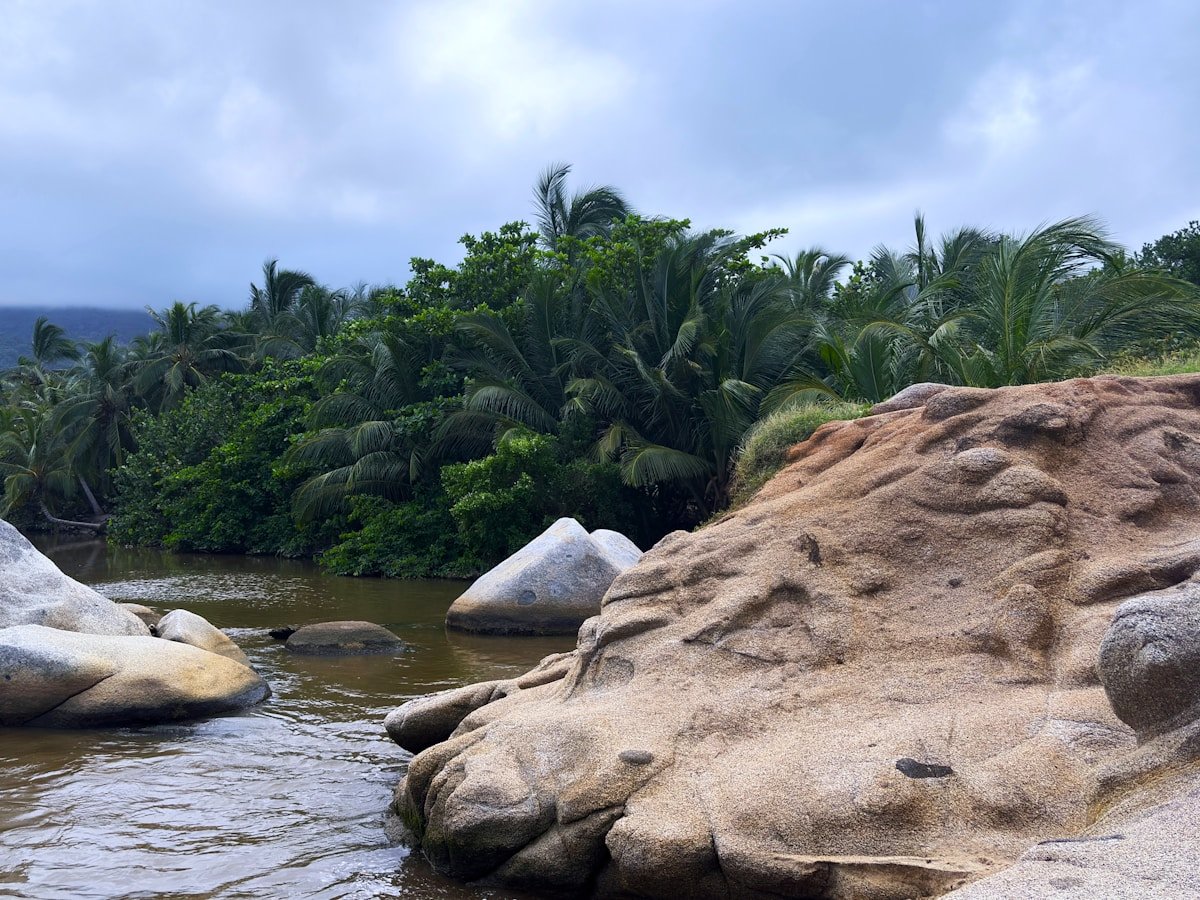
Ciudad Perdida - Teyuna in the indigenous Kogui language - is the largest pre-Columbian city discovered in the Americas. Built between the 9th and 14th centuries on the slopes of the Sierra Nevada de Santa Marta, it predates Machu Picchu by several centuries. Getting there requires a 4–6 day trek through one of the most biodiverse jungle corridors in South America, and arriving at the stone terraces after four days of hiking through heat and river crossings produces a different quality of experience than a bus-and-cable-car ascent.
The trek is not especially technical, but it is physical. Six to eight hours of hiking per day in tropical humidity at altitudes between 100 and 1,300 metres demands basic fitness. The stone staircase leading to the main site - 1,200 steps cut into the hillside, many of them steep and slippery - is the defining physical challenge of the route. Almost everyone who puts in the physical effort gets there. The question is comfort, not capability.
Route Options
Standard 4-Day Trek
The most common route, covering approximately 44 kilometres round trip. Day one starts at the Wiwa trailhead and follows the Buritaca River valley, with 4–6 hours of walking to the first camp at El Mamey or La Mina. Day two continues deeper into the jungle with multiple river crossings and arrives at the stone staircase. Day three is spent at the city itself - guided by a Kogui elder who accompanies all tour groups - with time to explore the terraces before beginning the return. Day four exits to the trailhead.
Camps are basic but functional: wooden platforms under covered roofs, hammocks provided, meals cooked at camp. Trekkers carry only a daypack; mules transport main luggage and supplies between camps.
5-Day Trek
The 5-day variation adds an extra night at the city site, allowing more time to explore the full extent of the terraces and spend additional time with the indigenous guide. This is recommended if budget allows - the city deserves more than a rushed afternoon. Price approx $420–450 USD with most operators.
6-Day Indigenous-Focus Route
A less common route that incorporates visits to active Kogui settlements and additional time with community guides discussing the cosmological significance of the sierra. This option is offered by a small number of operators (notably Wiwa Tour) and requires booking well in advance. Price approx $480–500 USD.
Licensed Operators
As of 2026, eight operators hold Colombian government authorisation to run Ciudad Perdida tours. All charge the same regulated base rate.
Magic Tour (Santa Marta)
The longest-established operator on the route, running since the trail was opened to tourism in the 1990s. Strong reputation for experienced guides and consistent camp quality. Standard 4-day departs Monday, Wednesday, Thursday, Saturday. Book via their Santa Marta office on Calle 16 or through their website. Price approx $350–360 USD for the 4-day.
Wiwa Tour
The operator most associated with indigenous-focus tours and community engagement. Founded with Wiwa community involvement; part of the guide and camp staff are indigenous community members. Good choice if cultural immersion is the priority over speed. They run the 6-day variant more regularly than other operators. Based on Carrera 3 in Santa Marta. Approx $360–380 USD for 4-day, $500 USD for 6-day.
Expotur
Popular with backpackers for good organisation and English-speaking guides. Regular departure dates with groups of 8–12 people. Office on Carrera 1 in Santa Marta near the Parque Bolívar. Approx $350–360 USD for the 4-day.
Turcol
Another established operator with positive reviews for guide quality. Offers flexible departure dates with smaller group sizes if booked ahead. Approx $360 USD for the 4-day.
Note: All eight operators are legally required to use the same trail, same camp sites, and same regulated pricing structure. Differences between them are primarily in group size, guide quality, departure frequency, and cultural emphasis. Do not book with unlicensed individuals offering discounted rates - these operations are illegal and have been shut down by Colombian authorities.
GYG-listed licensed operators with verified reviews and free cancellation - prices as of 2026, 4-day all-inclusive (transport, meals, accommodation, guides):
| Trek | Duration | From Price | |
|---|---|---|---|
| From Santa Marta: Ciudad Perdida 4-Day Trek | 4 days | from $340 | Book |
| From Santa Marta: 4-Day Lost City Discovery Tour | 4 days | from $350 | Book |
| Browse all Santa Marta tours | - | - | Browse |
Prices are per person for shared group departures and include transport from Santa Marta, all meals on trail, hammock or tent accommodation at camps, and guide fees.
Getting to Santa Marta
Ciudad Perdida treks depart exclusively from Santa Marta on Colombia’s Caribbean coast. Santa Marta has its own airport (Simón Bolívar International, SMR) with direct flights from Bogotá (approx 1 hour, from $60–80 USD) and Medellín (approx 1 hour 10 minutes). Bus connections from Cartagena take approximately 4 hours and cost approx $15–25 USD.
Most operators want trekkers to register and receive briefings the evening before the trek departs. Plan to arrive in Santa Marta at least one day before your tour start date.
Difficulty and Physical Preparation
The trek is appropriate for people who hike regularly but does not require mountaineering experience or technical skills. The main physical demands are:
- Heat and humidity: Temperatures at lower elevations reach 35°C+ with high humidity. Heat exhaustion is a genuine risk on day one and two. Hydration and sun protection are critical.
- River crossings: Multiple river crossings daily, some thigh-deep in rainy season. Trekkers wade through - no bridges on most crossings.
- The staircase: 1,200 stone steps, wet and mossy, with no handrail on most sections. Trekking poles help on the descent.
- Cumulative fatigue: Six to eight hours of walking daily, often on uneven terrain. Days two and three are the hardest.
People with knee issues should bring trekking poles and discuss the route with operators before booking. The descent is harder on joints than the ascent.
What to Pack
Clothing:
- Lightweight moisture-wicking shirts (2–3)
- Quick-dry shorts or convertible trousers (2 pairs)
- Long-sleeve layer for evening and mosquito protection
- Rain poncho or lightweight waterproof jacket (not an umbrella - hands need to be free)
- Camp shoes or flip-flops for evenings
Footwear:
- Trail shoes or light hiking boots with good grip - not sandals
- Waterproof or quick-dry socks (multiple pairs)
- Many trekkers hike sections in sandals once rivers begin - this is optional
Equipment:
- Headlamp with spare batteries
- Sleeping sheet or lightweight liner (camps provide hammocks but not sheets)
- Dry bag or waterproof pack cover
- Trekking poles (available to rent in Santa Marta if you don’t own them, approx $10–15 USD for the week)
Health and hygiene:
- High-SPF sunscreen
- DEET insect repellent (40%+ recommended for jungle conditions)
- Water purification tablets as backup (camps provide purified water but river water is not safe untreated)
- Anti-diarrhoeal medication
- Blister treatment
- Antihistamine
Documents and valuables:
- Original passport or certified copy - required at military checkpoints on the trail
- Cash in small denominations for tips (guides and cook staff); no card payment on the trail
- Camera or phone in a waterproof case
On the Ground: Practical Details
Meals: Three meals per day provided at camp - typically rice, beans, chicken or fish, plantain, and eggs. Vegetarian can be accommodated with advance notice. There is no food available for purchase on the trail.
Phones and power: No reliable phone signal for most of the route. Some camps have solar charging points but availability is limited. Download offline maps and carry a power bank.
Altitude: The sierra reaches significant elevation but the trek itself stays mostly below 1,300 metres. Altitude sickness is not a primary concern but heat-related illness is - the humidity at lower elevations is extreme.
Tips: Tipping guides and camp cooks is standard practice. A tip of approx $20–30 USD for the lead guide and $10–15 USD for the cook per trekker is appropriate for a 4-day tour.
Mules: Main packs are carried by mule between camps. You carry only a daypack with water, snacks, camera, and rain gear during hiking hours. Mule handlers are typically indigenous community members.
Related reading: Lost City Trek Colombia.