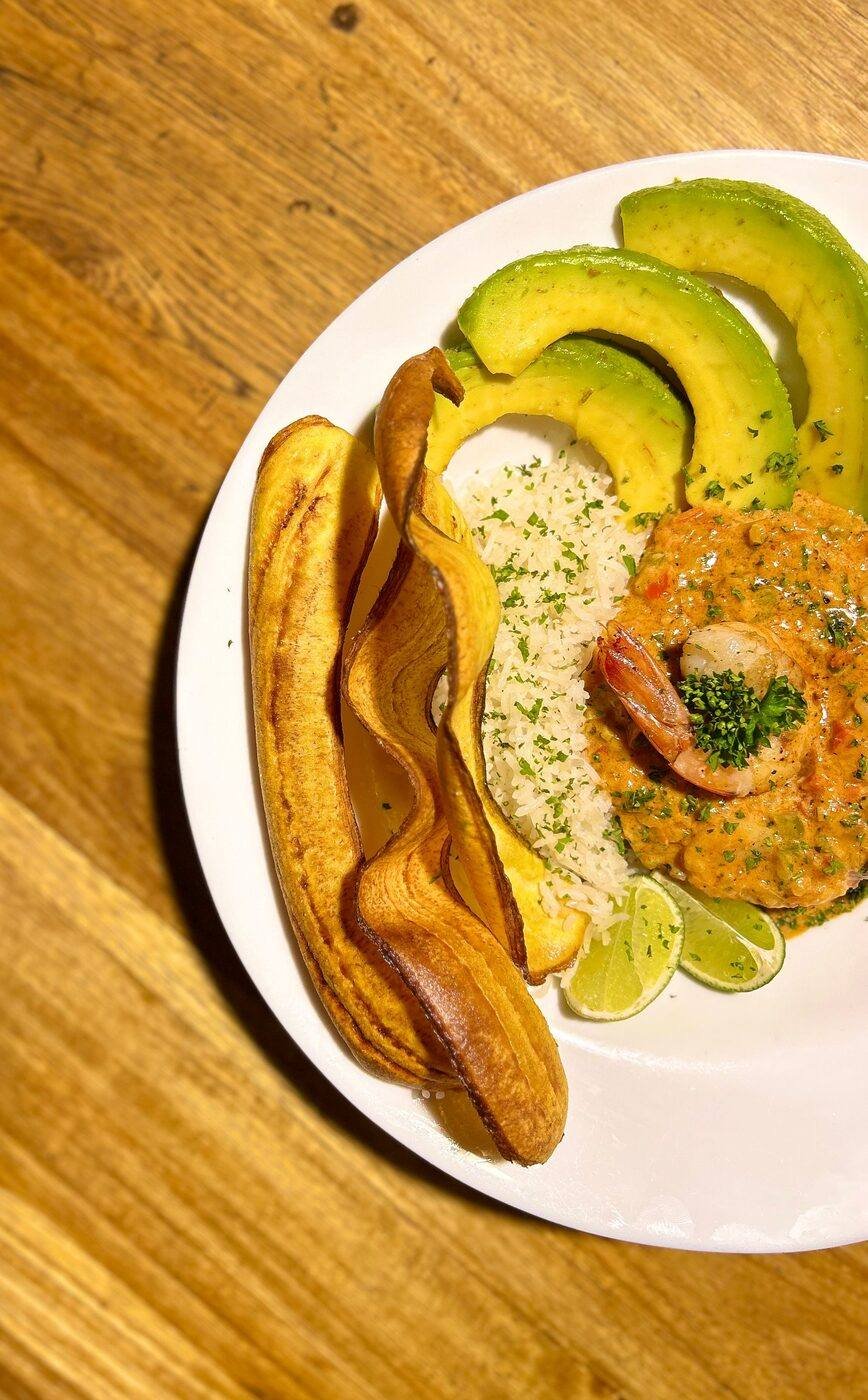
San Andrés food is shaped by the Raizal tradition - the Caribbean culture of the island’s original inhabitants, who arrived via English Puritan settlement in the 17th century and developed a cuisine distinct from both Colombian mainland cooking and generic Caribbean tourist food. The foundation is seafood: whole fish grilled over wood, crab in coconut broth, ceviche with local lime. Coconut rice and fried plantain appear with nearly everything. The island is also a free-trade zone, which brings imported beer and spirits at notably lower prices than the mainland.
The restaurant scene divides roughly into Raizal-tradition spots (fewer, usually inland or in quieter neighbourhoods), mainstream seafood places serving the tourist circuit, and international/fusion options around the town centre.
Local Raizal Food - What to Look For
Rondon: The definitive dish of Raizal culture. A slow-cooked stew containing conch, fish, crab claws, oxtail or pork (depending on the cook), dumplings made from yuca flour, yuca root, and green banana - all cooked in coconut milk. The broth is complex, fatty, and coconut-sweet. Preparation takes four to six hours; it is not a dish that appears on menus by default. To eat proper rondon, you need to order it a day ahead from a restaurant that makes it. Price: approximately COP 45,000–70,000 per serving as of 2026.
Arroz con coco: Coconut rice - slightly sweet, toasted on the bottom, distinctly different from mainland Colombian arroz. This accompanies virtually every fish dish on the island. It is not remarkable in itself but signals when a restaurant is cooking in the Raizal tradition rather than improvising.
Ceviche de caracol: Conch ceviche in lime juice with onion, coriander, and local chilli. Lighter and sweeter than Peruvian-style ceviche due to the conch rather than fish base. Usually served cold as a starter.
Fish: The most commonly served whole fish are pargo (red snapper), mero (grouper), and mojarra. Grilled or fried. A good fish prepared simply in coconut butter and lime is the test of any island kitchen. Ask for the daily catch rather than ordering from a fixed menu.
Patacones: Twice-fried green plantain - pressed flat after the first fry, then fried again until crisp. Better here than most mainland versions because the plantains are local and ripe.
Restaurants - Town Centre and Northern Coast
El Restaurante de Doña Ana
A small, family-run spot on the road behind Spratt Bight beach, this is among the places most consistently mentioned by those who stay longer on the island for authentic Raizal cooking. The menu is small and changes with availability - whole grilled fish, coconut rice, crab legs, and sometimes rondon with advance notice. Décor is simple (plastic chairs, Formica tables); quality is not. Prices: approximately COP 30,000–55,000 for a main with sides as of 2026. Cash only. Hours: typically lunch and early dinner (noon–7pm, closed Mondays).
La Regatta
On the waterfront north of the town centre, La Regatta is the highest-profile seafood restaurant on the island and caters to a mix of local regulars and visitors staying in the northern hotel strip. The setting is open-air and directly over the water. Grilled lobster (from approximately COP 90,000 per 500g as of 2026), whole red snapper, shrimp in garlic butter, and seafood rice are all reliably good. This is also one of the few restaurants that will prepare rondon for a group if requested the day before - confirm at time of reservation. Mains: approximately COP 55,000–120,000. Reservations recommended for dinner in peak season.
Miss Celia’s (Restaurante Miss Celia)
One of the most locally respected Raizal kitchens on the island. Miss Celia’s serves whole fish, coconut crab, and the full accompaniment of coconut rice and patacones in a small house interior away from the tourist strip. The food is cooked to order in a genuinely home-kitchen fashion - this is not a restaurant that rushes. If rondon is available (typically weekends), it will be the best version most visitors eat on the island. Prices: COP 35,000–65,000 for a full plate. Hours: lunch only, typically noon–4pm. No advance booking by phone; arrive early as seating is limited.
El Rincón del Mar
On the circumferential road on the western side of the island near West View, this open-air spot caters to divers and snorkellers heading back into town. Good for grilled fish (approximately COP 40,000–60,000), ceviche (COP 20,000–30,000), and cold beer after a morning in the water. Not fine dining - the value is location, freshness, and a cold Águila at the right moment.
Ceviche and Casual Eating
San Andrés’s town centre along Avenida Colombia and the streets behind Spratt Bight have multiple ceviche vendors and small informal restaurants.
Ceviche stalls near the pier (Puerto Nuevo): Several vendors sell conch ceviche, shrimp ceviche, and mixed seafood servings from approximately COP 15,000–25,000 per cup. These are not restaurants - typically a table, a cooler, and a vendor - but the ceviche is made to order and often excellent. Morning and lunchtime only; rarely operating past 3pm.
Corriente restaurants (set lunches): The local daily lunch (sopa, main, juice) is available at several spots on the back streets of the town centre for approximately COP 20,000–30,000. These serve mainland Colombian-style cooking more than Raizal cuisine - useful for a filling cheap lunch but not the island-specific experience.
Drinks and the Free-Trade Zone Advantage
San Andrés is a free-trade zone (zona franca). Imported spirits, wine, and beer are taxed at significantly lower rates than on the mainland. A bottle of Scotch whisky that costs COP 120,000 in Bogotá might be COP 70,000–80,000 here. Ron Medellin and Aguardiente are cheap on the whole island, but the imported spirit discount is the actual draw for Colombian travellers stocking up.
Club Colombia and Águila: Standard Colombian beers, cold, everywhere, approximately COP 8,000–12,000 in a restaurant setting.
Ron Caribeño: Local Caribbean rum (ron) is produced in the Raizal tradition - sweeter and lighter than mainland aguardiente, typically drunk neat or in a short mix. Available in most restaurants and tiendas for approximately COP 25,000–35,000 per bottle.
Coconut water: Fresh coconuts sold by vendors along the beach strip, approximately COP 5,000–8,000. Not exotic, but genuinely the right drink in the heat.
On the Cays: Haynes Cay Seafood
If you take the boat tour to Acuario and Johnny Cay, the typical lunch stop is Haynes Cay, where several seafood restaurants operate from pontoon structures over the water. The experience is distinctive - eating grilled fish with your feet dangling over the Caribbean - and the food quality is reasonable to good rather than exceptional. Grilled whole fish: approximately COP 35,000–60,000. Lobster (when available): approximately COP 80,000–130,000 per piece. The setting justifies going once. Bring more cash than you think - card machines are unreliable over the water.
What to Avoid
Restaurants in the duty-free mall zone: Several tourist-facing restaurants around the main shopping strip offer generic “Caribbean seafood” menus at inflated prices. The fish is typically fine but nothing is Raizal, portions are aimed at international tourists rather than local appetites, and you’re paying for the address. Spend the same money 10 minutes from the tourist corridor for genuinely better food.
Lobster out of season: Lobster (langosta del Caribe) is subject to a harvest ban in the Seaflower Reserve during breeding season, typically May through June and parts of October–November. Dates vary year to year. Ordering lobster during the ban supports illegal fishing. Check whether the season is open when visiting; most reputable restaurants observe it.
Take a Guided Food Tour of San Andrés
San Andrés Raizal food - rondon, caracol guisado, coconut bread from La Loma bakeries, and the Haynes Cay seafood experience - is also the food that is hardest to access without local contacts. A guided culinary tour of the island connects you to the Raizal families who still cook in the traditional way: Doña Françoise in La Loma for advance-order rondon, Miss Celia’s for the best coconut fish preparations, and the vendors around El Cove bay where the boats bring the daily catch directly to outdoor tables. Without a guide, most visitors spend their entire stay on the tourist strip at Spratt Bight and miss the authentic island food entirely. Book a San Andrés food tour
Practical Notes
Cash vs card: Larger restaurants (La Regatta, larger hotel dining rooms) accept cards. Smaller family places, ceviche vendors, and beach spots operate cash-only. Bring COP - ATMs are in the town centre (Bancolombia on Avenida Colombia being the most reliable).
Hours: Restaurants on San Andrés often follow island time - kitchens may not be ready until 12:30pm for lunch and often close by 9pm. Dinner after 8:30pm is possible at the larger tourist-facing spots but increasingly difficult at smaller local places.
Reservations: Not required except for peak periods (December–January, Semana Santa) and for any restaurant you’re asking to prepare rondon in advance. For the latter, call or message the day before and confirm attendance - the preparation is time-intensive and cooks rightly won’t start it without commitment.