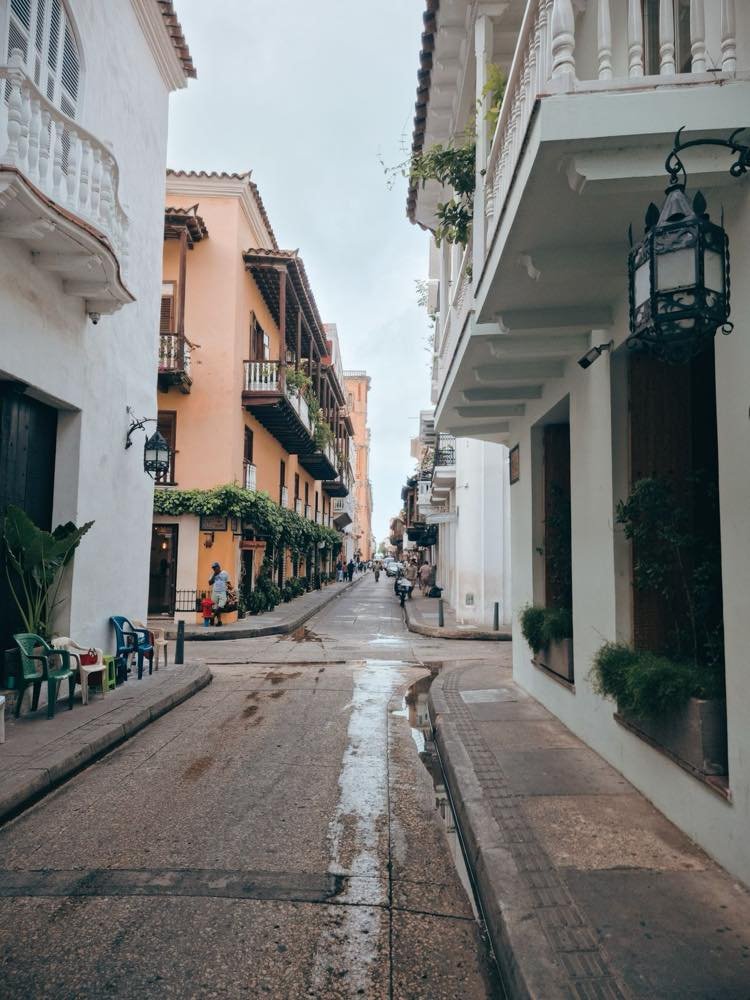
Colombia’s four most visited destinations are clustered in the Andean heart and Caribbean coast of the country - and they sit close enough to each other that ten days covers all of them without becoming a blur. The route from Bogota south into the coffee highlands, northwest to Medellin, and northwest again to Cartagena is Colombia’s most travelled first-visit circuit. This itinerary is structured to give each destination enough time to reveal itself beyond the obvious, with named hotels across three price tiers and transport costs updated as of 2026.
Overview
| Days | Location | Nights |
|---|---|---|
| 1–2 | Bogota | 2 |
| 3–4 | Salento / Coffee Region | 2 |
| 5–7 | Medellin | 3 |
| 8–10 | Cartagena | 3 |
Getting between cities:
- Bogota → Salento: Bus from Terminal Salitre to Armenia (approximately 8–9 hours, COP 55,000–80,000), then jeep to Salento (30 minutes, COP 3,500). Or fly Bogota→Armenia (1 hour, USD 40–90 with luggage) then transfer.
- Salento → Medellin: Bus Armenia→Medellin (6–7 hours, COP 55,000–75,000). Or fly Armenia→Medellin (45 minutes, USD 35–75).
- Medellin → Cartagena: Fly (1 hour 15 minutes, USD 45–100). There is no practical land route.
Day 1: Arrival in Bogota
Arrive at El Dorado International Airport (BOG). Bogota sits at 2,600m altitude - take the first afternoon at a slow pace, particularly if arriving from sea level. Altitude headache is common on day one; drink water, avoid alcohol, and don’t rush.
Bogota’s neighbourhoods divide clearly: La Candelaria (the colonial centre, historic but congested), La Macarena and El Chorro de Quevedo (bohemian, walkable, good restaurants), Chapinero (professional, café culture), and Usaquén (wealthier north, Sunday flea market). Stay in La Macarena or Chapinero for the best mix of access and atmosphere.
Where to stay in Bogota:
Budget: Hotel Galerazamba (Calle 54B No. 4-74, Chapinero) - small guesthouse in a quieter block of Chapinero, basic rooms, helpful staff, reliable hot water. Doubles from approximately COP 85,000 per night (USD 20–22).
Mid-range: Casa Medina (Carrera 7 No. 69A-22, Chapinero) - a converted 1940s colonial mansion now operating as a boutique hotel. 62 rooms across original and new wings; tile floors, heavy wood furniture, fireplace in the lobby. Doubles from approximately USD 100–135 per night. The on-site restaurant is one of the better hotel dining rooms in the city.
High-end: Hotel de la Opera (Calle 10 No. 5-72, La Candelaria) - the most elegant colonial hotel in Bogota, built into two restored 19th-century houses immediately behind Teatro Cristóbal Colón. Doubles from approximately USD 180–240 per night. The rooftop terrace and bar have direct views over the historic quarter.
Search hotels in Bogota on Booking.com
Evening: Walk from your hotel to Plaza del Chorro de Quevedo for a glass of chicha at Chichería Dickens (Carrera 3 No. 12C-60), then dinner in La Macarena.
Day 2: Bogota - Gold Museum and La Candelaria
Full day in the city.
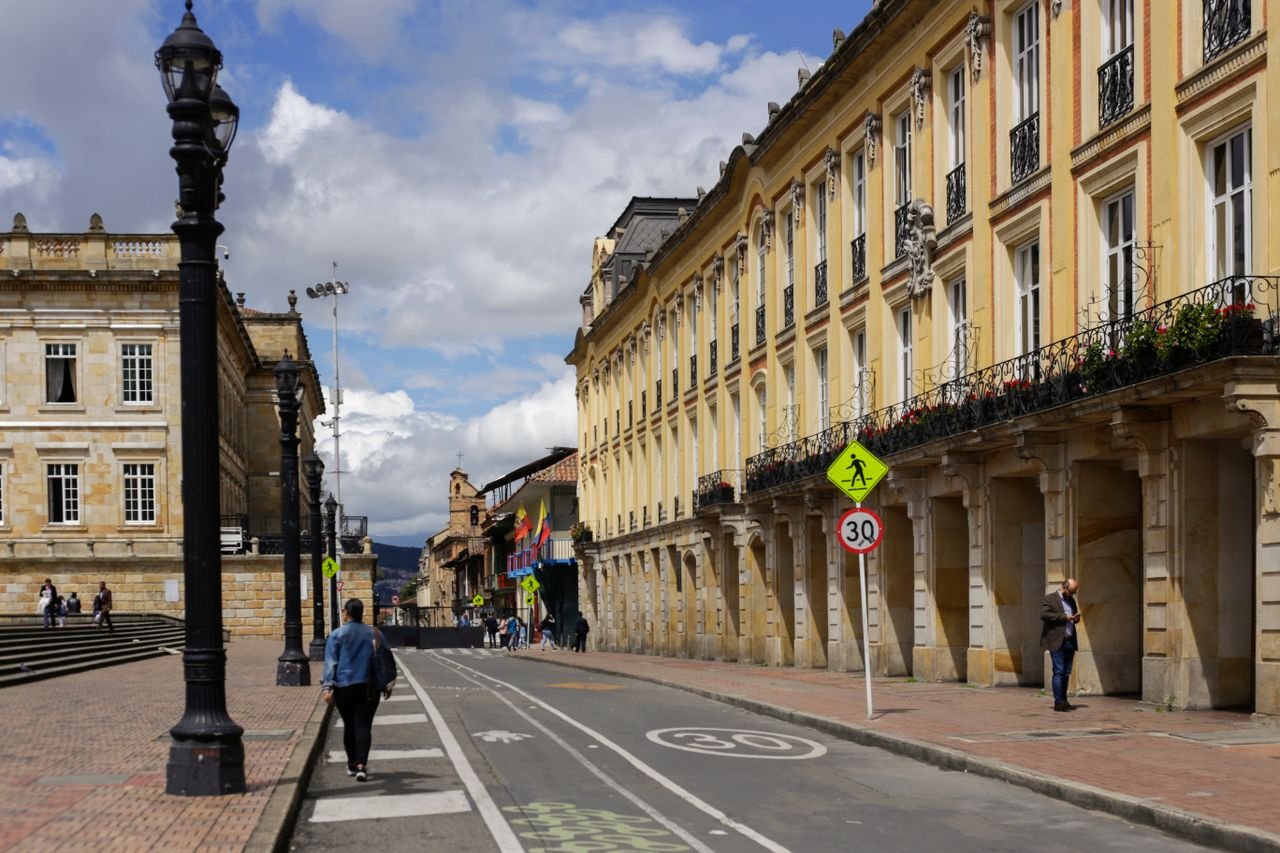 Colonial facades near Plaza de Bolivar, the heart of La Candelaria.
Morning: The Museo del Oro (Calle 16 No. 5-41, open Tuesday–Saturday 9am–6pm, Sundays 10am–4pm) holds the world’s largest collection of pre-Columbian gold work - over 55,000 pieces from the major indigenous civilisations of what is now Colombia. Entry: approximately COP 4,000 for adults, COP 2,000 for students. Two hours is enough for most visitors; half a day for those deeply interested in pre-Columbian history.
After the museum, walk north to La Candelaria (Bogota’s original colonial quarter, roughly 10 minutes on foot). The architecture around Parque Santander and Plazoleta del Rosario is the most intact colonial fabric in the city. Lunch at La Puerta Falsa (Calle 11 No. 6-50, open daily 7am–8pm) - hot chocolate with queso, ajiaco santafereño (a chicken and three-potato soup, the defining dish of Bogota), and obleas. Expect to pay COP 30,000 to 45,000 per person for a full lunch.
Afternoon: Walk the Cerro de Monserrate cable car or funicular (operates until 11:45pm Monday–Saturday, until 6:30pm Sunday; cable car ticket approximately COP 29,000 return) for the panoramic view over the full extent of Bogota spread across the Sabana. The viewpoint from the summit at 3,152m looks west over the entire city - on a clear afternoon (best around 3–4pm) the light is excellent.
Dinner: Leo (Calle 27B No. 6-75, Teusaquillo) - Chef Leonor Espinosa’s flagship restaurant and one of the highest-regarded tables in South America, focused on Colombian biodiversity ingredients (regional fish, tubers, insects) rarely encountered elsewhere. Tasting menu approximately COP 250,000–350,000 per person. Book 2–4 weeks ahead. For a more casual evening, El Patio Bonito in La Macarena serves good traditional Colombian dishes with better value.
Day 3: Bogota to Salento, Coffee Region
Early bus or morning flight to the coffee region. If flying, take the 7am–9am Bogota→Armenia flight (approximately USD 45–85 on Wingo or Avianca) and you arrive in Armenia by mid-morning. A jeep from Armenia to Salento costs approximately COP 4,000–8,000 per person (30 minutes) and departs from the main terminal in Armenia.
Alternatively, the overnight bus from Terminal Salitre (departing 10pm, arriving Armenia 6am) saves a night of accommodation but is a long ride - comfortable on Flota Magdalena or Expreso Bolivariano, approximately COP 55,000–75,000.
Arrive in Salento late morning. The town is built around a single main plaza - Calle Real is the pedestrian street running uphill from the plaza, lined with wooden balconied colonial buildings painted in bright colours. The whole town takes about 20 minutes to walk end to end.
Afternoon: Acclimatise. Walk the stairs at the top of Calle Real to the Alto de la Cruz viewpoint - a 10-minute climb with views over the coffee valley and surrounding hills. Sunset from here is excellent when the clouds allow.
Where to stay in Salento:
Budget: Hostal Camino Real (Calle Real No. 6-40) - clean dorm beds in a timber colonial building on the main street. Dorms approximately COP 40,000–55,000 per night per person; private rooms COP 95,000–130,000.
Mid-range: Finca Don Manolo (Vereda El Oso, 10 minutes from town) - a working coffee farm with four guestrooms, morning tours of the farm included in the rate. Doubles approximately COP 220,000–280,000 per night, including breakfast. One of the best mid-range stays in the region.
High-end: Hacienda Bambusa (Km 3, Vía Montenegro, Montenegro municipality) - luxury eco-lodge on a working bamboo and coffee farm, 30 minutes from Salento. Eight rooms with private terraces, a pool, and guided farm experiences. Doubles from approximately USD 250–380 per night. This is among the finest places to stay in the entire coffee region.
Search hotels in Salento on Booking.com
Dinner: Salento has a cluster of restaurants on the plaza and Calle Real. Brunch Coffee Bar serves solid café food; the restaurants around the plaza serve bandeja paisa variations and trout (trucha) from local farms for COP 25,000–50,000.
Day 4: Cocora Valley Walk
The Valle de Cocora (14km from Salento by jeep, COP 4,000–7,000 per person) is the defining experience of the coffee region - a valley of impossibly tall wax palms (palma de cera), Colombia’s national tree, rising from a green meadow floor beneath cloud-forested ridges. The palms can reach 60 metres in height. Seeing them in low morning mist is one of the most distinctive landscapes in the country.
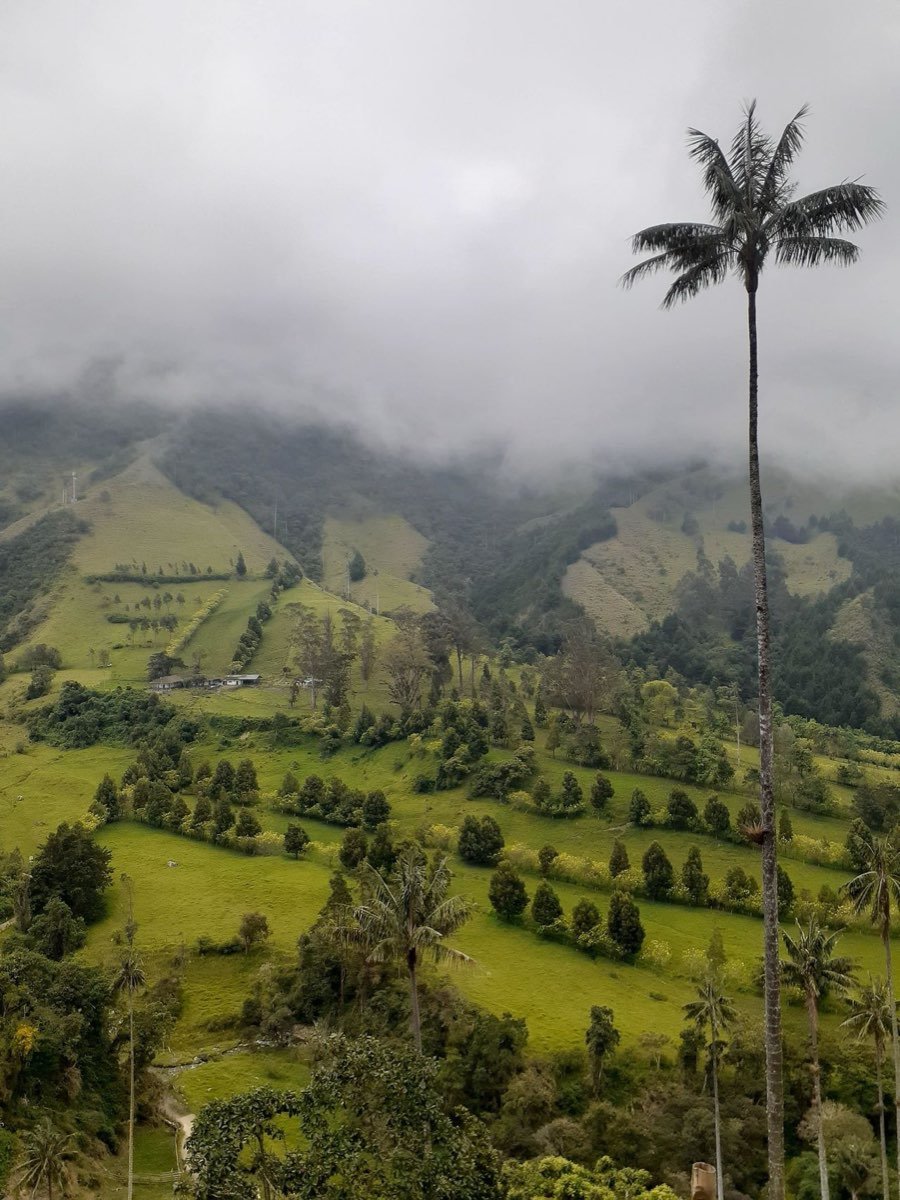 Wax palms in the Cocora Valley, a short jeep ride from Salento.
The standard route is a 4–5 hour circular walk beginning at the Cocora car park, going anti-clockwise: through the tall palm meadows first, then climbing into the cloud forest via two hummingbird sanctuaries (Acaime and El Bosque de los Colibríes, both charging a small entry fee and serving hot chocolate and arequipe - approximately COP 10,000–15,000), then descending back through the high palm meadows. Total distance approximately 14–16km.
Start as early as possible - jeeps leave Salento plaza from 6am. The mist burns off by 10am. Weekends bring crowds; midweek is considerably quieter.
Entry to Cocora Valley: approximately COP 7,000. Bring rain gear regardless of the forecast - the cloud forest can rain at any point. Good hiking boots are necessary; the cloud forest section involves stream crossings on rope bridges and muddy trails.
After the walk, return to Salento for lunch (most visitors are back by 2–3pm), then travel to Medellin.
Salento → Medellin: The fastest option is bus Armenia→Medellin with Flota Magdalena or Expreso Bolivariano from the Armenia terminal (6–7 hours, COP 60,000–80,000). An afternoon bus arriving Medellin by 9pm works well. Alternatively, fly Armenia→Medellin (40 minutes, USD 40–75) if the schedule allows.
Day 5: Arrival in Medellin - El Poblado and the Metro
Arrive in Medellin and settle in. Medellin sits in a narrow valley at 1,495m - warmer than Bogota and consistently temperate (the nickname is “la ciudad de la eterna primavera”, the city of eternal spring). Temperatures typically range from 17°C at night to 28°C midday.
The metro system is the backbone of the city: clean, safe, and excellent. The Metrocable (cable car) lines extend into the hillside comunas from several metro stations, giving riders direct visual contact with the city’s topography and the transformation of neighbourhoods that were previously inaccessible.
Where to stay in Medellin:
Budget: Hostel Patio Bonito (Calle 35 No. 7-27, El Poblado) - one of the most consistently well-reviewed hostels in Medellin. Social common areas, organised activities, mixed dorm beds from approximately COP 55,000–75,000 per night; private rooms from COP 140,000–180,000.
Mid-range: Hotel Dann Carlton Belfort (Carrera 43A No. 7-50, El Poblado) - reliable 4-star hotel in the middle of El Poblado with a pool, gym, and solid breakfast. Doubles from approximately USD 85–120 per night. Less character than a boutique option but convenient and professionally run.
High-end: The Charlee Hotel (Calle 9 No. 33-16, El Poblado) - the best-regarded design hotel in Medellin, with a rooftop bar and pool that provide the best aerial view of El Poblado’s hillside of low-rise buildings. 54 rooms. Doubles from approximately USD 175–250 per night. The rooftop is an excellent spot for sunset with a drink even if you are not staying here.
Search hotels in Medellin on Booking.com
Evening: Walk the streets of El Poblado - the principal expat and tourist zone, built around Parque de la 93 and Avenida El Poblado. Busy with restaurants and bars. Have dinner at Carmen (Calle 9A No. 37-28, El Poblado) - a celebrated local restaurant serving modern Colombian cuisine with serious wine. Mains approximately COP 65,000–110,000.
Day 6: Medellin - Comuna 13 and Laureles
Morning: Comuna 13 (San Javier neighbourhood) is the hillside community formerly associated with cartel violence in the 1980s and 1990s that has undergone one of the most documented urban transformations in Latin America. The outdoor escalators (inaugurated 2011), murals, and community-led cultural spaces are genuine rather than performative tourism - the neighbourhood is lived-in and active.
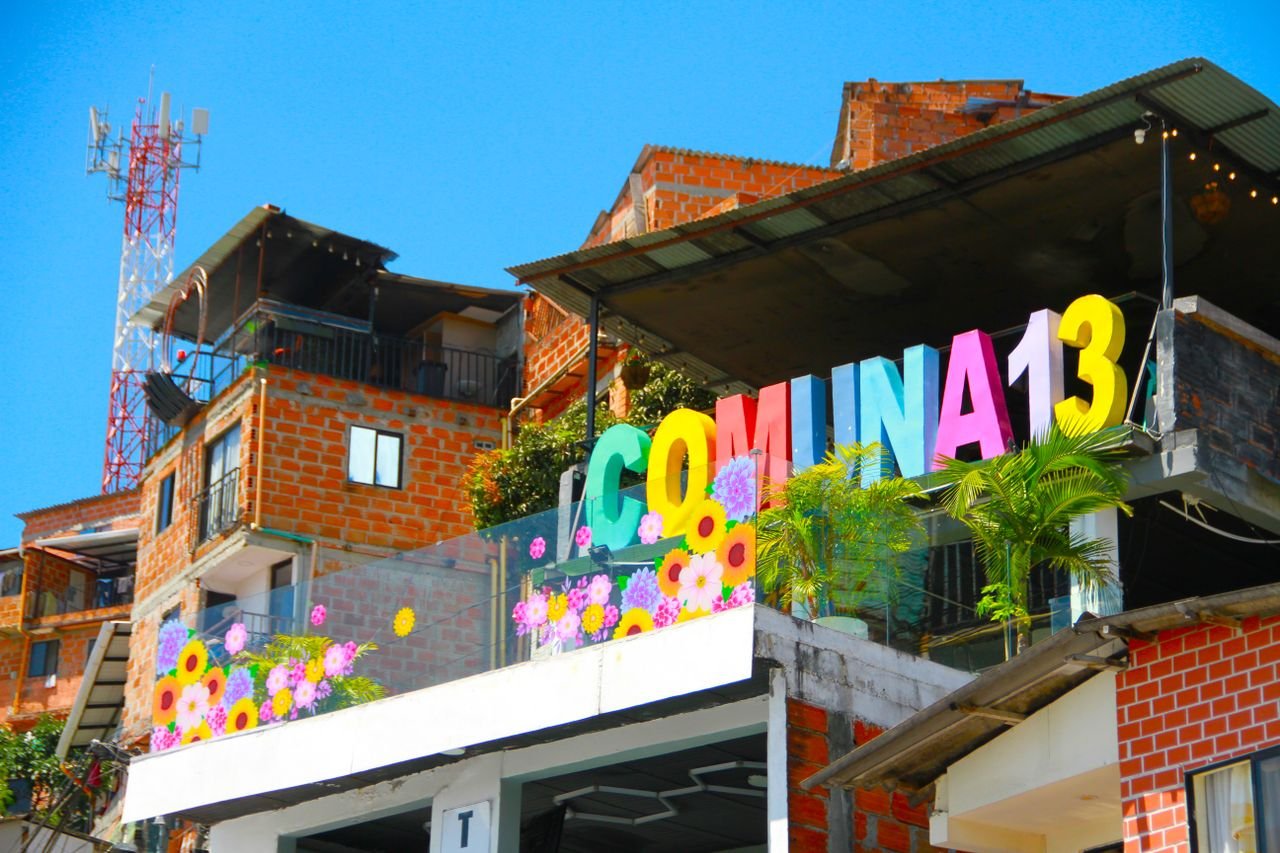 The Comuna 13 sign marks the neighbourhood we visit on day six.
Take the Metro to San Javier station (about 20 minutes from El Poblado, Metro Línea B to Industriales, then transfer). The escalators (free to use) rise through the hillside. The murals begin immediately and continue up through the neighbourhood. Walking the route with a locally-based guide is recommended: Real City Tours Medellin runs free walking tours of the area (tip-based, typically COP 20,000–40,000 per person). Tours depart San Javier station at 10am and 2pm. You can also book a guided Medellin city tour on GetYourGuide for a structured half-day experience combining the escalators, street art, and Botero Plaza.
Lunch in Laureles: take the Metro back towards El Centro and walk or taxi to Laureles (the residential neighbourhood west of El Poblado). El Rancho de Pepín (Carrera 70 No. 44B-42) is a neighbourhood institution for bandeja paisa - big portions, local clientele, approximately COP 28,000–38,000 per person.
Afternoon: Walk Parque de la 70 - Laureles’s main commercial strip, with excellent neighbourhood restaurants, bakeries, and coffee spots. Pergamino Café (Avenida El Poblado No. 40A-25, El Poblado, though also at other locations) for an afternoon specialty coffee (COP 10,000–18,000). This is among the best specialty roasters in Colombia.
Evening: Medellin’s bar scene in El Poblado and Parque de la 70 runs late. Envy Rooftop (Calle 9 No. 35-05) is the most popular rooftop bar in El Poblado for sundowner drinks; cocktails from COP 25,000–42,000.
Day 7: Medellin - Guatapé Day Trip
A full-day excursion from Medellin to Guatapé (79km east of Medellin, approximately 2 hours by bus) is the most popular day trip in the Antioquia region.
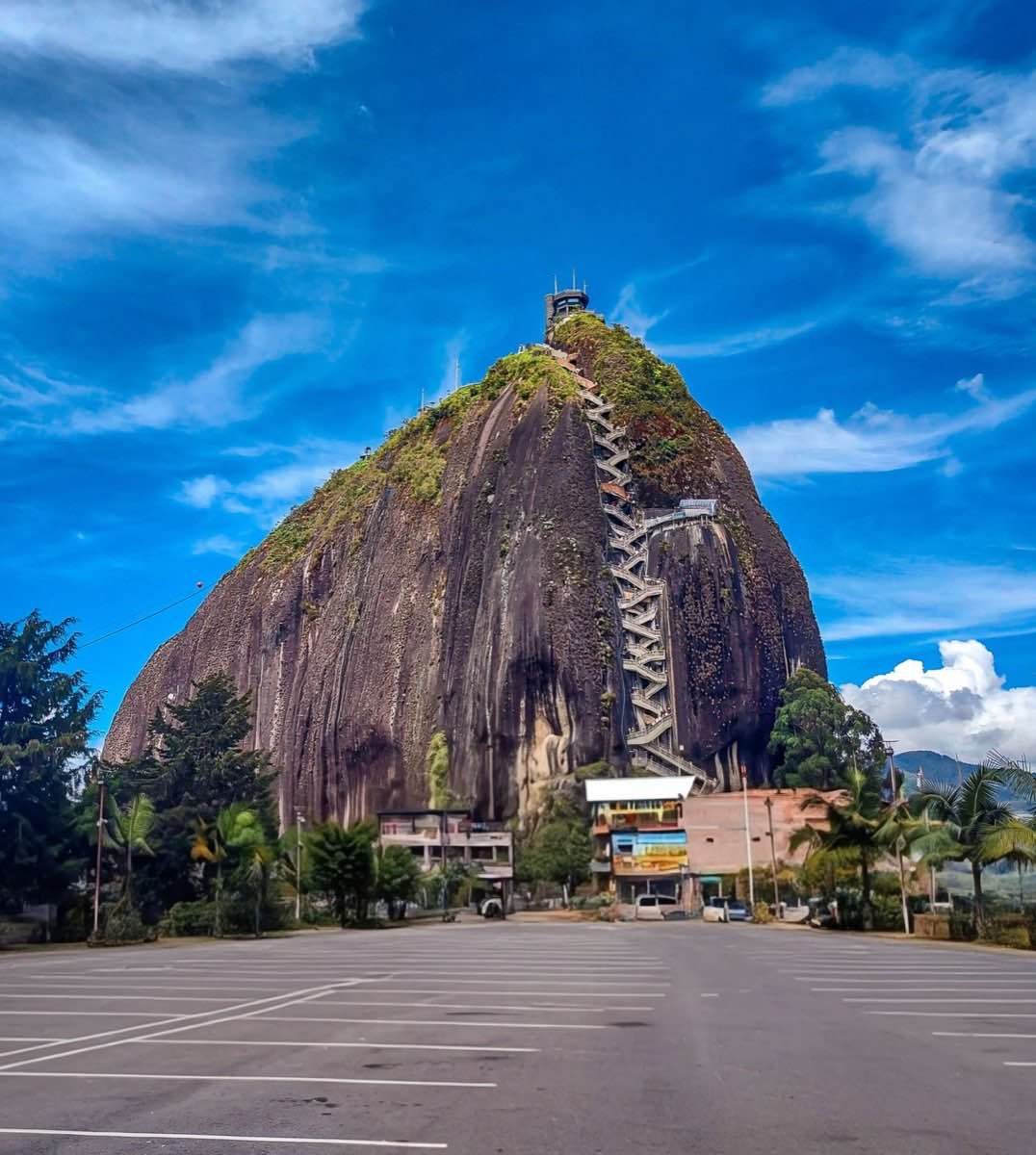 El Penol rock above the Guatape reservoir, a half-day trip from Medellin.
El Peñol - a 220-metre granite inselberg rising from the Guatapé reservoir - is the visual centrepiece: 740 steps cut into a crevice in the rock lead to a summit with panoramic views over the turquoise reservoir and its island clusters. Entry to climb El Peñol: approximately COP 22,000 as of 2026. Allow 45 minutes for the climb and summit.
Guatapé town (4km from El Peñol) is the most photographed street in Antioquia - the zócalos (hand-painted relief panels that run along the base of each house’s exterior) make the main streets look like a continuous art installation. Walk the main plaza and malecon (waterfront promenade) along the reservoir.
Getting there: Buses leave from Terminal del Norte in Medellin for El Peñol/Guatapé from 6am, approximately hourly. Journey approximately 2 hours. Ticket: COP 16,000–22,000 each way. Return buses from Guatapé until 6pm (confirm last bus time at the terminal when you arrive). Organised day tours from Medellin include transport and typically cost USD 30–55 per person - browse Guatapé day trips on GetYourGuide for a selection of rated options with free cancellation.
Lunch in Guatapé: Several restaurants on the reservoir waterfront serve sancocho de gallina (hen broth with vegetables) and whole fried tilapia from the reservoir - lunch for COP 25,000–40,000 at a lakefront spot.
Day 8: Medellin to Cartagena
Morning flight from José María Córdova International Airport (MDE) to Rafael Núñez International Airport (CTG) in Cartagena. Flight time approximately 1 hour 10 minutes. Book with Avianca, LATAM, or Wingo; prices range from USD 45 to 100 depending on lead time and baggage allowance.
Arrive Cartagena by midday. Take a taxi from the airport to your hotel - metered taxis should cost COP 30,000–45,000 to the walled city or Getsemaní (approximately 20–25 minutes).
Cartagena is dramatically warmer than anywhere else on this itinerary: average year-round temperature 30–33°C with high humidity. Adjust pace accordingly - midday hours are best spent in shade or at the pool.
Where to stay in Cartagena:
Budget: Media Luna Hostel (Calle de la Media Luna No. 10-46, Getsemaní) - well-run hostel in the heart of Getsemaní with a rooftop bar. Dorm beds from approximately COP 55,000–80,000; private rooms COP 170,000–230,000. Getsemaní is the recommended location for budget and mid-range - more authentic than the walled city, cheaper, and still extremely safe in the main areas around the plaza and Calle Larga.
Mid-range: Hotel Movich Cartagena de Indias (Calle del Colegio No. 34-60, Getsemaní) - a solid 4-star option between the walled city and Getsemaní. Pool, good breakfast, and rooms that are better value than equivalent hotels inside the walls. Doubles from approximately USD 95–140 per night.
High-end: Sofitel Legend Santa Clara (Calle del Torno No. 39-29, San Diego, within the walls) - the finest hotel in Cartagena and one of the best in Colombia, occupying a 17th-century convent beside the Plaza San Diego. The original chapel and cloisters are preserved within the hotel. Doubles from approximately USD 280–420 per night, rising sharply during December and July. Breakfast on the pool terrace is exceptional.
Search hotels in Cartagena on Booking.com
Afternoon: Walk the Walled City walls (Murallas) - the complete ring of fortifications is walkable in approximately 40 minutes. Do this in the late afternoon (5–6pm) when the light is golden and the temperature drops slightly. The section above Baluarte de Santo Domingo looking out over the bay is the most photogenic stretch.
Evening: Dinner in Getsemaní. Demente (Calle Guerrero, Getsemaní) serves the most ambitious modern Colombian food in the neighbourhood - COP 55,000–80,000 per main, reservations advisable at weekends.
Day 9: Cartagena - Walled City, Getsemaní
Morning: Explore the walled city on foot. Key sights:
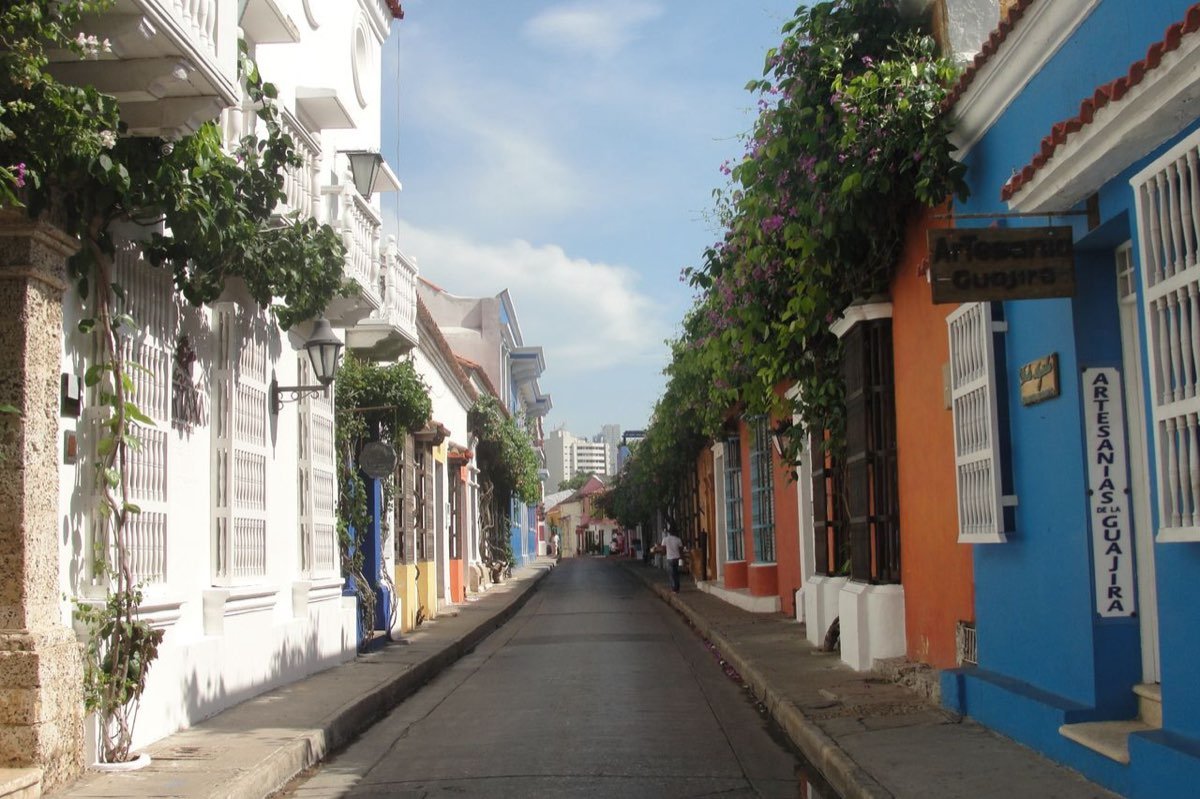 A flower-draped lane inside Cartagena’s walled city.
- Castillo San Felipe de Barajas (Avenida Araujo s/n) - the largest Spanish fortification in the Americas, a vast 17th-century hilltop fortress with tunnels running under the rock. Entry approximately COP 25,000. Open 8am–6pm daily. Budget 1.5 to 2 hours.
- Plaza Santo Domingo - the most photographed square in the walled city, with Fernando Botero’s La Gorda bronze sculpture and coffee shops spilling onto the plaza. Busy all day.
- Palacio de la Inquisición (Plaza Bolívar, Calle 34 No. 3-11) - the former headquarters of the Spanish Inquisition in New Granada, now a museum with original instruments of interrogation. Entry approximately COP 18,000.
Lunch: La Cevichería (Calle Stuart No. 7-14, Walled City) - Cartagena’s most celebrated restaurant, focused on Caribbean ceviche and seafood. Book 2–3 days ahead during high season. Mains approximately COP 45,000–85,000.
Afternoon: Getsemaní neighbourhood - walk Calle Larga and the streets radiating from Parque del Centenario. The street murals here are among the most significant in the country; every exterior wall in the core of the neighbourhood has been painted in the last decade. The street food vendors on Calle Larga selling ceviche from carts (COP 10,000–18,000) are some of the best in Cartagena.
Evening: Sunset drinks at Alquímico (Calle del Colegio No. 34-24) - a three-storey colonial house in Getsemaní with a rooftop terrace that has views over both the neighbourhood and the walls. Considered one of the best cocktail bars in South America; cocktails from COP 28,000 to 42,000. Arrive before 6:30pm to secure a rooftop spot.
Day 10: Optional Island Day Trip, then Departure
If flights permit, Day 10 can include an early boat trip to the Rosario Islands or Playa Blanca on the Barú Peninsula.
Rosario Islands: Speed boats leave from Muelle Turístico (the main tourism pier in the Bocagrande area) from 8am. Return day trips cost approximately COP 80,000–120,000 per person including the boat, or up to COP 180,000–250,000 with snorkelling and lunch packages. Journey time approximately 1.5 hours each way. The islands have clear water and reef - better for snorkelling than the mainland beaches.
Playa Blanca (Barú): A longer, more rustic beach - white sand, shallow clear water, palm shade. Day trips via boat from Muelle Turístico run approximately COP 70,000–100,000 per person round-trip. The beach gets crowded on weekends; go on a weekday if possible.
Both options require an early departure (6:30–7am from the pier) to return in time for a late afternoon or evening flight.
Departure: Rafael Núñez International Airport handles international flights - most North American and European routes connect via Bogota’s El Dorado. Allow 2 hours before a domestic flight and 2.5 to 3 hours for international.
Budget Summary (per person, as of 2026)
| Category | Budget (10 days) | Mid-range (10 days) | High-end (10 days) |
|---|---|---|---|
| Accommodation | USD 180–240 | USD 900–1,200 | USD 2,800–4,000 |
| Domestic flights | USD 120–200 | USD 150–250 | USD 200–350 |
| Food & drink | USD 120–180 | USD 300–500 | USD 700–1,200 |
| Tours & entry fees | USD 60–100 | USD 120–200 | USD 250–450 |
| Local transport | USD 40–70 | USD 80–130 | USD 150–280 |
| Total | USD 520–790 | USD 1,550–2,280 | USD 4,100–6,280 |
Prices as of 2026. Exchange rate approximately COP 4,200–4,400 per USD at time of writing - verify current rates before travel.
Booking Timeline
- 4 weeks ahead minimum: Domestic flights (Bogota→Armenia or Medellín, Medellín→Cartagena). Prices rise sharply in the final 2 weeks.
- 2 weeks ahead: La Cevichería dinner reservation (Cartagena). Leo restaurant dinner reservation (Bogota) if planning to go.
- 1 week ahead: Guided day tours (Guatapé, Cocora Valley guided experiences, commune 13 tours if opting for a paid guide).
- On arrival: Jeep to Salento, city taxis, tinto at Paloquemao market.
Book Your Trip
- Flights - Find the best fares to Colombia · flights guide
- Travel Insurance - Get covered before you go · insurance guide
- eSIM - Stay connected from landing · eSIM guide
- Airport Transfers - Pre-book your transfer from Bogota or Medellin · airport guide
- Car Rental - Compare prices across providers
- Hotels - Hotels in Bogotá · Hotels in Salento · Hotels in Medellín · Hotels in Cartagena
- Tours & Activities - Browse Colombia tours on GetYourGuide