Colombia’s two most visited cities could not be more different. Cartagena is a walled Caribbean city - hot, colourful, compact, and overwhelmingly oriented around its colonial architecture and nearby beaches. Medellin is an Andean city at 1,495 metres above sea level - temperate, sprawling, increasingly creative, and the undisputed choice for longer stays and expat living. Most itineraries include both, but if you’re choosing, here’s what each actually delivers.
The Core Difference
Cartagena is a postcard destination: you come to see the old town, feel the Caribbean heat, and day-trip to the Rosario Islands. Most visitors are satisfied after 2 to 4 days. Medellin rewards longer investment - it takes a few days just to understand the city’s different neighbourhoods, and the best experiences (the food, the nightlife, the transformation story, the day trips) take time to unlock.
Atmosphere and Setting
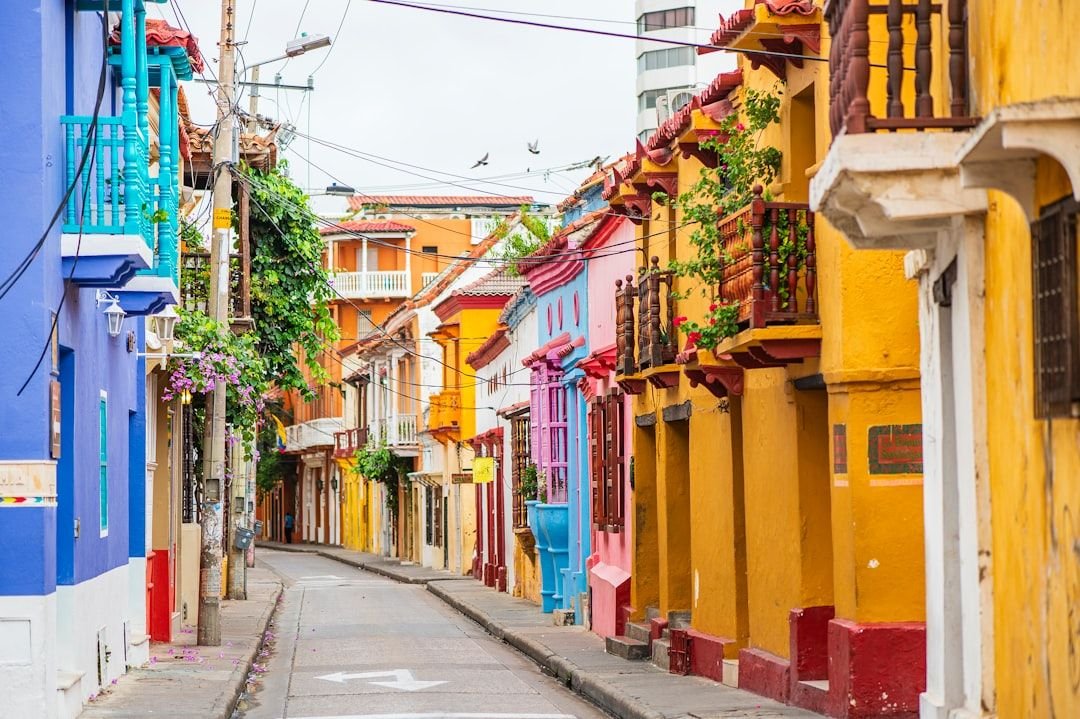
Cartagena’s historic old town (Ciudad Amurallada) is genuinely beautiful. The 13 km of colonial walls encircling the city were built by Spain in the 16th century and are remarkably intact. Inside the walls, brightly painted colonial houses with flower-draped balconies line streets barely wide enough for two cars. The heat is substantial - the city sits at sea level on the Caribbean coast, with year-round temperatures of 29 to 34 degrees Celsius and high humidity. Outside the old town, the Bocagrande neighbourhood to the south has a more modern, Miami-adjacent feel with high-rise hotels facing the beach.
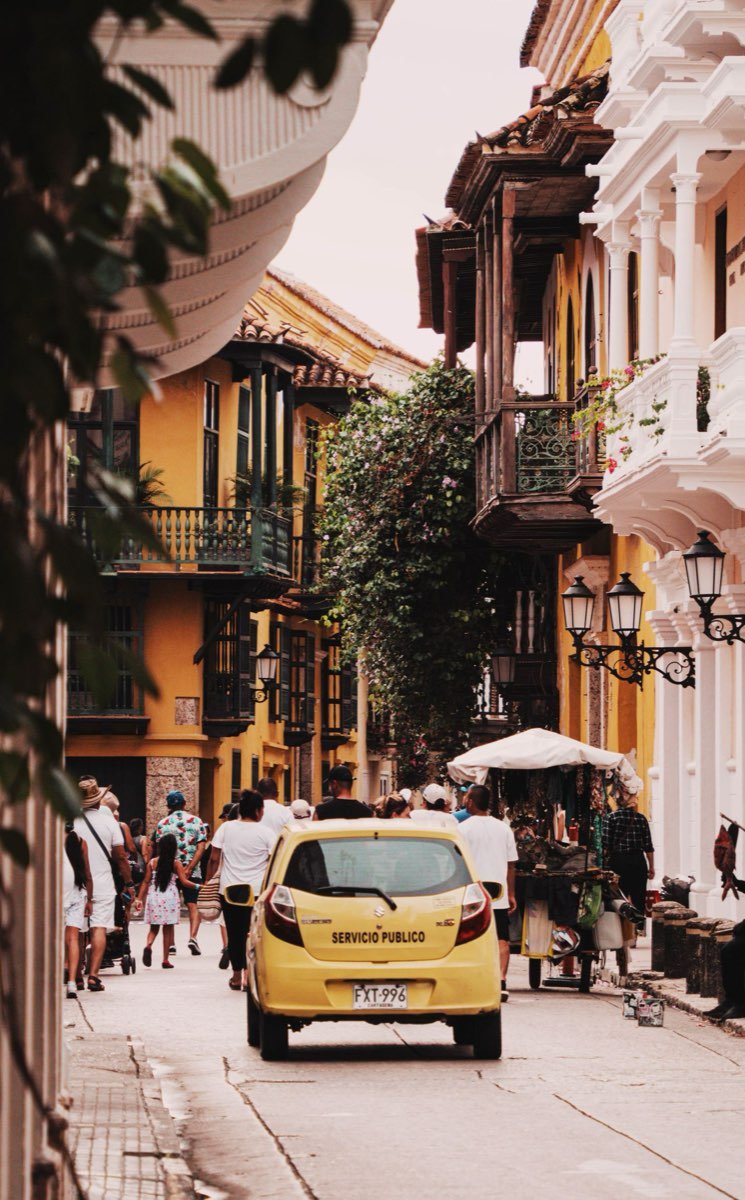 Colonial house fronts in Cartagena’s walled city.
Medellin sits in the Andes at an altitude that makes it far more pleasant year-round (18 to 28 degrees Celsius, with occasional afternoon rain). It’s Colombia’s second city and a sprawling metro of about 4 million people. The most traveller-friendly neighbourhoods are El Poblado in the south (full of restaurants, bars, and boutique hotels) and Laureles-Estadio (more local, less touristy, excellent food scene). The city’s cable car system and metro make it navigable without a taxi for most day-to-day movement.
Winner for scenery and historic atmosphere: Cartagena. Winner for livability and climate: Medellin.
Accommodation
Cartagena within the old town commands a premium. Budget hostels run USD 15 to USD 30 per night in a dorm, USD 60 to USD 100 per night for a private room. Mid-range boutique hotels inside the walls charge USD 120 to USD 250 per night. The Hotel Santa Clara (a converted convent) and Casa San Agustin are flagship properties at USD 300 to USD 600 per night. Outside the old town in Getsemani, prices drop significantly - guesthouses from USD 30 to USD 70 per night for a private room.
Medellin is cheaper. El Poblado hostels run USD 12 to USD 25 per dorm, USD 40 to USD 80 per private room. Boutique hotels in El Poblado charge USD 60 to USD 150 per night. Long-stay apartments in Laureles or El Poblado can be found for USD 500 to USD 900 per month, which is why the city attracts a large digital nomad and expat community. Luxury options like Casa Entonces and The Charlee Hotel run USD 150 to USD 300 per night.
Winner for value: Medellin. Winner for atmosphere within the hotel: Cartagena (the boutique hotel experience in a colonial building is hard to match).
For a full breakdown of neighbourhoods and price ranges, see our Cartagena hotels guide and Medellin hotels guide.
Food
Cartagena does Caribbean food well - fresh fish, ceviche, coconut rice, and arepas de huevo (fried corn patties filled with egg) are all excellent. The best local food is at the food stalls in Getsemani and at the market. Sit-down restaurants in the old town are oriented towards tourists and international visitors - a main course costs USD 12 to USD 25 at a mid-range restaurant. Juan del Mar and La Cevicheria are consistently cited for seafood; both charge USD 18 to USD 35 for mains.
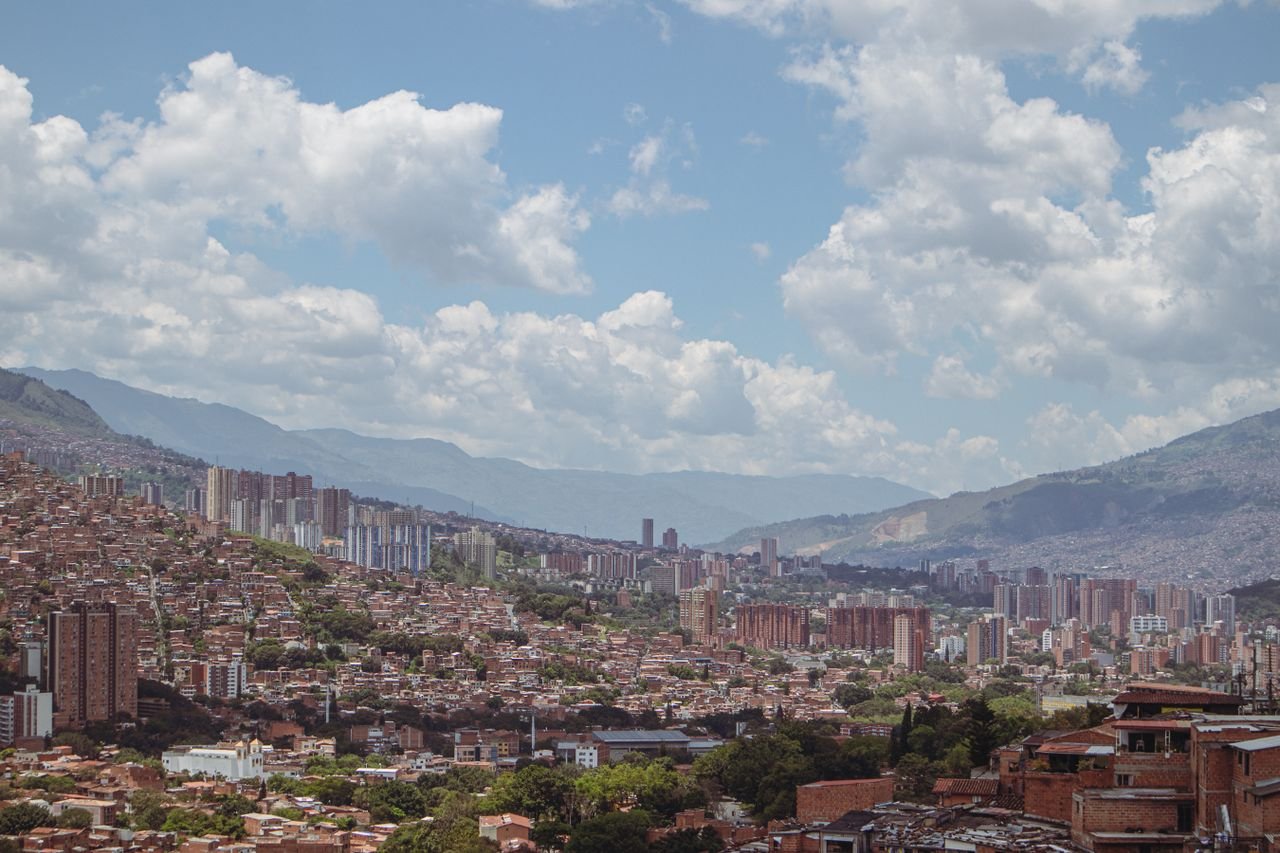 Medellin climbs the slopes of the Aburra Valley.
Medellin has one of South America’s best urban food scenes. El Poblado is dense with high-quality restaurants covering Colombian, sushi, Lebanese, Italian, and modern tasting-menu cuisine. Pergamino Cafe in El Poblado has been cited as one of the best coffee bars in Latin America. The Mercado del Rio on the edge of El Hueco houses dozens of food stalls from USD 5 to USD 15 for a full meal. Masa, Vintrash, and Carmen are among the standout restaurants for contemporary Colombian cuisine, with tasting menus from USD 35 to USD 80 per person. The local staple - bandeja paisa, a plate of grilled meat, beans, rice, chorizo, chicharron, and arepa - is available at simple restaurants (fondas) for under USD 6.
Winner for food: Medellin, by a meaningful margin.
Activities
Cartagena’s primary activities are: exploring the old town on foot (free), the Castillo de San Felipe de Barajas (entry USD 18), the Palace of the Inquisition (USD 8), day trips to the Rosario Islands (from USD 35 to USD 80 per person for a boat day trip), and tours to the Totumo Mud Volcano (USD 30 to USD 50). The city beaches within Bocagrande are mediocre - the Rosario Islands and Playa Blanca are the genuine beach destinations, both reached by day boat or a 45-minute speedboat ride.
Medellin’s activity list is longer and more varied. The Pablo Escobar tours are controversial but popular (USD 20 to USD 40 per person). The Metrocable to Parque Arvi covers 16 km of forested hills above the city (USD 2 cable car). The Museo de Antioquia has an excellent Botero collection - 23 paintings and 23 sculptures donated by Fernando Botero himself, entry USD 4. The Real Medellin walking tour through the city’s transformation story is one of the best free activities in Colombia. Day trips to Guatape and the El Penol rock are 90 minutes by bus (from USD 5) and highly worthwhile. See our Guatape guide for the full logistics.
Winner for activities and day trips: Medellin.
Budget
Cartagena is expensive by Colombian standards. Daily costs in the old town: accommodation USD 80 to USD 200 (mid-range), meals USD 30 to USD 60, activities USD 20 to USD 50. A comfortable 3-day visit runs USD 400 to USD 800 per person including day trips. Budget travellers staying in Getsemani and eating local can cut this to USD 50 to USD 80 per day, but the old town experience itself pushes costs up.
Medellin runs approximately 30 to 40 percent cheaper than Cartagena for equivalent quality. Mid-range daily budget: accommodation USD 50 to USD 120, meals USD 20 to USD 40, activities USD 10 to USD 30. A comfortable 5-day stay runs USD 400 to USD 700 per person. Budget travellers can live well on USD 35 to USD 55 per day.
Winner for budget: Medellin.
Getting There
Cartagena’s Rafael Nunez International Airport (CTG) has direct flights from Bogota (1 hour, from USD 60 return on Avianca or Copa), and international connections from Miami, Panama City, and Fort Lauderdale. The airport is 3 km from the old town - a taxi runs USD 10 to USD 15.
 El Penol, the classic day trip from Medellin.
Medellin’s Jose Maria Cordova Airport (MDE) serves international flights from Miami, Madrid, Mexico City, Lima, and other hubs. Domestic flights from Bogota run 1 hour (from USD 50 return). The airport is 28 km from El Poblado - a taxi runs USD 20 to USD 30 (45 to 60 minutes), or an official airport bus (Sitva) costs USD 2.
Winner for access: Roughly equal - both have good domestic connections from Bogota.
Best Time to Visit
Both cities are year-round destinations. Cartagena is hot year-round; the driest months are December to April, which is also peak season with higher prices. The “wet season” (June to November) brings afternoon rain but the city never fully shuts down. Medellin has two dry seasons (December to February and June to August) and the climate is pleasant year-round due to altitude. The Feria de las Flores festival in early August is worth timing a visit around.
Who Should Choose Cartagena
- Visitors with limited time who want a single strong visual impression of Colombia
- Beach-focused travellers who want the Caribbean coast experience
- Couples on a romantic short break (the boutique hotel options are hard to beat)
- Photographers - the old town walls and coloured facades are endlessly photogenic
Who Should Choose Medellin
- Longer stays (7 days or more in Colombia) where immersion in a city pays off
- Digital nomads and budget-conscious travellers
- Food and nightlife-focused visitors
- Anyone interested in urban transformation, design, or contemporary Latin American culture
- Travellers wanting good day-trip options (Guatape, the coffee region, Jardin)
Verdict
Most Colombia itineraries of a week or longer should include both cities. A standard route is Medellin (4 to 5 nights) plus Cartagena (3 nights), flying between them or connecting via Bogota. If choosing only one: Cartagena wins for a short 2 to 4 day trip that prioritises visual impact and ease; Medellin wins for any visit of 5 days or more where depth, food, and value matter more than scenery. Cartagena is a destination you visit; Medellin is a city you experience.