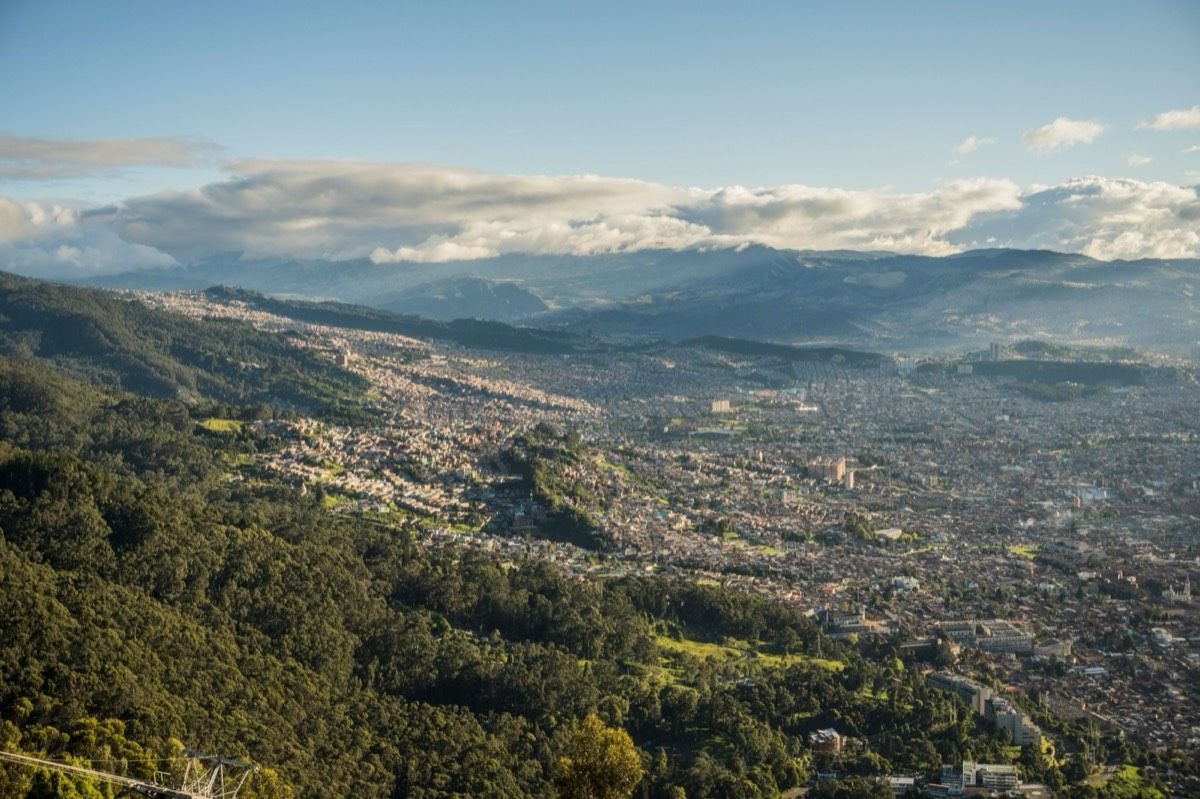
Two countries, two very different propositions. Colombia - the Caribbean coast, the Coffee Region, the renewed cities - is a country that surprises most visitors with its range. Peru - Machu Picchu, Cusco, the Amazon, Lima - is built around one of the world’s great bucket-list destinations. The comparison is less about which is better and more about what kind of trip you want.
Here is what each country offers at its best, and where each one falls short.
What Colombia Does Best
The Caribbean coast. Cartagena’s walled Old City - a UNESCO World Heritage site of colonial plazas, rainbow-coloured balconies, and 16th-century fortifications - is genuinely one of South America’s most beautiful urban environments. The nearby Rosario Islands offer day trips to clear Caribbean water. North of Cartagena, Santa Marta serves as the gateway to Tayrona National Park - 15,000 hectares of jungle meeting Caribbean beaches in a combination that is hard to match on the continent.
City culture. Colombia’s cities are the trip for many visitors. Bogota has the strongest museum offering in northern South America (the Gold Museum alone justifies a visit), a world-class gastronomic scene, and a historic district that rewards exploration. Medellin - transformed since the 1990s - is one of South America’s most innovative cities, with the cable cars, street art of Comuna 13, and a coffee culture rooted in the nearby Eje Cafetero making it endlessly interesting for travellers.
The Coffee Region. The Eje Cafetero - the triangle of Quindío, Risaralda, and Caldas departments around Salento, Filandia, and Manizales - is uniquely Colombian. Staying on a working coffee finca, learning the production process from cherry to cup, and hiking through the Valle del Cocora’s wax palms is an experience with no direct equivalent elsewhere in South America.
The Ciudad Perdida (Lost City). The four to six day trek through the Sierra Nevada de Santa Marta to the pre-Columbian city of Teyuna is one of the great adventure treks in the Americas. Unlike Machu Picchu, it remains genuinely off-road and sees a fraction of the foot traffic - roughly 100 to 120 trekkers per day versus thousands at Machu Picchu.
What Peru Does Best
Machu Picchu. No amount of tourist saturation diminishes the site itself. The Inca citadel at 2,430 metres, revealed when the morning cloud clears, remains one of the world’s extraordinary human achievements. Entry fees start at approximately USD 45 (COP 190,000) and must be booked in advance; the Inca Trail - the four-day trek through cloud forest and Andean passes - requires booking 3 to 6 months ahead.
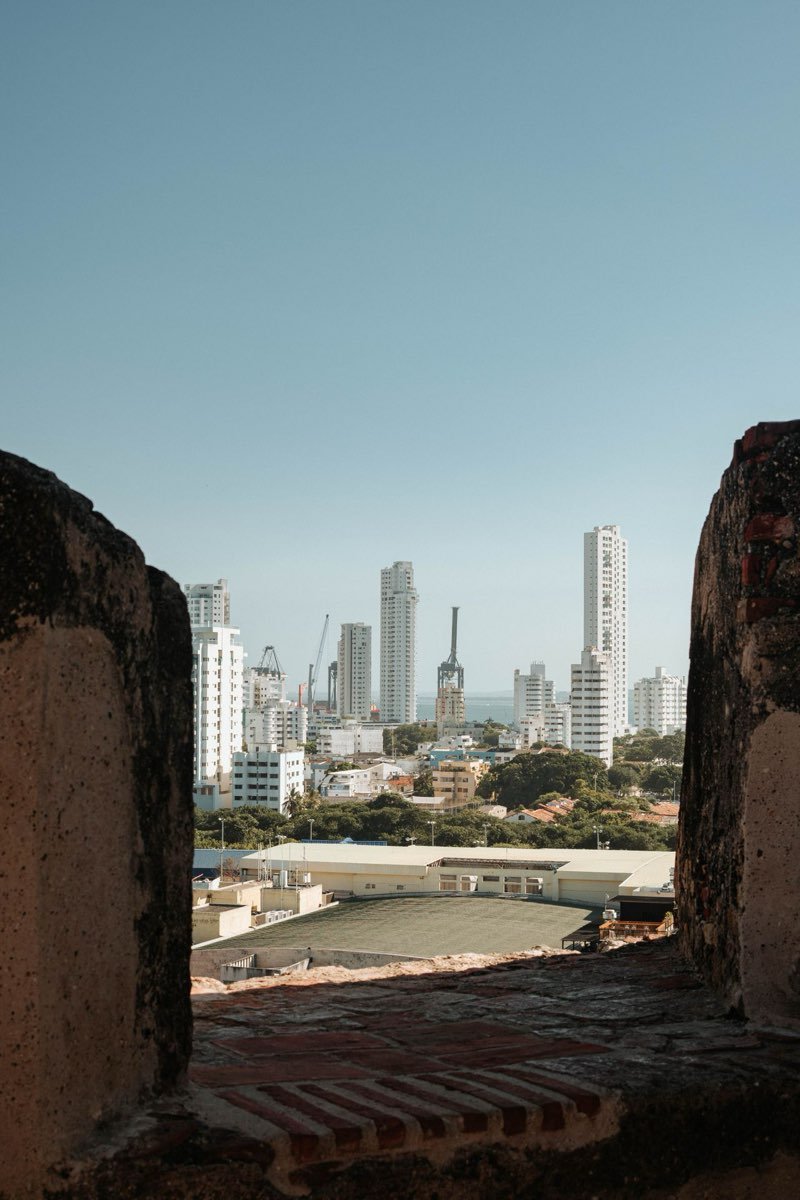 Cartagena’s fortifications and skyline.
Inca heritage depth. Cusco itself is a living museum. The city’s Plaza de Armas, the Sacsayhuamán fortress above the city, the Inca walls incorporated into Spanish colonial buildings, and the Sacred Valley’s series of Inca terraces and fortress sites (Pisac, Ollantaytambo, Moray) are unmatched anywhere in the Americas.
Lima’s food scene. Peru’s capital has, by most credible rankings, the best restaurant scene in South America. Miraflores and Barranco concentrate fine-dining restaurants serving ceviche, tiradito, causa, and innovative Nikkei (Japanese-Peruvian) fusion. Central, Maido, Kjolle, and Astrid y Gastón have put Lima in the same conversation as the world’s top food cities.
The Amazon. Both Colombia and Peru offer Amazon access, but Peru’s river lodges around Iquitos - accessible only by boat or plane, 3,646 km from the river’s mouth - offer a deeper wilderness experience. Colombia’s Leticia is closer to the border town model; Peru’s Pacaya-Samiria National Reserve offers one of the most biodiverse stretches of Amazon basin accessible to tourists.
Lake Titicaca. At 3,812 metres, the world’s highest navigable lake - shared with Bolivia - is a Peru highlight with no Colombian equivalent. The floating Uros Islands (totora reed islands built and maintained by the Uros people) and the island of Taquile are worth the overnight from Puno.
Climate: When to Visit Each Country
Colombia has no true dry season nationally - the country straddles the equator and different regions peak at different times. The Caribbean coast (Cartagena, Santa Marta, Tayrona) is driest from December to April and July to August - good beach travel windows. The Coffee Region and Medellin are most pleasant from December to February and June to August, when rainfall dips. Colombia works year-round, which is one of its genuine advantages.
Peru’s high season is May to September - the Andean dry season, when trekking conditions are best and Machu Picchu cloud cover is lower. The wet season (November to March) makes the Inca Trail muddy and unpredictable. Lima is overcast most of the year due to the Pacific coastal fog (garúa) but rarely cold.
Advantage for flexibility: Colombia. Better weather window clarity: Peru.
Cost of Travel
Both countries are affordable by western European or North American standards. A realistic daily budget for independent travel:
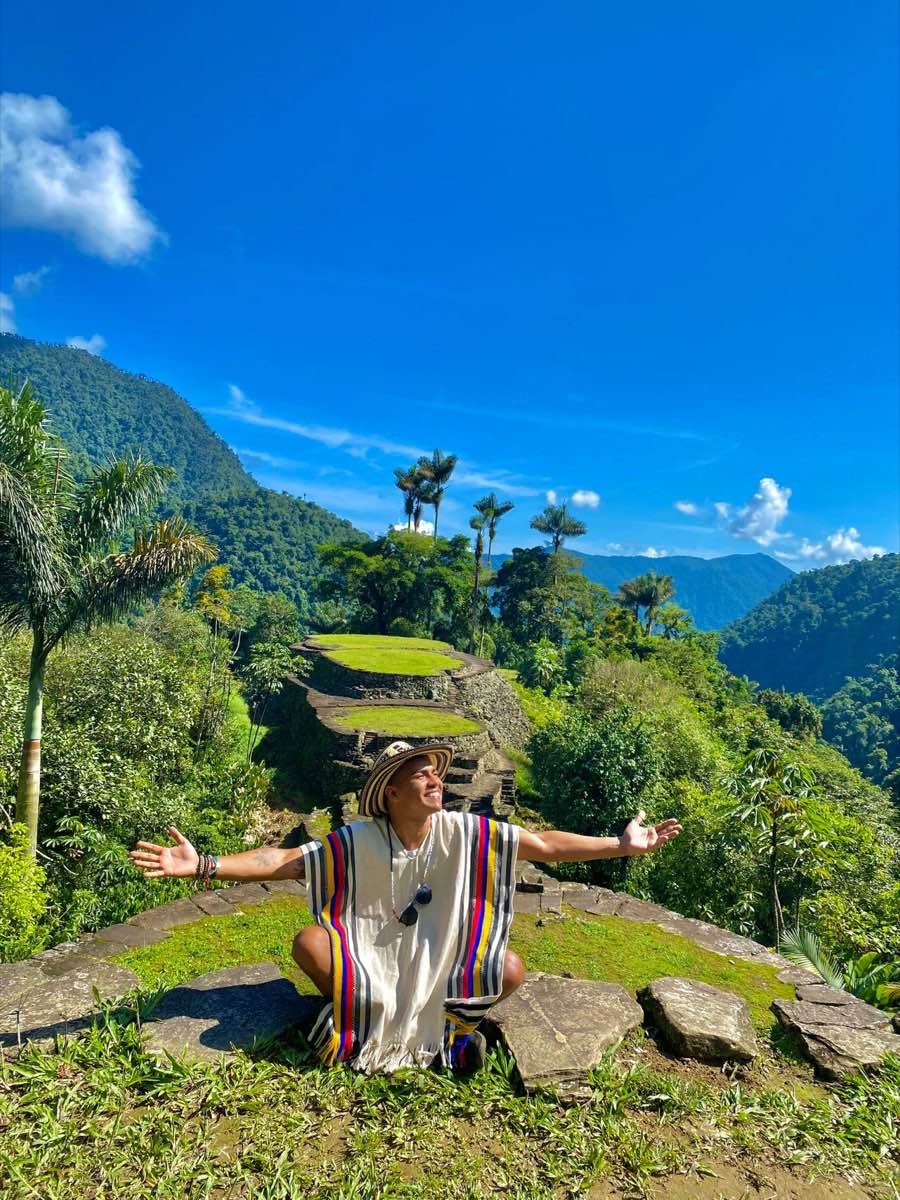 Ciudad Perdida, Colombia’s answer to Machu Picchu.
Colombia: USD 40 to USD 65 per person covers a private room in a mid-range hostel, two meals, local transport, and one or two paid activities. Cartagena’s Old City runs 30 to 40 per cent above Medellin or Bogota prices. The Colombia travel budget guide covers full cost breakdowns by city.
Peru: USD 45 to USD 75 per person covers similar comfort. The Machu Picchu circuit (Cusco + train + entry) adds a meaningful fixed cost - budget a minimum of USD 120 to USD 180 for the full Aguas Calientes day trip from Cusco. Lima’s Miraflores restaurants run comparable to mid-range London or New York pricing at the top end.
Slight edge for overall budget: Colombia, outside of Cartagena.
Itinerary Planning
First-time to South America, 2 weeks: Colombia is often the better starting point. The mix of city life (Bogota, Medellin), coast (Cartagena), and the Coffee Region fits neatly into 14 days without requiring domestic flights for every leg. The 14-day Colombia itinerary or the two-week Colombia guide shows how the pieces fit together.
Bucket-list site, shorter trip: Peru, specifically Machu Picchu. If you have 10 days and one primary objective - arriving at Machu Picchu - Lima, Cusco, Sacred Valley, and the citadel fit cleanly. Colombia’s equivalent of a single unmissable headline sight is less obvious, which is also part of its character.
Combining both: Bogota to Lima is a direct flight of around 4 hours (Avianca and LATAM serve the route). A four-week trip could reasonably cover Bogota, Medellin, Cartagena (Colombia) and then Lima, Cusco, Machu Picchu, Sacred Valley (Peru) without feeling rushed.
Safety
Both countries have improved significantly and both require the same standard vigilance as any South American destination. Colombia’s main tourist areas - Cartagena’s Old City, Medellin’s El Poblado and Laureles, Bogota’s Chapinero, Usaquén, and La Candelaria - are busy with tourists and generally safe. The Colombia safety guide covers this in detail.
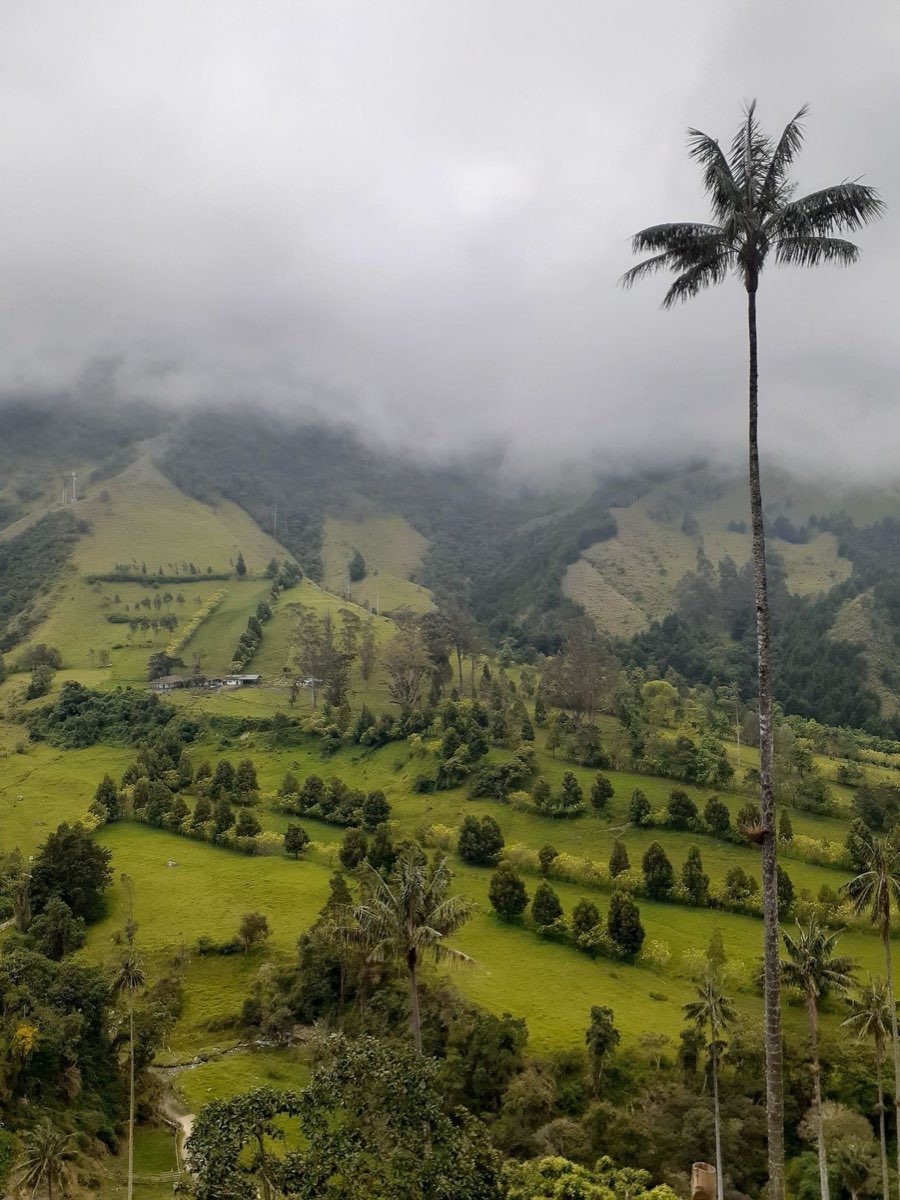 Wax palms in the Cocora Valley.
Peru’s main tourist areas - Lima’s Miraflores and Barranco, Cusco’s historic centre, Aguas Calientes - are heavily visited and similarly safe. Express kidnappings using tampered taxis are a documented risk in Lima; always use Uber or pre-booked taxis. Both countries have areas that sit outside tourist circuits and require greater care - check current advisories before travel.
Which Country Wins?
Choose Colombia if you want diverse cities, a Caribbean coast, coffee country, and a destination that feels genuinely evolving and full of stories. Colombia rewards travellers who want to experience a country mid-transformation.
Choose Peru if Machu Picchu is on your list, if Inca heritage and archaeological depth matter to you, or if you want the continent’s best food scene in Lima. The Peruvian circuit (Lima–Cusco–Sacred Valley–Machu Picchu) is one of the best-defined travel routes in the world.
Choose both if you have three weeks or more. The two countries complement each other well - Colombia’s cultural energy and coast balanced against Peru’s ancient heritage and high-altitude landscapes. On a first South America trip, this combination covers the continent’s two standout mainstream destinations without needing to push further south.