Fourteen days is the threshold where Colombia stops feeling like a highlights reel and starts feeling like a country. This route moves from the Andean capital through the coffee highlands, into the innovation city, along the Caribbean coast, and into one of South America’s finest national parks. It covers enough ground to show the country’s range without making every day feel like a transit day.
Fly into Bogota El Dorado (BOG). Fly out from Santa Marta Simon Bolivar airport (SMR) or back to Bogota if your international routing requires it. Booking domestic legs at least two to three weeks ahead saves significantly on Avianca and LATAM fares.
Days 1-2: Bogota
Arrive at El Dorado and transfer to La Candelaria or Chapinero depending on your accommodation. App taxis (Cabify or InDriver) run COP 35,000 to 55,000 to the centre. The TransMilenio bus is COP 3,200 but slow with luggage.
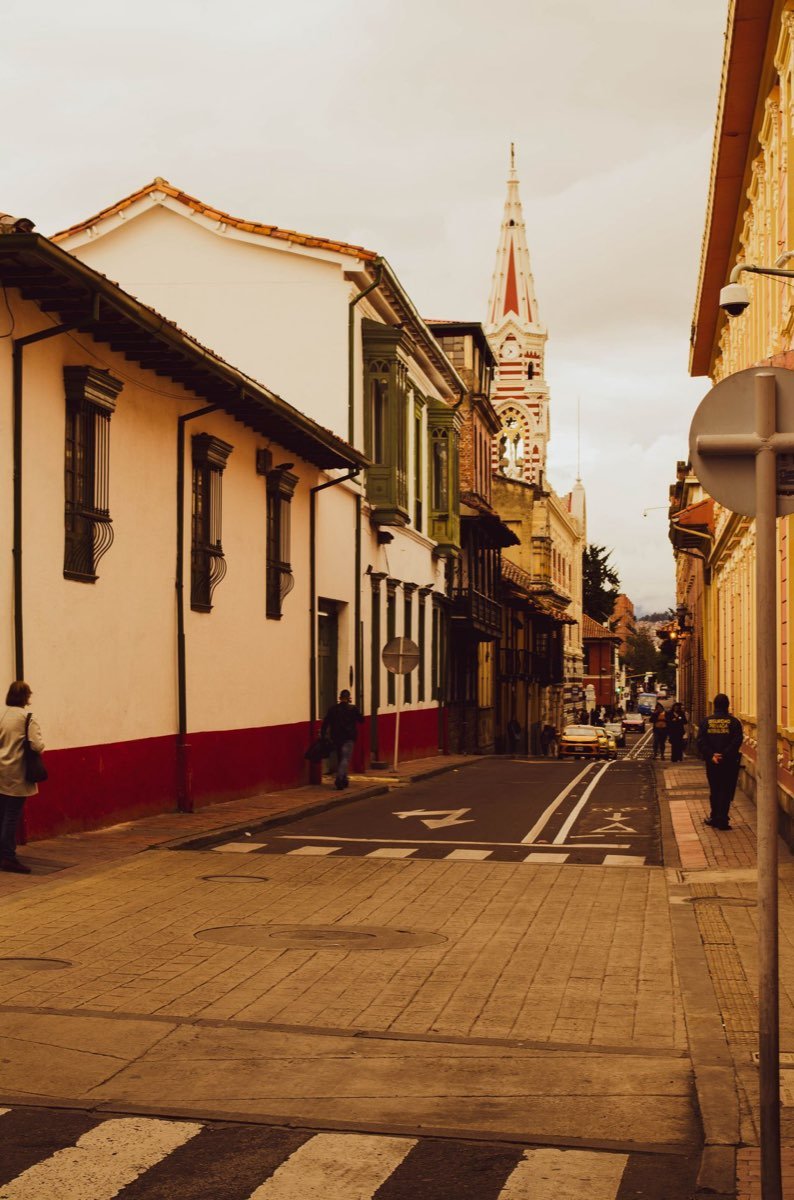 A quiet historic street in central Bogota.
Search hotels in Bogota on Booking.com
Accommodation:
- Budget: La Pinta Hotel Boutique Hostel near Plaza Chorro de Quevedo has dorms from COP 55,000 and private rooms from COP 170,000.
- Mid-range: Hotel de la Opera on Calle 10 in La Candelaria charges COP 380,000 to 480,000 and is steps from the Teatro Colon and Gold Museum.
- Luxury: Casa Medina in Chapinero has doubles from COP 900,000 in an Art Deco building from 1945 with a restaurant that reliably outperforms its surroundings.
Day 1: Start at the Museo del Oro (COP 5,000 entry for foreign visitors, free Sundays) on Carrera 6. The permanent collection of pre-Columbian goldwork from every major Colombian culture is the single best museum introduction to the country. Two hours is the right amount of time. Walk south to Plaza Bolivar for street empanadas (COP 2,000 to 4,000 each) and the Catedral Primada. Take the cable car up to Monserrate at dusk (COP 28,000 round trip) for city views. Dinner at Masa on Carrera 13, Zona Rosa: wood-fired pizza and pasta from COP 42,000.
Day 2: The Sunday market at Usaquen in the north of the city draws artisan traders and food stalls; on other days the cafe strip on Calle 119 is worth the trip for breakfast alone. Amor Perfecto serves single-origin Colombian pour-overs from COP 8,000. Afternoon: a guided street art walk through La Candelaria (COP 30,000 to 50,000 per person, tip-based). The murals from the 2011 city initiative remain among the most technically accomplished street art in Latin America. Dinner at Quinua y Amaranto on Carrera 4 for COP 20,000 to 30,000 for a full set lunch.
Days 3-5: Coffee Region - Salento and Cocora Valley
Take an early bus from Bogota Salitre terminal to Armenia (COP 50,000 to 70,000, 5 hours). From Armenia bus station, shared jeeps (COP 12,000 to 16,000, 45 minutes) run to Salento every 30 to 40 minutes. Alternatively, fly Bogota to Pereira (COP 150,000 to 200,000, 1 hour) and jeep from Pereira’s bus terminal to Salento (COP 12,000 to 16,000, 45 minutes).
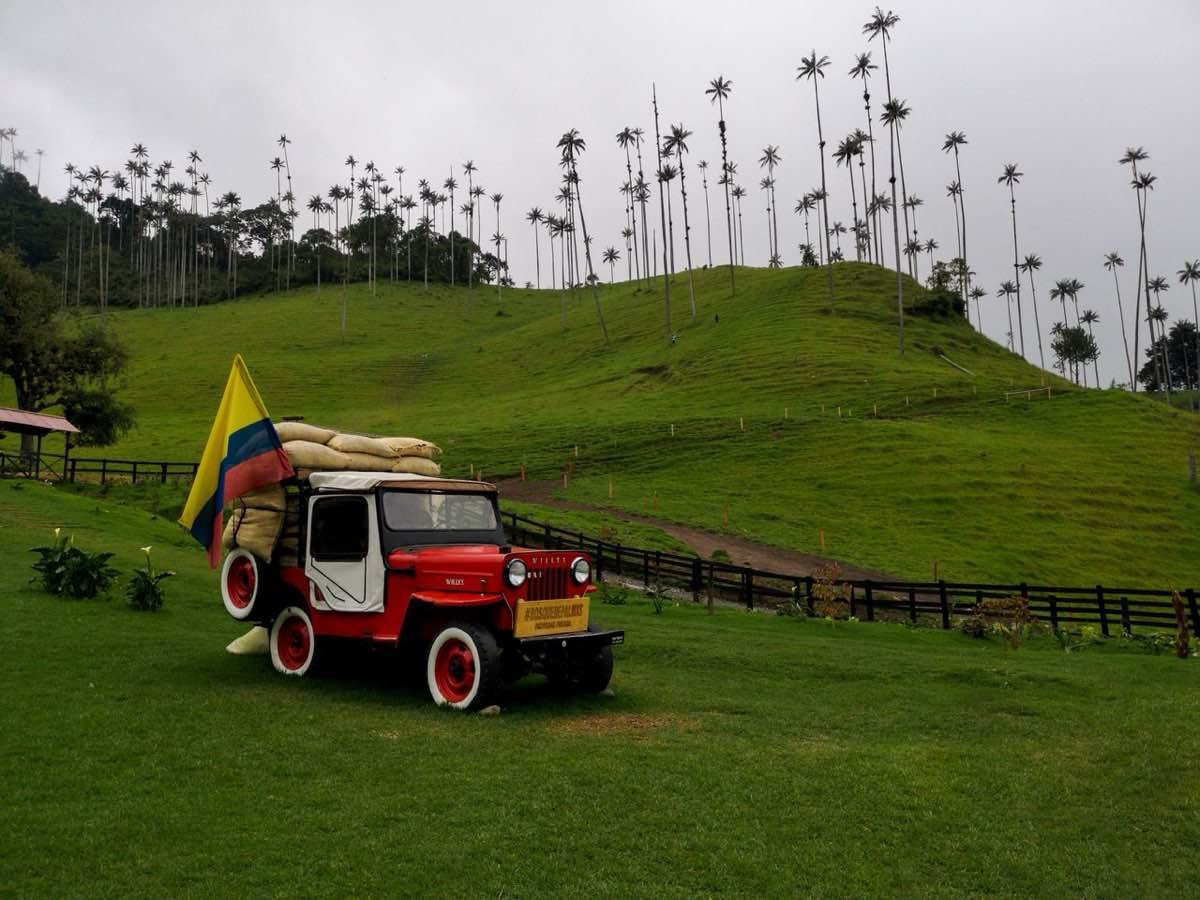 A Willys jeep on the green slopes above Salento, the classic way to reach Cocora.
Search hotels in Salento on Booking.com
Accommodation in Salento:
- Budget: Plantation House Salento has dorms from COP 60,000 and hammock spaces for less. The garden is excellent.
- Mid-range: Hotel Salento Real has private doubles from approximately COP 160,000 and is a short walk from the main square.
- Upgrade option: Several coffee farm stays in the Salento area rent rooms directly; prices run COP 200,000 to 350,000 per night including farm access and breakfast.
Day 3: Arrive in Salento and walk Calle Real, the main commercial street lined with colourful shopfronts, handcraft stalls and speciality coffee shops. Cafe Jesus Martin does pour-overs from single-estate Quindio beans from COP 5,000 to 10,000 per cup. Afternoon: coffee farm tour at Finca El Ocaso (approximately COP 30,000 to 45,000 per person) covering the full production cycle from cherry to cup. Dinner at Brunch on the main square - pastas and salads from COP 28,000; fill up early, the kitchen closes at 9pm.
Day 4: The Cocora Valley hike is the centrepiece of the coffee region. Chiva jeeps from the main square depart from around 6:30am (COP 5,000 to 8,000 each way to the trailhead). The full cloud-forest loop passes through the Sierra del Cocora before emerging into the open valley of wax palms - Colombia’s national tree, growing to 60 metres, and entirely otherworldly. The loop takes 4 to 6 hours. Rubber boots are available at the trailhead for COP 10,000 if your shoes aren’t waterproof. Entry is free. Return to Salento by 4pm.
Day 5: Optional second activity day or slow morning in Salento before onward travel. The Mirador Alto de la Cruz above town is a 20-minute uphill walk with the best panoramic view of the valley. Cafe de Jesus Martin is worth a second visit for a different single-origin lot. Take the late afternoon jeep back to Pereira or Armenia to position for the Medellin flight.
Days 6-8: Medellin
Fly from Pereira or Armenia to Medellin Jose Maria Cordova airport (30 to 50 minutes, from COP 150,000). The airport is 35 km from the city; a taxi or Cabify to El Poblado costs approximately COP 60,000 to 80,000.
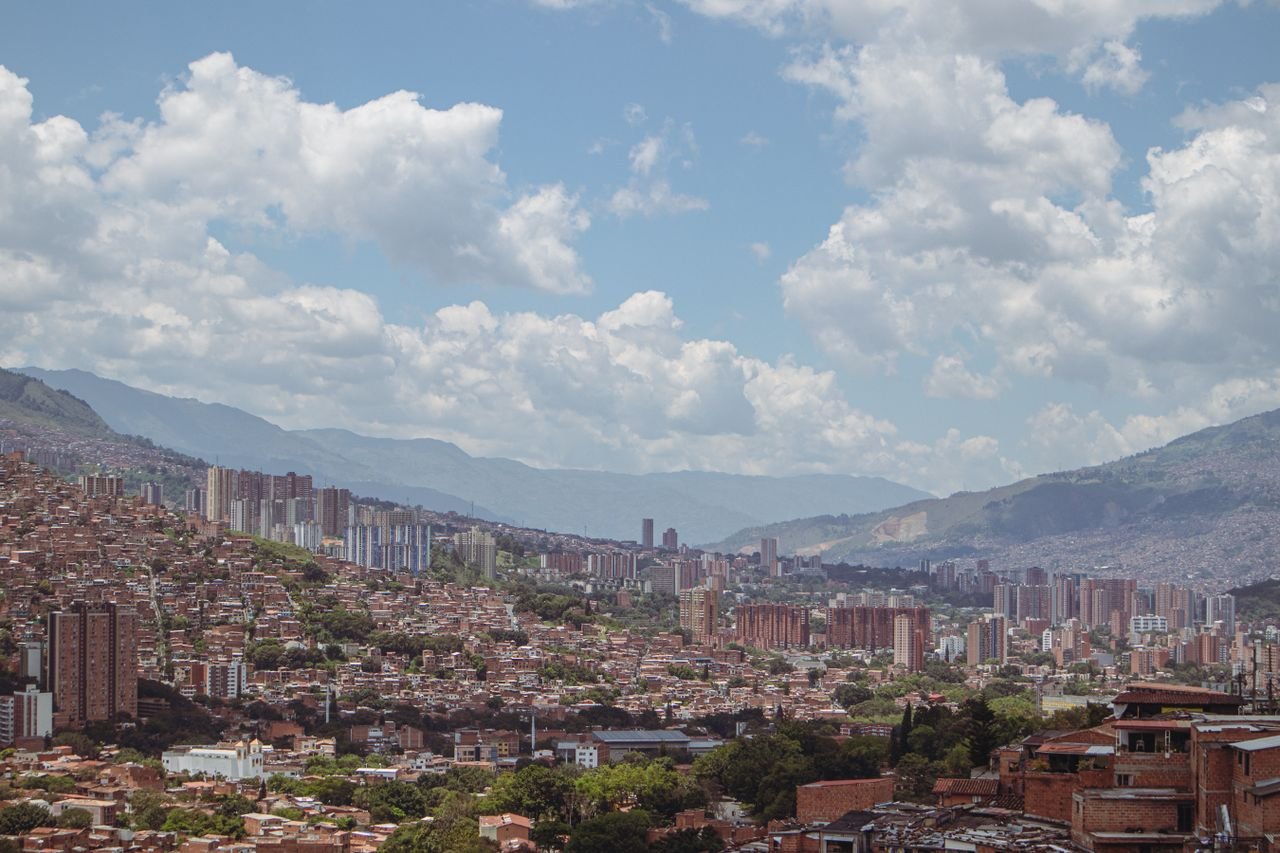 Medellin fills the Aburra Valley from floor to ridge.
Search hotels in Medellin on Booking.com
Accommodation:
- Budget: Black Sheep Hostel in El Poblado has dorms from COP 58,000. The social programme and location make it the best value entry point into the neighbourhood.
- Mid-range: Hotel El Poblado Boutique charges COP 290,000 to 420,000. Ask for a city view room.
- Luxury: The Charlee Hotel on Calle 9 has doubles from COP 750,000, a rooftop pool with a full-valley view, and rates that include breakfast.
Day 6: Arrive and spend the afternoon in El Poblado. The Metro (COP 3,400 per journey with card) connects the neighbourhood to the centre. Walk Calle 10, the main restaurant strip, and choose a dinner spot: Carmen on Calle 10 does the most accomplished contemporary Colombian cooking in the city, with mains from COP 65,000. Reserve a week ahead for weekends.
Day 7: Commune 13. Take Metro Line B west to San Javier station. Commune 13 (San Javier) - formerly one of the most violent comunas in Latin America - was transformed by a 2002 security operation and then by the installation of public escalators and infrastructure. The outdoor escalators on the hillside run free, 6am to 10pm daily. Local youth guides run excellent graffiti and history tours from the escalator base (approximately COP 40,000 per person); the quality of the storytelling and the murals rivals anything on this route. Allow 3 hours. Afternoon: either take Metro Cable Line L to Parque Arvi (COP 8,500 return) for forest trails above the valley, or visit Museo de Antioquia on Plaza Botero in the city centre (COP 18,000).
Day 8: Guatape day trip. Buses depart from the Medellin bus terminal on Calle 48 every 30 minutes from 7am (COP 20,000 to 25,000 each way, 2 hours). The Piedra del Penol is a 200-metre granite monolith with 649 steps cut into the natural crack; entry is approximately COP 22,000. Views over the reservoir system and its 360 islets are some of the most distinctive in Colombia. The village of Guatape has Colombia’s most photogenic streets: colourful colonial facades with bas-relief panels (zocalos) covering the ground floor of every building. Lunch at a lakeside restaurant runs COP 30,000 to 50,000.
Days 9-11: Cartagena
Fly from Medellin to Cartagena (approximately 1 hour, COP 200,000 to 350,000). Taxi from the airport to the walled city costs approximately COP 25,000 to 35,000.
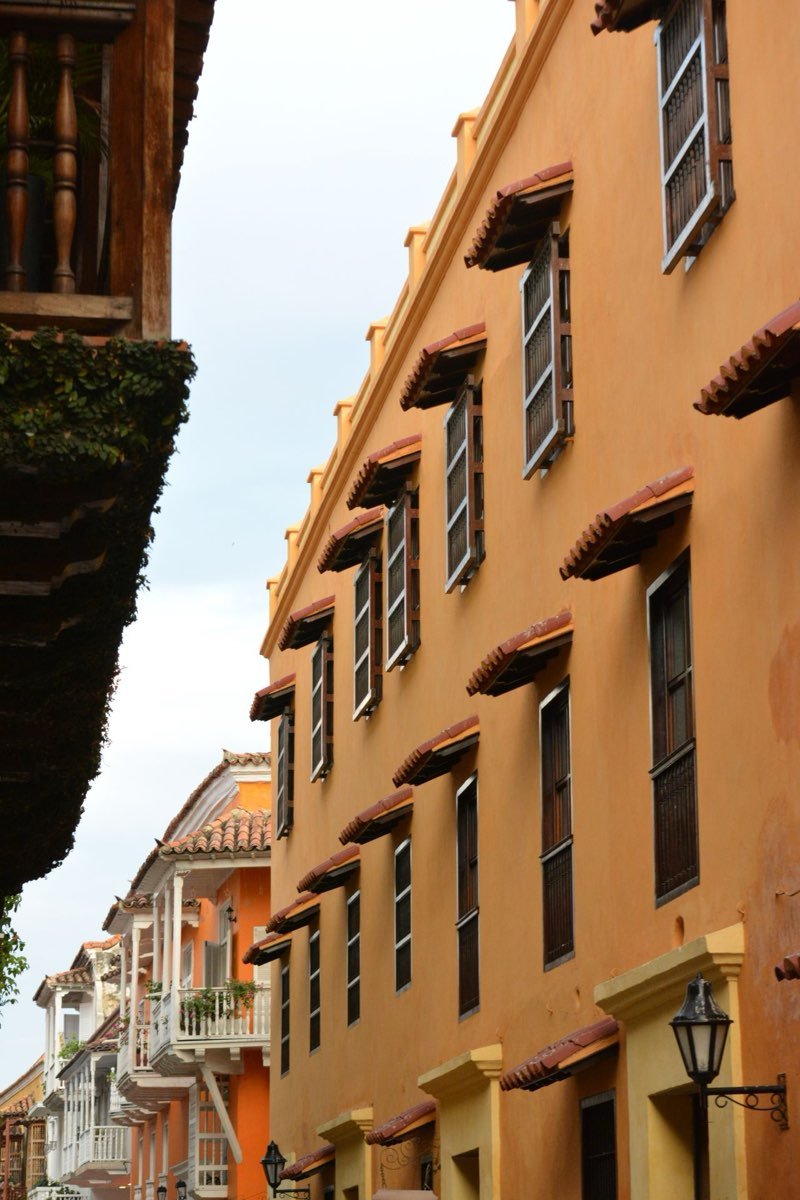 Balconied colonial facades in Cartagena’s old town.
Search hotels in Cartagena on Booking.com
Accommodation:
- Budget: Media Luna Hostel in Getsemani has dorms from COP 60,000. Getsemani has better street life and lower prices than inside the walls.
- Mid-range: Hotel Casa San Agustin inside the walled city charges COP 750,000 to 1,000,000 in a restored colonial mansion with a pool.
- Luxury: Sofitel Legend Santa Clara, a converted 17th-century convent on the wall perimeter, has doubles from COP 1,500,000. The rooftop bar at sunset earns the extra cost.
Day 9: Walk the Walled City (Las Murallas) walls - free, 90-minute circuit. Inside, the barrios of San Diego and El Centro hold the best-preserved colonial architecture in the Americas. Visit Castillo San Felipe de Barajas (COP 35,000 entry): the largest Spanish fortification built in the New World, with a tunnel system still walkable. For dinner, La Cevicheria on Calle Stuart inside the walls is the city’s most cited seafood restaurant - book ahead, mains from COP 55,000.
Day 10: Spend the morning in Getsemani, the neighbourhood outside the walls. The street art here documents neighbourhood history with political directness. Plaza de la Trinidad has street ceviche vendors from early morning (COP 10,000 to 15,000 per cup). Afternoon: half-day boat trip to Playa Blanca on the Baru Peninsula (from COP 80,000 per person with snorkelling) or the Rosario Islands (from COP 120,000). Departures from the Muelle Turistico de la Bodeguita. Evening: cocktails on a walled-city rooftop; the light at dusk is the best photo opportunity on this entire route.
Day 11: Slow morning in Cartagena. The Palacio de la Inquisicion on Plaza Bolivar (COP 22,000) is the most important colonial history museum in the city. Afternoon transfer by bus or shuttle to Santa Marta (4 hours, COP 40,000 to 60,000 by direct shuttle from the terminal at Calle 30). Arrive in Santa Marta for the evening.
Days 12-14: Santa Marta and Tayrona National Park
Santa Marta is the oldest surviving European city in South America, established in 1525. The historic centre around Parque de los Novios is compact and walkable. The city serves as the base for Tayrona National Park and the Lost City trek.
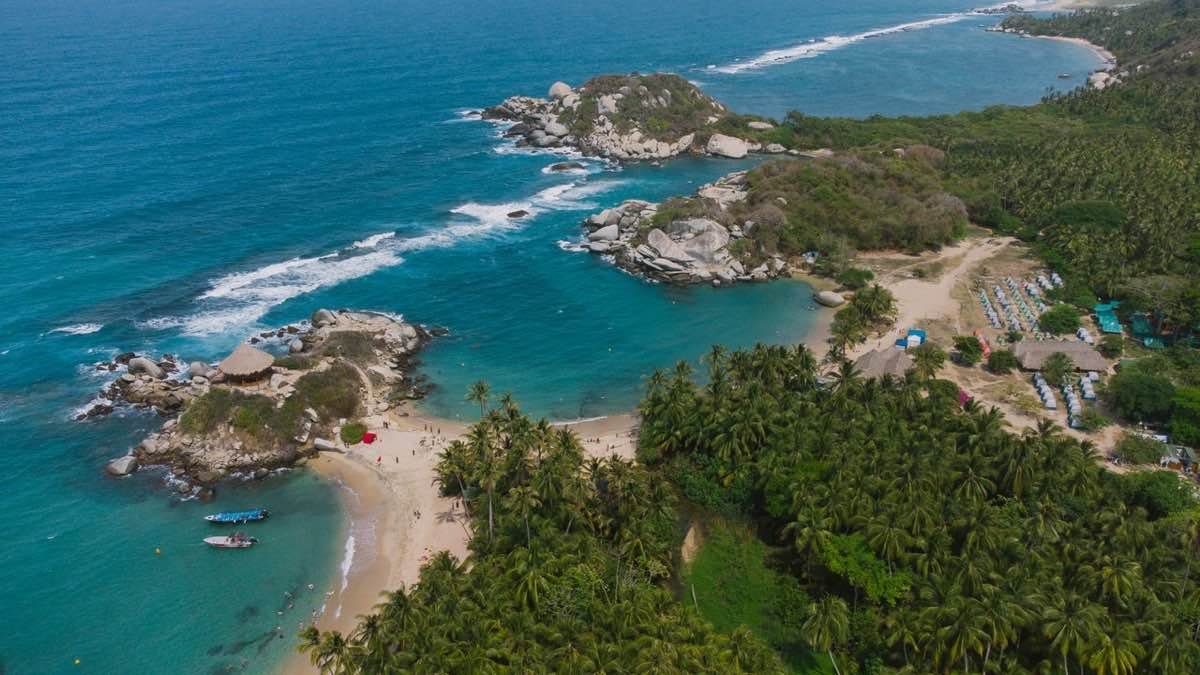 The coves and headlands of Tayrona National Park.
Search hotels in Santa Marta on Booking.com
Accommodation in Santa Marta:
- Budget: Casa de Isabella hostel near the historic centre has dorms from approximately COP 55,000.
- Mid-range: Hotel Movich Casa del Algarrobo in the historic centre charges COP 350,000 to 500,000 for a double; the building is one of the oldest in the city.
- Option: Stay inside Tayrona. Camping and hammock accommodation inside the park costs COP 50,000 to 120,000 per person per night at designated sites. Ecohabs Tayrona is the park’s eco-lodge option with rates from approximately COP 600,000 per night; book far in advance for peak season.
Day 12: Arrive in Santa Marta, check in, and eat on the Malecon waterfront. Dinner at any of the seafood restaurants along Calle 1 runs COP 35,000 to 70,000. The city has a relaxed Caribbean energy that contrasts sharply with Cartagena’s tourist intensity. The historic barrio of El Prado has the best colonial architecture in Santa Marta, walkable in 45 minutes.
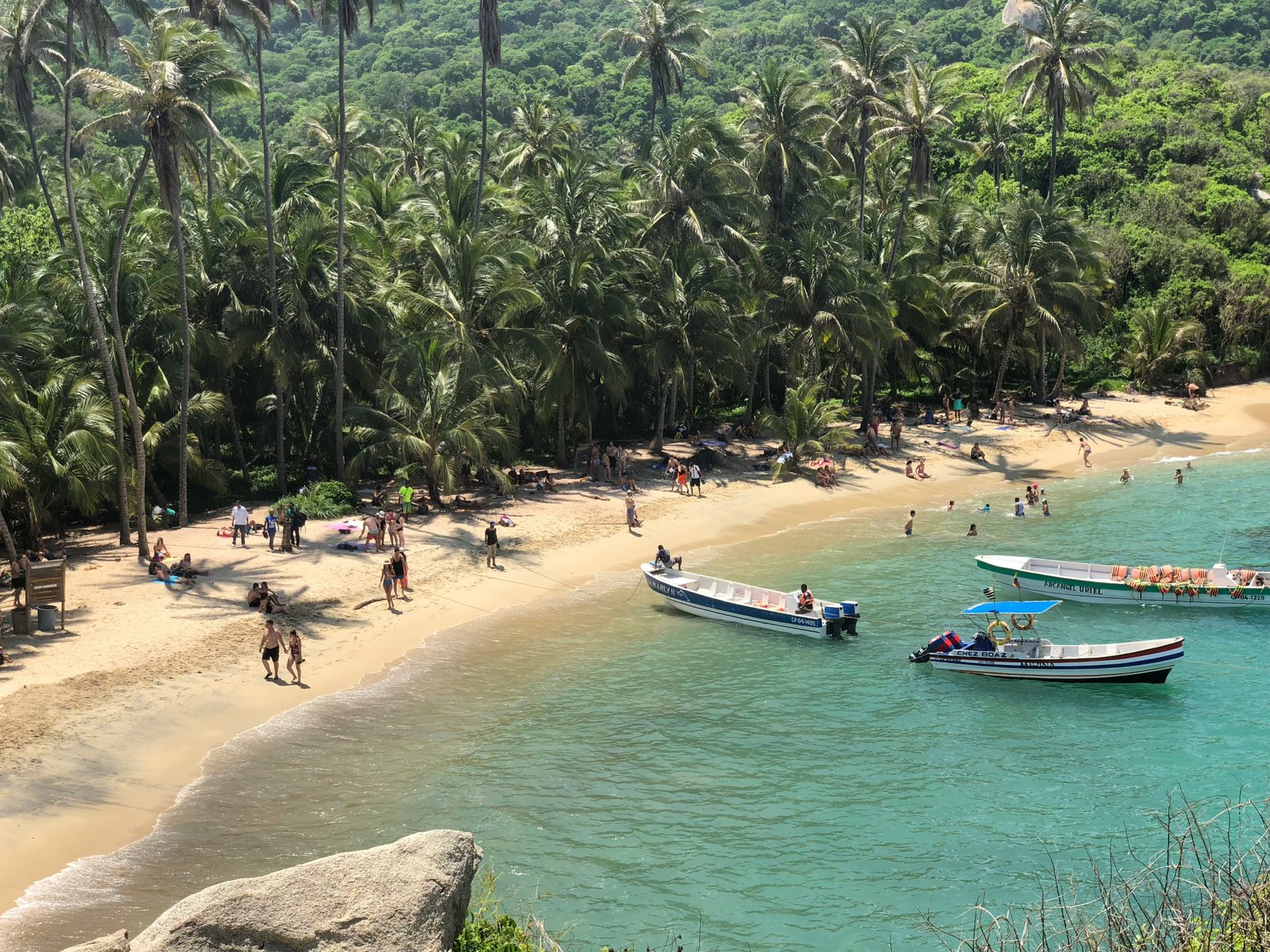
Day 13: Tayrona National Park. Colectivo taxis from the main market area to El Zaino park entrance cost approximately COP 12,000 to 15,000 per person (45 minutes). Entry fee: approximately COP 59,000 as of 2026 for foreign visitors. From the entrance, park shuttle buses (COP 5,000) run to the trailhead at Canaverales. The walk to Cabo San Juan del Guia, the park’s most dramatic beach, takes 45 to 75 minutes through dry tropical forest. The beach sits inside a rocky cove flanked by palm forest with boats anchored in turquoise water. Day visitors must leave by 5pm; those staying overnight at the hammock camp get the beach to themselves in the morning.
Camping at Cabo San Juan: hammock rental costs approximately COP 50,000 to 80,000 per night (book ahead through the park concession). If day-tripping, return to the entrance by 4pm for the colectivo back to Santa Marta.
Day 14: Final morning in Santa Marta or a second, unhurried visit to Tayrona. The beach at Playa Bello Horizonte (10 minutes from central Santa Marta by taxi, COP 8,000) is a local alternative if you want a last swim without the park entry fee. Depart from Simon Bolivar airport (SMR), a 15-minute taxi from the centre at approximately COP 20,000.
Prefer a bundled trip? Compare typical prices in our guide to Colombia tour packages.
Transport Summary
| Leg | Mode | Duration | Approx Cost (2026) |
|---|---|---|---|
| Bogota to Armenia/Pereira | Bus | 5 hours | COP 50,000-70,000 |
| Pereira to Medellin | Flight | 30-50 min | COP 150,000-200,000 |
| Medellin to Cartagena | Flight | 1 hour | COP 200,000-350,000 |
| Cartagena to Santa Marta | Bus/shuttle | 4 hours | COP 40,000-60,000 |
| Salento jeep connections | Shared jeep | 45 min | COP 12,000-16,000 |
Compare and book intercity bus tickets with Omio - covers the Bogota to Armenia and Cartagena to Santa Marta bus legs on this route.
Budget Summary (Per Person, 14 Days, 2026 Estimates)
| Expense | Budget | Mid-Range | Luxury |
|---|---|---|---|
| Accommodation per night | COP 55,000-80,000 | COP 300,000-500,000 | COP 750,000+ |
| Meals per day | COP 30,000-60,000 | COP 80,000-180,000 | COP 200,000-400,000 |
| Domestic transport (all legs) | COP 600,000-900,000 | COP 800,000-1,200,000 | COP 1,000,000-1,500,000 |
| Activities and entry fees | COP 200,000-400,000 | COP 400,000-700,000 | COP 700,000-1,500,000 |
| 14-Day Total (excl. int’l flights) | from COP 2.0M | from COP 5.0M | from COP 12M |
Practical Notes
- Best time: December to March is the driest season across most of this route. Tayrona closes for environmental recovery for several weeks in February and June; check the current schedule before booking that leg.
- Yellow fever: Recommended for the Tayrona and jungle sections. Get vaccinated at least 10 days before travel.
- SIM card: Buy a Claro or Tigo SIM at Bogota airport. A 5GB data pack costs approximately COP 25,000 to 40,000. An eSIM for Colombia activates before you land.
- Lost City Trek: Four to seven days from Santa Marta, the trek to Ciudad Perdida is one of the best multi-day hikes in South America. If your schedule allows, build three extra days into the Santa Marta section. Only operate through licensed agencies; cost is approximately COP 1,400,000 to 1,800,000 all-inclusive for the standard 4-day version as of 2026.
- Insurance: Travel insurance for Colombia is important for this route given the activity range. Confirm your policy covers hiking and water activities before departure.
Book Your Trip
- Flights - Find the best fares to Colombia · flights guide
- Travel Insurance - Get covered before you go · insurance guide
- eSIM - Stay connected from landing · eSIM guide
- Airport Transfers - Pre-book your transfer from Bogota or Medellin · airport guide
- Tours and Activities - Browse Colombia tours on GetYourGuide