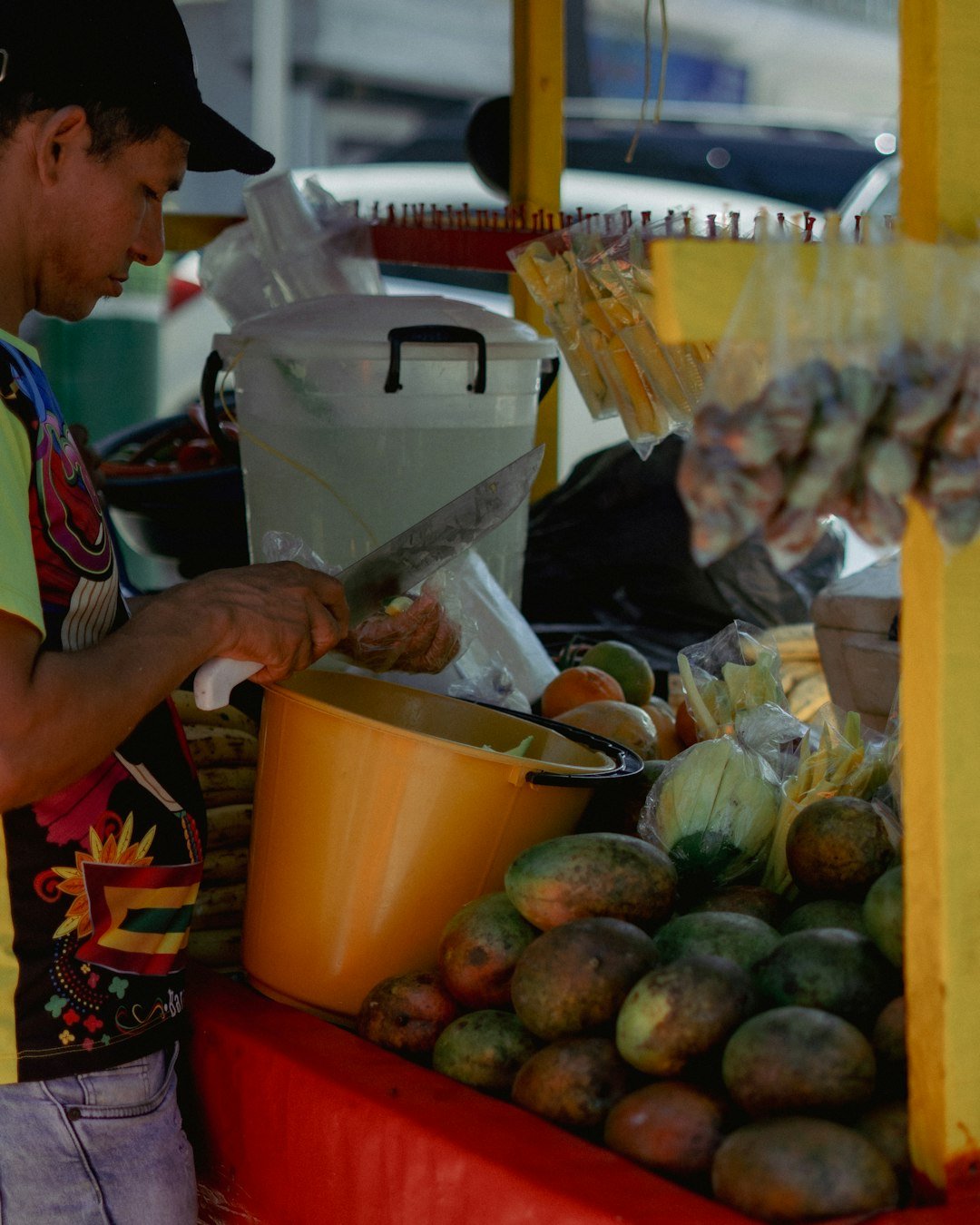
Colombia’s street food is among the most distinct in South America - not because of culinary novelty, but because of the regional variation you get between cities just a few hours apart. The empanada you eat in Cali is fried in lard and stuffed with potato and rice; the one in Bogota is often baked and includes meat. The arepa you eat in Medellin is a thin, grilled corn disk with butter; the arepa de choclo in Salento is a soft, sweet corn and cheese version. Understanding that variation is the point.
Empanadas: Regional Variations
No street food is more Colombian than the empanada - a fried (occasionally baked) pastry of corn or wheat dough stuffed and sealed, eaten as a snack at any hour of day. The price of a single empanada tells you roughly where you are in the country.
Cali-style empanadas are the most celebrated. They use a fine yellow corn masa that fries to a thin, crisp shell with a distinctive crunch. The filling is potato and rice - no meat in the classic version, which sounds sparse but works because of the texture contrast. Vendors season the exterior with salt and ají (a bright, thin fresh chilli sauce spooned on at the counter). You will find them at dozens of street carts around Calle Quinta and the San Antonio neighbourhood for COP 1,500 to 2,500 each. The standard is to eat three with a glass of lulada or a black coffee.
In Bogota, empanadas tend to be slightly larger, often with potato and beef or chicken inside. The dough is thicker. They are sold from plastic boxes by vendors near metro stations and office areas around Chapinero and La Candelaria for COP 2,500 to 4,000. The best tend to come from proper fritanga stalls rather than the cheapest carts - look for the ones where the oil is genuinely hot.
In Medellín, empanadas appear at midmorning and again at late afternoon as a snack between meals, sold from carts near markets and schools. Plaza Minorista in the centre has multiple empanada vendors; a single empanada runs COP 2,000 to 3,500.
Arepas: The National Staple
The arepa is Colombia’s bread equivalent - eaten at breakfast, as a snack, as a side dish at every meal, and from street stalls at all hours. The variety by region is substantial enough that Colombians from different cities will argue about which is the real arepa.
Arepa paisa (Medellin and Antioquia): A thin, round, grilled corn disk about the width of a palm. Eaten with butter and salt, or with hogao (a tomato-onion sauce). Crisp at the edges, soft inside. Sold from street counters near bus stations and markets for COP 2,000 to 4,000. In Medellin’s La Minorista market, vendors sell them fresh from a comal (griddle), stacked by the dozen, from 6am.
Arepa de choclo (Coffee Region): Made from sweet white corn rather than dried corn masa, these are thicker, slightly sweet, and served with a slice of fresh cheese melted over the top. Essential eating in Salento and around the main plaza in Armenia. From bakeries and market stalls for COP 3,000 to 6,000. The best version comes hot from the comal with the cheese just softening.
Arepa de huevo (Caribbean Coast, especially Cartagena): A deep-fried arepa stuffed with a whole egg - a Caribbean speciality that is richer and more filling than the inland versions. The dough is fried once, an egg is inserted through a small opening, then it goes back in the fryer. The result is a golden, slightly puffed pastry with a runny or set egg depending on timing. Street versions in Cartagena’s Getsemaní neighbourhood cost COP 3,500 to 6,000 each and are sold from wooden kiosks.
Arepa de chocolo con queso (Bogota): In Bogota’s markets and street stalls, corn and cheese arepas are sold wrapped in a corn husk. Slightly sweet from the corn, with the cheese mixing into the batter rather than sitting on top. Look for them at Mercado de Paloquemao for COP 3,000 to 5,000.
Bandeja Paisa: Where to Eat Colombia’s Biggest Plate
The bandeja paisa is not technically street food - it requires a table, a tray, and about 15 minutes to eat. But the best versions are served at market-hall counters and fondas (traditional worker canteens) rather than restaurants, which is why it belongs in this category.
The full plate includes: red beans with pork, white rice, ground beef (picadillo), chicharrón, a fresh chorizo, a fried egg, sweet plantain slices, avocado half, and a grilled arepa paisa. Some versions add a small piece of grilled or braised beef. The combined calorie count is substantial - this was designed to sustain a person through a day of physical farm work.
Where to eat it in Medellin:
The Mercado del Río food hall has several counters serving bandeja paisa in a more relaxed setting, for approximately COP 30,000 to 40,000. The quality is consistent and the counters are well-run.
Around Plaza Minorista (the largest traditional market in Medellin), fondas open from around 7am and serve bandeja paisa as lunch from 11am to 2pm. Expect to pay COP 16,000 to 25,000 - these are working canteens, not restaurants, and the food is better for it.
La Fondita del Barrio near Laureles serves the most celebrated neighbourhood bandeja in the city, with beans cooked overnight and chicharrón that actually shatters rather than chewtough. A full plate runs approximately COP 28,000 as of 2026.
In Bogota, bandeja paisa is available across the city at traditional restaurants. La Puerta Falsa in La Candelaria (Calle 11 No. 6-50) is the most historic eating counter in Bogota - tiny, close tables, and serving a bandeja variant along with ajiaco since 1816. A plate runs approximately COP 32,000 to 38,000.
Lechona: Tolima’s Stuffed Roast Pig
Lechona tolimiense is one of Colombia’s great festive foods - a whole pig stuffed with a mixture of rice, yellow peas, pork meat, onion, cumin, and herbs, then roasted for eight to ten hours in a clay oven until the skin is mahogany-dark and crackling. It is the ceremonial food of the Tolima department and the cities of Ibagué and Espinal are its home.
You will encounter lechona at family celebrations, Sunday markets, and religious festivals across Colombia, but the most accessible street experience is at Parque de Bolívar in Ibagué on weekends, where vendors arrive in the morning with whole roasted pigs and serve portions carved to order. A plate of lechona with a chunk of the crackling skin and a scoop of the rice-pea stuffing costs approximately COP 18,000 to 28,000. The skin must be ordered explicitly - it goes first.
In Bogota, lechona has crossed over from festival food to everyday eating. The Plaza de Mercado de Paloquemao has at least two permanent lechona stalls selling portions from early morning. Street vendors with full pigs on carts appear around Avenida 68 and in the Fontibón area on Sunday mornings. A portion runs COP 15,000 to 22,000.
How to eat lechona: It comes served in a foam plate or paper plate. The crackling skin goes on the side or on top of the stuffing. No cutlery required - pick up the skin with your hands. A cold aguapanela or a beer alongside.
Obleas: Street Dessert
No street food run is complete without an oblea - a sandwich of two thin, crisp wafers with a layer of arequipe (Colombia’s caramel spread, similar to dulce de leche) as the binding agent. The standard additions are grated cheese, jam, and whipped cream. In Bogota and most of the Andean region, oblea vendors are a fixed feature of parks and plazas in the evening.
The Bogota version, sold around Parque de la 93, Usaquén market, and the Universidad Nacional campus, tends to be generous - a wide wafer with a thick arequipe layer plus two or three optional extras. Price: COP 4,000 to 8,000 depending on additions. The best versions add a sharp fresh cheese that contrasts with the sweetness.
Sancocho: The Soup You Eat Standing Up
Sancocho is Colombia’s catch-all broth - a long-cooked soup with yuca (cassava), corn on the cob, plantain, potatoes, and a protein (chicken, beef, fish, or mixed depending on region). Every region has its own version and it is eaten at every social level, from home kitchens to market canteens to Sunday lunch at a finca.
The sancocho de gallina (hen broth) found at Cali’s Galería Alameda market is considered one of the best examples in the country - a clear, deep yellow broth from a long-cooked old hen, served with yuca, corn, and a side of rice and avocado. A bowl at a market counter in the Galería costs approximately COP 14,000 to 22,000. Arrive before 1pm - it sells out.
Key Markets by City
Bogota: Mercado de Paloquemao (Carrera 25 between Calles 19 and 22, open daily from 5am). The largest traditional market in Bogota. Lechona, arepas, empanadas, fresh juice, obleas, fruit you will not recognise. Best before 10am.
Medellin: Plaza Minorista José María Villa (Carrera 57 between Calles 55 and 58, open daily from 6am). The beating heart of Medellin’s market economy. Arepas, bandeja paisa, empanadas, fresh produce from across Antioquia.
Cali: Galería Alameda (Carrera 26 between Calles 5 and 8, open Tuesday to Sunday from 6am). The most atmospheric market in Cali, particularly strong for sancocho, empanadas, and fresh juice made from Pacific coast fruits.
Cartagena: Mercado de Bazurto (Avenida Pedro de Heredia, open daily from 5am). The large informal market serving the local population rather than tourists. Seafood, arepas, carimañolas (yuca fritters stuffed with meat), ceviche costeño. Come with a local guide if you have not visited a large Colombian market before.
Join a Guided Street Food Tour
Colombia’s street food circuit is best explored with a local guide who knows which carts have the freshest oil, which market stalls are the best value, and how to navigate large markets like Paloquemao in Bogotá and Plaza Minorista in Medellín without getting overwhelmed. Street food tours in the major cities cover empanada carts, arepa vendors, lechona stalls, oblea sellers, and market comedores - often within the same two-hour walk. The context also changes how you eat: understanding why Cali’s empanadas are different from Bogotá’s, or why chontaduro is specific to the Pacific coast, transforms the experience from snacking into a genuine overview of Colombian food culture. Book a street food tour in Colombia
What to Drink With Street Food
Street food in Colombia pairs naturally with:
- Agua de panela: Hot water with raw cane sugar dissolved in it. The equivalent of breakfast tea. Free or COP 1,000 at market counters.
- Jugo natural: Fresh juice blended with water or milk, from Colombia’s extraordinary fruit variety - lulo (sour citrus), maracuyá (passion fruit), guanábana (soursop), mora (blackberry), tomate de árbol (tree tomato). COP 3,000 to 7,000 at a juice stall.
- Tinto: Black espresso-style coffee, served in a small plastic cup, COP 1,000 to 2,000 at market carts. Not a specialty coffee experience, but the daily fuel of most Colombians.
- Lulada: A Cali speciality - lulo fruit mashed with ice, water, and sugar. Cold, sharp, and refreshing. COP 4,000 to 7,000 at Cali street stalls.
Plan Your Visit
The best street food in Colombia is clustered around its city markets - Paloquemao in Bogotá, Plaza Minorista in Medellín, Mercado de Bazurto in Cartagena. If you’re building a trip around eating, plan at least a half-day in each market. Search hotels in Colombia to find accommodation close to the action in each city.