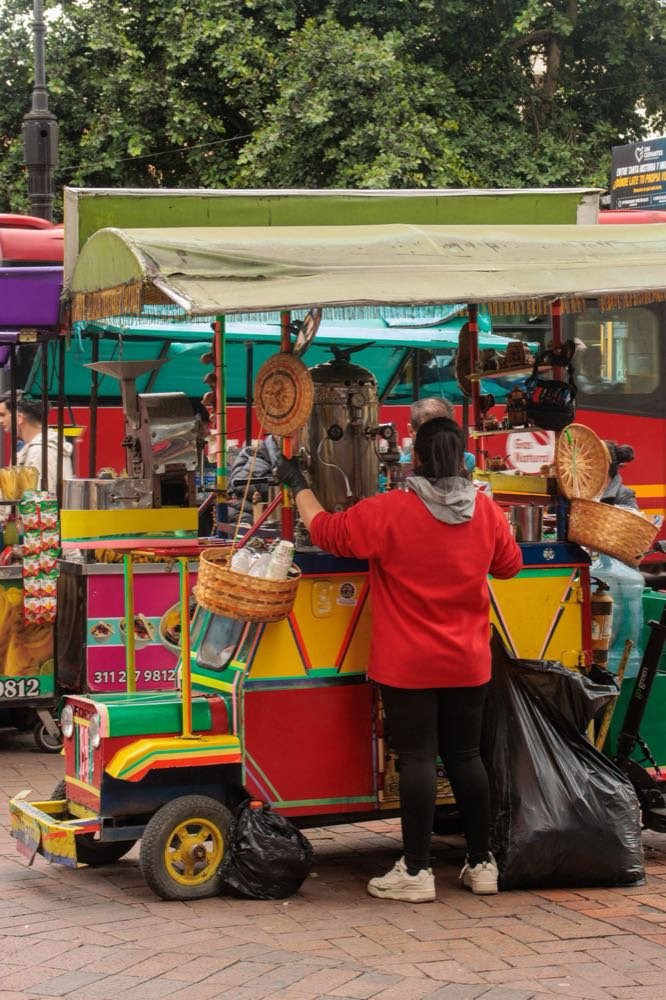
Colombian food changes sharply from city to city, and a guided tour is the fastest way to taste that variety without guessing which stalls are worth the queue. A good guide explains what you are eating, takes you to vendors you would walk past and handles the logistics. This guide covers what food tours in Bogotá, Medellín and Cartagena actually cover, typical prices and how to choose. Prices are approximate and as of 2026.
Bogotá Food Tours
Bogotá tours usually centre on two things: tropical fruit and the traditional highland table. Expect a walk through a produce market, where guides introduce fruits that rarely appear abroad, such as lulo, granadilla, curuba and uchuva. Tastings in La Candelaria often include ajiaco (the chicken, potato and corn soup that defines the capital), tamales, hot chocolate with cheese and fresh arepas.
Tours generally last three to four hours and cost from approximately USD 35 to 70 per person. Wear layers, because the altitude of about 2,600 metres makes mornings cool. You can browse current options through our Bogotá tours page or start with a walking tour of the old centre that includes stops for local snacks. For where to eat on your own, see our Bogotá food guide.
Medellín Food Tours
Medellín is the best city for Paisa cuisine. Tours often combine bandeja paisa, arepas, buñuelos, chicharrón and fresh juice with a neighbourhood walk. The Comuna 13 graffiti tour with street food and cable car is one of the most booked experiences in the country because it pairs local snacks with the story of the neighbourhood’s transformation. Read our Comuna 13 tour guide before you go, and treat the history with respect.
Prices start from approximately USD 30 to 60 per person. Explore wider options on our Medellín tours page and our Medellín food guide.
Cartagena Food Tours
Cartagena’s food scene is Caribbean: coconut rice, fried fish, arepas de huevo, ceviche, fresh fruit juices and cocadas (coconut sweets). Tours tend to focus on Getsemaní and the walled Old Town, with tastings spread across street stalls and small restaurants. Evening tours are more comfortable than midday ones because of the heat.
Expect from approximately USD 40 to 80 per person. A historic centre and Getsemaní walking tour is a good way to see the neighbourhoods first, and Cartagena tours lists the food-specific options. Our Cartagena food guide covers dishes and prices for eating independently.
Beyond the Big Three
Coffee region. A farm visit is the Colombian equivalent of a food tour: you pick, roast and taste. The El Ocaso coffee farm tour from Salento is a well-reviewed example, and our coffee farm tours guide compares options.
Cali. Local markets and street food shape the experience here; see tours in Cali.
Eating Well Before and After Your Tour
A food tour works best as a starting point. Note the stalls and restaurants the guide recommends, then return on your own for a full meal. In Bogotá, the markets are busiest early in the morning, so go before midday for the best choice. In Medellín, try a corrientazo (set lunch) at a local fonda for roughly COP 15,000 to 25,000. In Cartagena, eat the big meal at lunch and keep the evening for lighter street food, because many Old Town restaurants charge tourist prices after dark. Carry small notes for street vendors, who rarely have change for large bills, and drink only bottled or purified water at stalls.
How to Choose a Food Tour
- Group size. Smaller groups (under 12) move faster and let you ask questions.
- What is included. Check the number of tastings, drinks and whether lunch is part of the price.
- Dietary needs. Vegetarians can eat well in Colombia, but many traditional dishes contain meat. Our Colombian street food guide explains what to expect.
- Timing. Go hungry. Tastings add up to a full meal.
- Recent reviews. Look for comments on guide knowledge and pace, not just food quality.
What to Try on Any Tour
Empanadas, arepas, ajiaco, bandeja paisa, sancocho, patacones, fresh fruit juices and aguapanela. For drinks, read our Colombian drinks guide. For general trip planning and entry rules, see the official ProColombia tourism site.