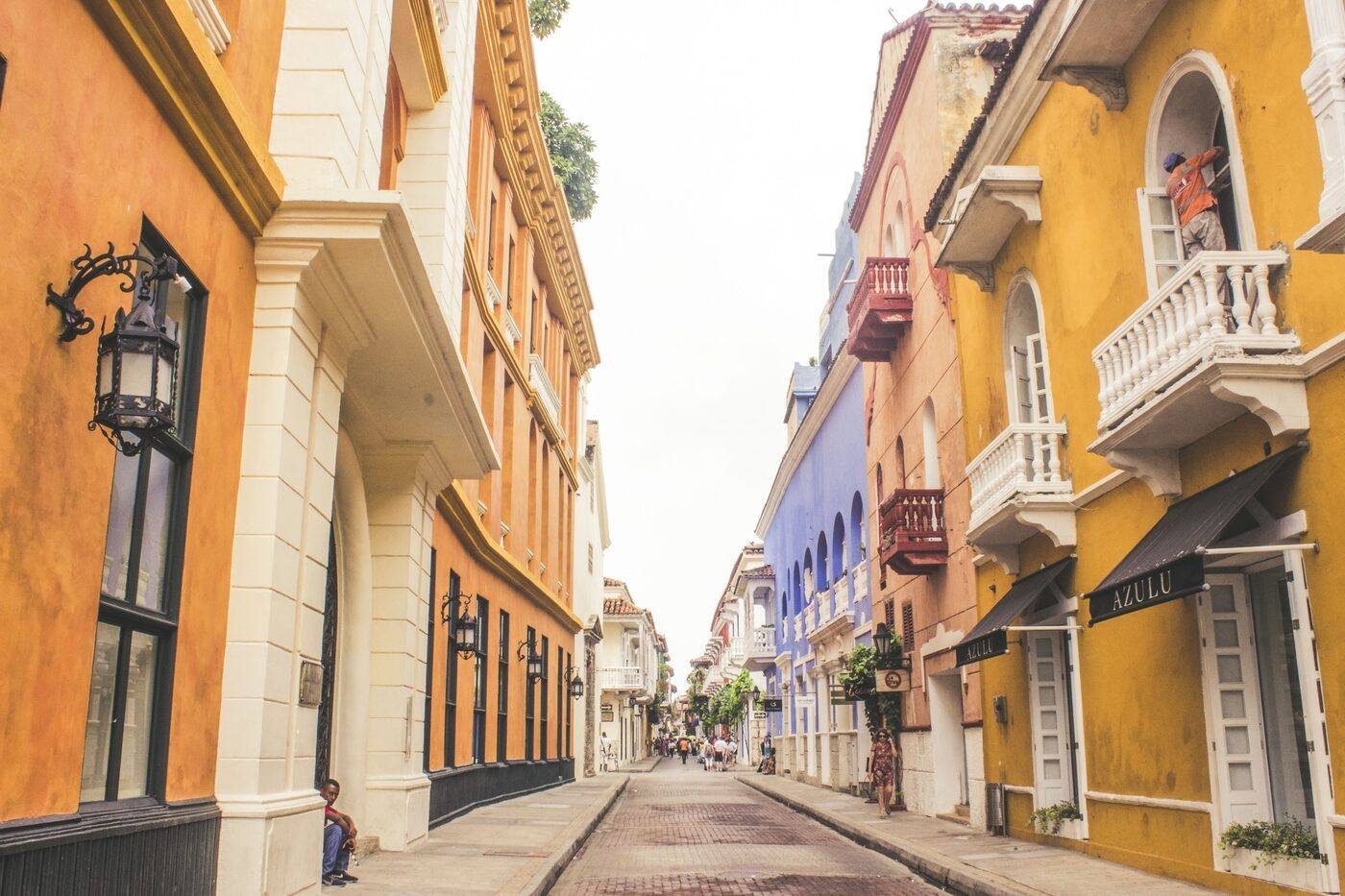
Colombia’s Caribbean coast gives you two cities within 220 km of each other that could not feel more different. Cartagena is one of Latin America’s most photographed old towns: walled, colonial, and expensive by Colombian standards. Santa Marta is older, rougher around the edges, and sits at the doorstep of Tayrona National Park - some of the best coastline in South America. Choosing between them comes down to what you actually want from a beach destination.
Beach Quality
This is the clearest win for Santa Marta. The city itself does not have the best urban beaches - Rodadero Beach, south of the centre, is functional but crowded. The reason to base in Santa Marta is access to Tayrona National Park.
Tayrona is 34 km east of Santa Marta and takes 45–60 minutes by shared minibus (approximately 12,000–15,000 COP). Inside the park, beaches like Cabo San Juan del Guía combine jungle-backed coves with clear Caribbean water and minimal development. The water is swimmable at designated zones; some beaches have strong rip currents at specific points marked on park maps. Entry to Tayrona costs around 68,000–89,000 COP (approximately $16–22 USD as of 2026) for foreign visitors. The park requires advance booking during Colombian holiday periods (Semana Santa, July, December) - book several weeks ahead during these windows.
Cartagena’s best nearby beaches are the Islas del Rosario, an archipelago of small coral islands 35–45 km offshore. Day trips run from the Muelle Turístico and take approximately 90 minutes each way by boat; the full-day excursion with snorkelling costs $35–60 USD depending on operator quality. The water is clear and the coral, while partially bleached, is still worth the trip. The islands have a few overwater accommodation options for those who want to stay overnight.
The catch: the Islas del Rosario require a boat trip and are entirely dependent on weather and sea state. Tayrona is accessible overland regardless of sea conditions. For travellers who want reliable beach access without logistical overhead, Santa Marta and Tayrona win cleanly.
Colonial Architecture and History
Cartagena wins here without contest. The historic walled city (Ciudad Amurallada) is a UNESCO World Heritage Site and one of the best-preserved examples of Spanish colonial military architecture in the Americas. The walls were built from the late 16th century to defend against pirate attacks and naval assaults; walking the full perimeter takes about an hour.
Inside the walls, the streets of Getsemaní and the Centro are dense with colourful buildings, bougainvillea, street art, and plazas. The Castillo de San Felipe de Barajas is the largest Spanish-built fortress in the Americas - entry costs approximately 35,000 COP and the engineering alone justifies the visit. The Torre del Reloj, Plaza de Bolívar, and the merchant houses of the old city are all within easy walking distance.
Santa Marta has historical significance - it was founded in 1525, making it one of the oldest surviving European cities in South America, and Simón Bolívar died at the Quinta de San Pedro Alejandrino estate just outside the city in 1830. The estate is open to visitors (entry approximately 20,000 COP) and the grounds are pleasant. But the historic centre of Santa Marta lacks the architectural consistency of Cartagena; it is being renovated steadily but has not reached the same state of preservation.
For anyone with an interest in colonial history, Spanish fortifications, or Latin American architecture, Cartagena is the destination.
Budget
Santa Marta is noticeably cheaper than Cartagena across accommodation, food, and activities. A midrange guesthouse in Santa Marta’s El Rodadero or near the Parque de los Novios area costs $30–50 USD per night. A set lunch in the market area runs 12,000–18,000 COP.
Cartagena’s Centro and Getsemaní have seen significant price inflation driven by tourism and boutique hotel development. A comparable midrange room inside or near the walls costs $60–100 USD per night in high season. Restaurants in the walled city routinely charge 40,000–80,000 COP for a main course. The neighbourhood of Getsemaní, just outside the walls, is cheaper and increasingly popular with independent travellers - budget hostels there start from around $15–20 USD for a dorm bed.
For budget-conscious travellers, Santa Marta is the better base. For those willing to pay a premium for walking distance to the architecture, central Cartagena delivers.
Diving
Both cities offer Caribbean diving, but the conditions differ.
The Islas del Rosario from Cartagena have reefs in the 10–25 m range with the typical Caribbean mix: parrotfish, angelfish, sea turtles, and nurse sharks. Visibility varies with season and weather; April–September is generally the best period. Day diving trips including two dives and equipment cost approximately $60–90 USD through operators at Muelle Turístico.
From Santa Marta, the main dive site is the coral reefs around Playa Blanca (not to be confused with the island of the same name near Cartagena) and the Tayrona coast. Visibility is generally good and the sites are less trafficked than the Islas del Rosario. Operators based in the El Rodadero area run two-dive trips from approximately $60–80 USD.
The diving is comparable in quality; neither location ranks among Colombia’s absolute best (that is Providencia Island in the western Caribbean). The Islas del Rosario from Cartagena are more established commercially; Santa Marta’s sites are less crowded.
How Many Days Each City Deserves
Santa Marta works well as a 3–4 day stop. One day in Tayrona is the minimum; two full days allows you to stay overnight inside the park at the hammock camps or eco-cabañas near Cabo San Juan (book ahead - capacity is limited). The Minca coffee village in the Sierra Nevada de Santa Marta, 45 minutes from the city, is worth a half-day if you have the time.
Cartagena warrants 2–3 days. The first day covers the walled city and San Felipe; the second day is for the Islas del Rosario; an optional third day allows for slower exploration of Getsemaní’s street art and the Bocagrande beach strip. Any longer and you will start repeating the same circuit.
What to Skip if Time Is Limited
If you have only 4–5 days on the coast and must choose one base, the decision comes down to priorities. Choose Cartagena if colonial architecture, nightlife, and a polished tourist infrastructure matter more than beach time. Choose Santa Marta if Tayrona is the main event and budget is a real consideration.
It is entirely possible to base in Santa Marta and do a day trip or overnight to Cartagena by bus (4–5 hours, approximately 50,000–70,000 COP by direct coach, or 30 minutes by Avianca if you book early at $30–60 USD). The reverse works too. Many travellers do 3 nights Santa Marta, then take the bus to spend 2 nights in Cartagena before flying out of BOG.
Nightlife
Cartagena has the more developed after-dark scene. Getsemaní in particular has transformed into one of the best nightlife neighbourhoods in Colombia: open-air bars, live cumbia and champeta music, and rooftop venues overlooking the walls. The Calle de la Sierpe and Plaza de la Trinidad areas heat up from around 10 pm and run until 2–3 am. Cocktail prices in Getsemaní run 20,000–35,000 COP - cheaper than inside the walls.
Santa Marta’s nightlife is centred on the El Rodadero waterfront and the Parque de los Novios area in the historic centre. It is lower-key and more local in character than Cartagena. For backpacker hostels and casual beer-and-hammock evenings, Santa Marta works fine. For a night out in the same league as Medellín’s Carrera 70, Cartagena is the clear choice.
The Verdict
Cartagena wins for colonial architecture, nightlife, and the classic Caribbean city experience that Colombia’s coast is famous for. Santa Marta wins for beach quality, access to Tayrona National Park, and budget - it is the better choice for travellers who want to spend most of their time outdoors rather than in a bar or restaurant. Travellers with 6+ days on the coast should do both, basing in Santa Marta first for the park, then finishing in Cartagena for the architecture and the flight connection out via Bogotá.
Book Your Trip
- Flights - Find the best fares to Colombia · flights guide
- Travel Insurance - Get covered before you go · insurance guide
- eSIM - Stay connected from landing · eSIM guide
- Airport Transfers - Pre-book your transfer from Bogota or Medellin · airport guide
- Car Rental - Compare prices across providers
- Hotels - Hotels in Cartagena · Hotels in Santa Marta
- Tours & Activities - Browse Colombia tours on GetYourGuide
Related reading: Cartagena’s Coral Reefs Get New Marine, Cartagena Nightlife and Santa Marta Nightlife.